
How ServiceNow’s Integration Hub Improves Fintech Interoperability
The Challenge of Connecting Fintech Systems Fintech interoperability is crucial for efficient, secure financial services. This article explores how ServiceNow Integration Hub fintech interoperability helps fintech companies overcome fragmented systems by seamlessly connecting applications, automating workflows, and ensuring real-time data exchange.
But there’s a challenge: Fintech ecosystems are often fragmented.
- Core banking systems, payment gateways, fraud detection tools, and customer service platforms operate in silos.
- Manual data transfers between systems lead to errors and delays.
- Security risks increase when disconnected platforms handle sensitive financial transactions.
For fintech companies to scale efficiently, their systems need to talk to each other effortlessly. That’s where ServiceNow’s Integration Hub makes a difference.
By connecting fintech applications, automating workflows, and enabling real-time data exchange, ServiceNow’s Integration Hub:
- Eliminates inefficiencies from disconnected systems
- Reduces operational costs by automating integrations
- Improves security by centralizing financial data flow

In this article, we’ll explore:
- Why fintech interoperability is critical for business success
- How ServiceNow’s Integration Hub simplifies fintech connectivity
- How Teiva Systems used ServiceNow to integrate its fintech ecosystem
For a broader look at how automation is transforming fintech, check out our previous article on ITSM best practices.
1. The Interoperability Challenge in Fintech
Fintech firms must integrate with multiple platforms, including:
- Core banking systems – To process transactions and account management.
- Payment gateways – To enable online payments and settlements.
- Fraud detection platforms – To analyze transactions and prevent financial crimes.
- Regulatory & compliance systems – To ensure real-time reporting and audit readiness.
- Customer relationship management (CRM) platforms – To personalize customer experiences.
However, integrating these platforms is easier said than done.
Manual Integrations Create Bottlenecks
Many fintech firms manually transfer data between systems, leading to:
- Slower transaction processing due to inefficient workflows.
- Higher error rates from manual data entry and reconciliation.
- Inconsistent customer experiences due to outdated information.
API Sprawl Makes Management Complex
Fintech firms rely on multiple third-party APIs, but without centralized API management, they face:
- Security risks due to lack of visibility over API connections.
- Integration failures caused by outdated or conflicting API updates.
- Increased IT workload in maintaining multiple custom-coded integrations.
Compliance & Security Risks from Disconnected Systems
-
- Regulators require real-time reporting, but disconnected systems slow compliance efforts.
- Sensitive financial data is stored across multiple platforms, increasing security risks.
- Manual compliance tracking leads to missed regulatory deadlines and potential fines.
The solution? A unified integration approach that automates data exchange, enforces security policies, and reduces complexity.
-
2. How ServiceNow’s Integration Hub Solves Fintech Interoperability Issues
ServiceNow’s Integration Hub provides a centralized, low-code solution for fintech firms to connect all their applications and automate workflows without needing complex custom coding.
Pre-Built API Connectors for Faster Integrations
- Out-of-the-box integration spokes connect to common fintech applications, including:
- Core banking systems (e.g., Temenos, Finastra, FIS, Fiserv)
- CRM platforms (e.g., Salesforce, HubSpot, Microsoft Dynamics)
- Payment processors (e.g., Stripe, PayPal, Square, Adyen)
- Regulatory compliance tools (e.g., LexisNexis, Onfido, Trulioo)
Example: A fintech company using Stripe for payments and Salesforce for customer management can use ServiceNow’s Integration Hub to synchronize customer transactions in real-time, avoiding manual data reconciliation.
No-Code/Low-Code Automation for Seamless Workflows
- Non-technical teams can build integrations using drag-and-drop automation.
- Data flows are fully automated, eliminating manual errors.
- Workflows can trigger actions across multiple systems simultaneously.
Example: A loan approval system can automatically:
- Fetch a customer’s credit score from an external provider.
- Validate their financial history with a core banking system.
- Trigger an automated compliance check before approval.
Centralized API Management for Security & Compliance
- All API connections are monitored from a single dashboard.
- ServiceNow enforces security policies to prevent unauthorized data access.
- Automated audit trails ensure compliance with financial regulations.
Example: If an API used for identity verification (e.g., KYC checks) is outdated or compromised, ServiceNow automatically flags it for review and prevents risky transactions.
3. Case Study: How Teiva Systems Streamlined Fintech Integrations with ServiceNow
The Challenge: Too Many Disconnected Systems
Teiva Systems, a fintech technology provider, struggled with:
- Disjointed customer data across its CRM, payment processing, and fraud detection tools.
- Manual compliance reporting, leading to delays.
- High IT maintenance costs from managing multiple custom-coded integrations.
The Solution: Implementing ServiceNow’s Integration Hub
By deploying ServiceNow Integration Hub, Teiva Systems:
- Automated real-time data exchange across banking, payment, and fraud detection systems.
- Eliminated manual compliance tracking with automated reporting.
- Reduced IT integration costs by 60% by replacing custom-coded APIs with ServiceNow’s pre-built connectors.
The Results: A Fully Integrated Fintech Ecosystem
- 50% reduction in integration maintenance costs.
- Faster, automated transactions across systems.
- 100% compliance readiness with real-time monitoring
Want more details? Read the full Teiva Systems case study.
4. Best Practices for Fintech Integration with ServiceNow
Use Pre-Built Spokes Before Custom Development
- Start with ServiceNow’s pre-configured connectors for fintech platforms.
- Avoid custom-coded integrations unless absolutely necessary.
- Continuously update and monitor API usage to avoid failures.
Automate Workflows Across Multiple Systems
- Set up automatic triggers between fintech applications.
- Ensure data consistency by synchronizing real-time records.
- Monitor transactions end-to-end to detect potential failures.
Enforce API Security & Compliance from Day One
- Restrict API access to authorized users only.
- Encrypt financial data when transmitted between systems.
- Log and audit all API interactions to ensure regulatory compliance.
5. The Future of Fintech Interoperability: AI & Hyperautomation
Looking ahead, fintech firms will leverage AI-driven automation to:
- Predict integration failures before they occur.
- Automate financial reconciliations in real-time.
- Create self-healing fintech ecosystems that detect and fix broken workflows.
Fintech companies that prioritize interoperability today will be better equipped for future growth and regulatory changes.
Up next: Learn how ServiceNow enhances fintech security with automated threat detection in our next article: Enhancing Fintech Security with ServiceNow SecOps & Risk Management.
For more insights, check out our ServiceNow for Fintech Series:
- Why Fintech Companies Need ServiceNow
- Automating Fintech Workflows
- ServiceNow for Fintech Compliance
- ITSM in Fintech: Best Practices
- Enhancing Fintech Security with ServiceNow
- The Future of Fintech & ServiceNow
Still struggling with disconnected fintech systems and manual integrations? Get a free consultation on how ServiceNow Integration Hub can unify your fintech operations.
Oleksii Konakhovych, CTO, Mar 11, 2025
Eager to take the next step? Contact us today!
Latest Articles
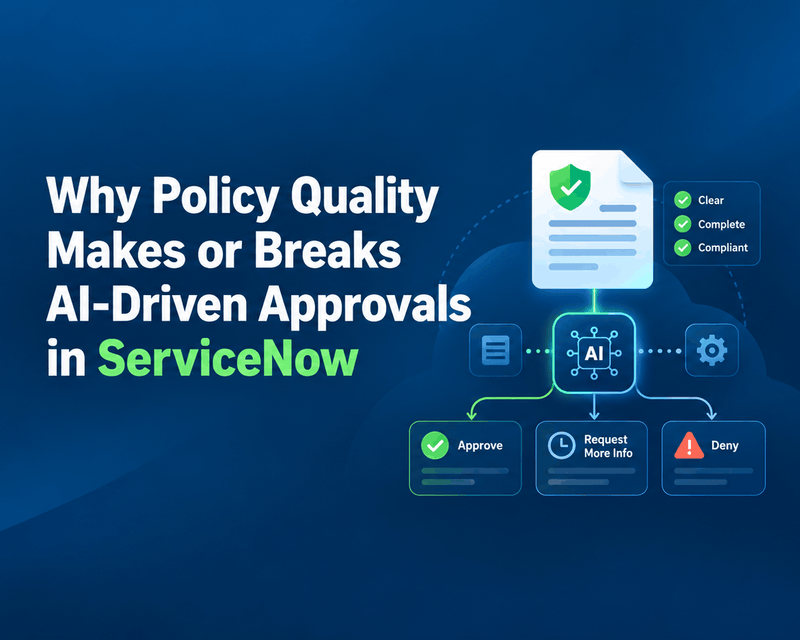
Why Policy Quality Makes or Breaks AI-Driven Approvals in ServiceNow
Why Policy Quality Makes or Breaks AI-Driven Approvals in ServiceNow AI can make approval decisions in seconds. It can also make the wrong ones, consistently, if the policy behind them is vague. As enterprises bring AI-driven approvals into ServiceNow, attention goes straight to automation: faster decisions, fewer manual tasks, shorter approval queues. One factor gets […]
read more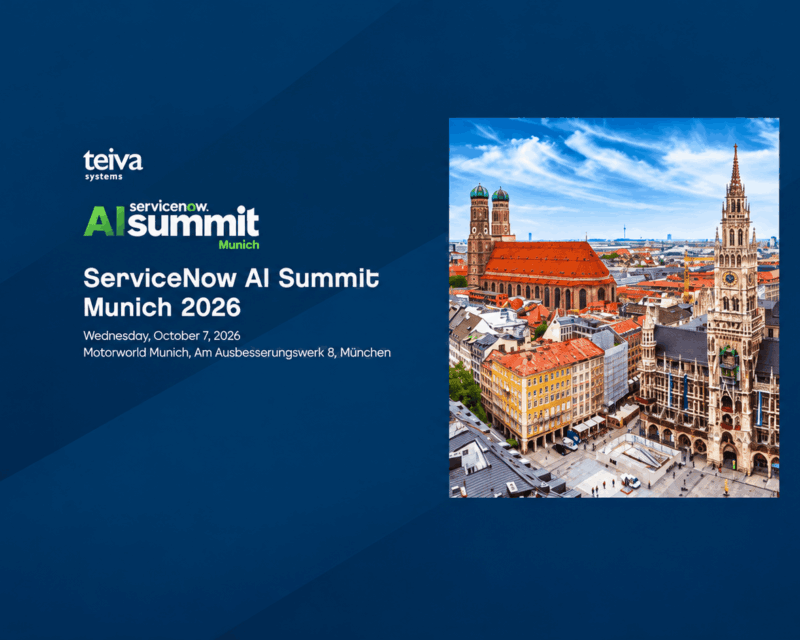
Teiva Systems at ServiceNow AI Summit 2026 — Munich
On October 7, 2026, Teiva Systems joined the ServiceNow AI Summit in Munich, where industry leaders, innovators, and the ServiceNow community came together to explore the next chapter of enterprise AI and intelligent automation.
read more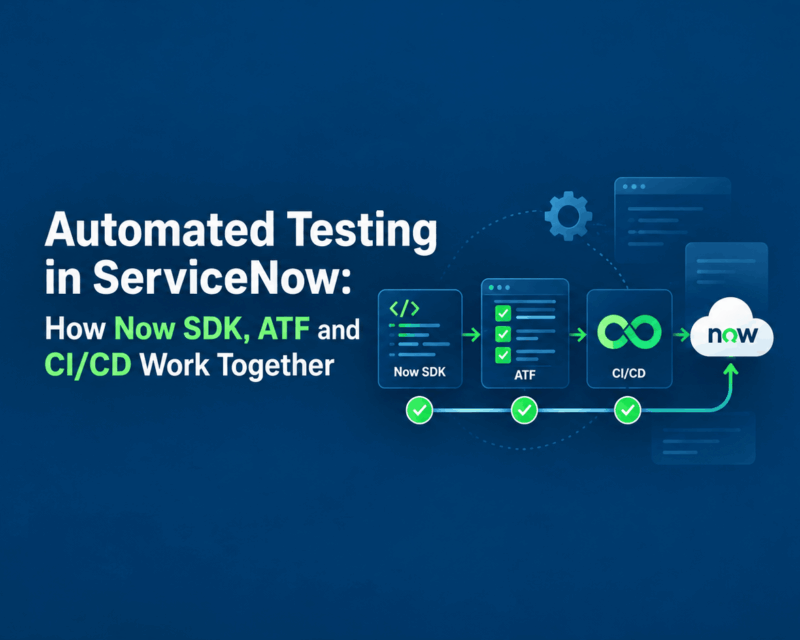
Automated Testing in ServiceNow: How Now SDK, ATF and CI/CD Work Together
Automated Testing in ServiceNow: How Now SDK, ATF and CI/CD Work Together Automated testing in ServiceNow is becoming more important, not because ATF or CI/CD are new concepts, but because the way they can work together is changing the development lifecycle itself. As ServiceNow moves toward a more source-driven engineering model, testing is becoming less […]
read more