
Enhancing Fintech Security with ServiceNow SecOps & Risk Management
Discover how AI-driven fintech security automation can proactively neutralize cyber threats and safeguard compliance.
AI-driven fintech security automation is essential to proactively counter cyber threats and ensure robust compliance in financial services.
The reality? The financial sector accounts for 29% of all cyberattacks, making it the most targeted industry globally.
A single security incident can lead to:
- Massive financial losses due to fraud or service disruption.
- Regulatory penalties for failing to protect customer data.
- Loss of customer trust, which is even harder to recover than money.
Yet, many fintech firms still rely on outdated, manual security processes that slow down threat detection and response.
The solution? ServiceNow Security Operations (SecOps).
By automating threat detection, accelerating incident response, and integrating risk management, ServiceNow helps fintech firms:
- Identify and neutralize threats faster
- Reduce compliance risks with automated reporting
- Improve security collaboration between IT and risk teams

In this article, we’ll explore:
- The biggest security risks fintech firms face
- How ServiceNow SecOps automates security & risk management
- How Teiva Systems strengthened its cybersecurity with ServiceNow
For more insights into fintech automation, check out our previous article on fintech interoperability.
1. The Biggest Security Challenges in Fintech
Fraud, Phishing, and Financial Cybercrime
- Identity fraud & account takeovers are on the rise, targeting fintech platforms.
- Phishing attacks trick customers and employees into revealing credentials.
- Fraudulent transactions cost fintech firms billions annually.
The problem? Many fintech firms react to fraud after it happens instead of preventing it.
Data Breaches & Compliance Risks
- A single data breach can expose millions of customer records.
- Regulatory penalties (GDPR, PCI-DSS, SOX) are steep for mishandling sensitive data.
- Security audits are time-consuming and require extensive manual effort.
The problem? Many fintech firms rely on fragmented security tools, making compliance tracking difficult.
Slow Threat Response Times
- Security alerts often go unnoticed due to alert fatigue.
- Incident response times are too slow, increasing the damage from attacks.
- Manual processes delay remediation, increasing financial losses.
The problem? Without automation, fintech firms struggle to keep up with modern cyber threats.
2. How ServiceNow SecOps Strengthens Fintech Security
ServiceNow Security Operations (SecOps) offers a fully automated, AI-driven approach to cybersecurity, helping fintech companies stay ahead of threats.
Automated Threat Intelligence & Incident Response
- AI-powered threat detection instantly flags suspicious activity.
- Automated incident response reduces human intervention and speeds up mitigation.
- Threat scoring prioritizes high-risk incidents so teams focus on what matters most.
Example: If a fintech firm detects unusual login activity, ServiceNow automatically triggers an alert, blocks the account, and notifies security teams—all without manual intervention.
Vulnerability Management & Automated Patching
- ServiceNow continuously scans for security gaps across IT infrastructure.
- Automated patch management ensures vulnerabilities are fixed before they’re exploited.
- Real-time risk assessment helps IT teams prioritize critical patches.
Example: If a fintech company’s payment system has an unpatched security flaw, ServiceNow automatically identifies the risk, recommends a fix, and triggers an automated patch update.
Security-Orchestrated Workflows for Faster Response
- Security, IT, and compliance teams collaborate in real time via ServiceNow’s unified platform.
- Playbooks automate response actions to reduce delays.
- Machine learning continuously improves security protocols based on past incidents.
Example: If a compliance violation is detected in a financial transaction, ServiceNow automatically alerts the risk management team and initiates a remediation workflow.
3. Case Study: How Teiva Systems Secured Its Fintech Platform with ServiceNow
The Challenge: Rising Cyber Risks & Compliance Gaps
Teiva Systems, a fintech technology provider, faced major security concerns:
- Increasing fraud attempts and phishing attacks.
- Lack of automated incident response, slowing security operations.
- Regulatory compliance tracking was fragmented.
The Solution: ServiceNow SecOps Implementation
By deploying ServiceNow Security Operations, Teiva Systems:
- Automated threat detection, reducing security response time by 50%.
- Implemented real-time risk scoring, prioritizing critical vulnerabilities.
- Integrated SecOps with ITSM, improving collaboration between IT and security teams.
The Results: A Stronger, More Resilient Security Posture
- 40% reduction in security breaches.
- 50% faster threat resolution times.
- 100% audit readiness with automated compliance tracking.
Want more details? Read the full Teiva Systems case study.
4. Best Practices for Fintech Security with ServiceNow
Automate Threat Detection & Incident Response
- Use AI-driven threat intelligence to monitor cybersecurity risks in real-time.
- Set up automated response playbooks to reduce human intervention.
- Ensure security alerts are prioritized based on severity and business impact.
Integrate Security & Compliance Operations
- Unify security, IT, and compliance teams with a centralized risk dashboard.
- Automate compliance checks to avoid regulatory fines.
- Use ServiceNow SecOps to enforce security policies across all fintech applications.
Continuously Monitor & Patch Vulnerabilities
- Use ServiceNow’s vulnerability management tools to identify and remediate security flaws.
- Schedule automated patches to keep systems up to date.
- Ensure fintech applications comply with PCI-DSS & GDPR regulations.
5. The Future of Fintech Security: AI-Driven Risk Management
Looking ahead, fintech firms will rely on AI and hyperautomation to:
- Predict security threats before they happen.
- Use machine learning to improve fraud detection.
- Automate compliance audits in real time.
Fintech companies that embrace AI-driven security today will stay ahead of cybercriminals—those that don’t will remain vulnerable.
Up next: Learn how ServiceNow is shaping the future of fintech automation and compliance in our next article: ServiceNow and the Future of Fintech: Trends to Watch.
For more insights, check out our ServiceNow for Fintech Series:
- Why Fintech Companies Need ServiceNow
- Automating Fintech Workflows
- ServiceNow for Fintech Compliance
- ITSM in Fintech: Best Practices
- The Future of Fintech & ServiceNow
Oleksii Konakhovych, CTO, Mar 12, 2025
Eager to take the next step? Contact us today!
Latest Articles
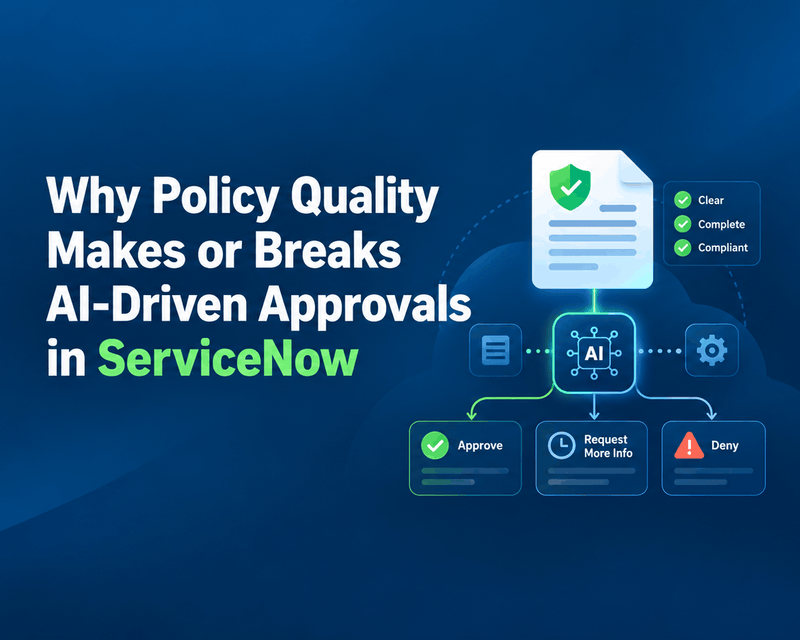
Why Policy Quality Makes or Breaks AI-Driven Approvals in ServiceNow
Why Policy Quality Makes or Breaks AI-Driven Approvals in ServiceNow AI can make approval decisions in seconds. It can also make the wrong ones, consistently, if the policy behind them is vague. As enterprises bring AI-driven approvals into ServiceNow, attention goes straight to automation: faster decisions, fewer manual tasks, shorter approval queues. One factor gets […]
read more
Teiva Systems at ServiceNow AI Summit 2026 — Munich
On October 7, 2026, Teiva Systems joined the ServiceNow AI Summit in Munich, where industry leaders, innovators, and the ServiceNow community came together to explore the next chapter of enterprise AI and intelligent automation.
read more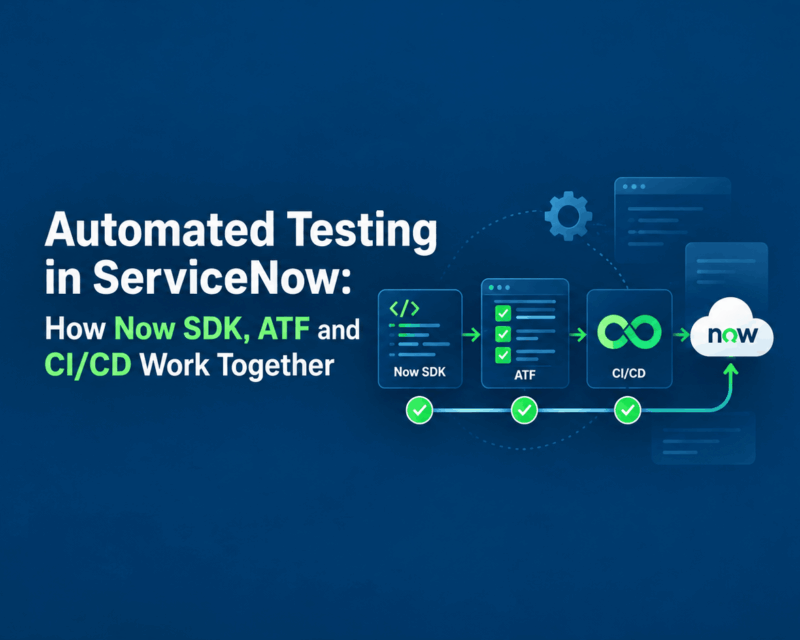
Automated Testing in ServiceNow: How Now SDK, ATF and CI/CD Work Together
Automated Testing in ServiceNow: How Now SDK, ATF and CI/CD Work Together Automated testing in ServiceNow is becoming more important, not because ATF or CI/CD are new concepts, but because the way they can work together is changing the development lifecycle itself. As ServiceNow moves toward a more source-driven engineering model, testing is becoming less […]
read more