
IT Service Management (ITSM) in Fintech: Best Practices & Use Cases
Introduction: The Need for Scalable ITSM in Fintech
Efficient IT Service Management (ITSM) is crucial for fintech companies operating in high-stakes digital environments, where downtime isn’t just inconvenient—it’s a significant business risk. Fintech customers demand instant transactions, uninterrupted 24/7 service, and robust security. At the same time, fintech IT teams must navigate complex compliance requirements, respond swiftly to security incidents, and manage integrations across multiple financial platforms.
Many fintech firms still rely on manual ticketing systems, reactive IT support, and disconnected workflows, leading to:
- Delayed incident resolution that frustrates customers
- High operational costs from inefficient IT processes
- Increased security risks due to slow response times
- Siloed teams working in isolation instead of collaboration
That’s why fintech companies need AI-powered, automated ITSM solutions like ServiceNow to:
- Reduce downtime and improve service delivery
- Proactively resolve IT issues before they escalate
- Streamline IT operations with automation and AI-driven insights

In this article, we’ll explore:
- Why scalable ITSM is critical for fintech growth
- Proactive vs. reactive IT service management
- How Teiva Systems used ServiceNow ITSM to optimize incident resolution and SLA management
For a deep dive into how fintech firms are automating IT workflows, check out our previous article on ServiceNow automation.
1. Why Fintech Firms Need AI-Driven ITSM Solutions
Downtime is Costly and Customer Expectations are Higher Than Ever
Fintech services—from mobile banking to online trading—must be available 24/7.
-
- A single hour of downtime can cost a fintech firm millions in lost transactions.
- Customers expect immediate issue resolution—and will leave if they don’t get it.
- Traditional ITSM tools aren’t fast enough to handle real-time incident management.
- The Fix: Automated, AI-powered ITSM detects and resolves issues before customers even notice them.
-
The Need for IT Scalability in a Rapidly Growing Industry
Fintech companies grow fast. But as they scale, their IT infrastructure often can’t keep up.
- More users = more support tickets = overwhelmed IT teams.
- New integrations = more complexity = higher risk of failures.
- Growing operations = more compliance requirements.
The Fix: AI-driven ITSM scales seamlessly, ensuring IT teams can handle growth without increasing overhead costs.
Security & Compliance Risks in IT Operations
- Fintech firms must comply with PCI-DSS, GDPR, and banking regulations.
- Slow IT response to security incidents increases risk exposure.
- Manual compliance tracking leads to missed regulatory deadlines.
The Fix: ServiceNow automates compliance tracking and risk management, reducing human error and regulatory risks.
2. Proactive vs. Reactive IT Service Management: What’s the Difference?
Most financial technology companies initially rely on reactive IT service management, addressing problems only after they occur. While suitable for smaller operations, this approach can lead to significant challenges during growth.
Reactive ITSM: The Old Way
A customer reports an issue → IT investigates manually → Fix is applied after downtime occurs.
Problem: This approach causes delays, impacts SLAs, and frustrates customers.
Proactive ITSM: The ServiceNow Approach
ServiceNow’s AI-driven ITSM detects issues in real-time → Predicts failures before they occur → Automates resolution processes.
- IT teams act before users notice a problem.
- Automated workflows speed up resolution.
- Customer experience improves drastically.
The Future? Predictive ITSM that prevents downtime altogether.
3. How Teiva Systems Transformed IT Service Management with ServiceNow
Teiva Systems, a leading financial technology provider, encountered three major IT service management challenges:
- Slow incident resolution affecting customer satisfaction
- High IT support costs due to manual processes
- Compliance risks from outdated tracking systems
The ServiceNow ITSM Solution
- Automated ticketing reduced service request backlog by 50% AI-driven issue categorization cut resolution time by 40%
- Integrated compliance tracking ensured 100% audit readiness
The Results: Faster IT, Lower Costs, Happier Customers
- 50% reduction in IT support costs
- Faster service request fulfillment, improving customer experience
- Stronger SLA performance & real-time compliance tracking
4. ITSM Best Practices for Fintech Companies
Automate IT Workflows Wherever Possible
- Eliminate manual ticket assignments with AI-based automation.
- Use chatbots and self-service portals to reduce IT support workload.
- Automate compliance documentation and SLA tracking.
Integrate ITSM with Security & Compliance Systems
- Ensure ITSM and Security Operations (SecOps) work together to track and mitigate threats faster.
- Automate compliance enforcement by integrating ITSM with GRC (Governance, Risk, and Compliance) tools.
Use AI to Predict and Prevent Incidents
- Analyze IT service patterns to predict issues before they escalate.
- Use ServiceNow’s Virtual Agent to handle repetitive service requests automatically.
Optimize ITSM for Scalability
- Cloud-based ITSM ensures fintech firms can scale operations without IT bottlenecks.
- Flexible automation rules adapt as fintech services grow.
Read the full Teiva Systems case study.
5. The Future of ITSM in Fintech: AI & Hyperautomation
Looking ahead, AI and hyperautomation will redefine IT service management in fintech:
- AI-driven self-healing IT infrastructure will fix issues before they affect customers.
- Advanced predictive analytics will eliminate downtime altogether.
- Cross-functional automation will connect IT, security, and compliance teams seamlessly.
Companies that adopt next-generation technology today will lead tomorrow, while those that delay risk falling behind.
Next up: Learn how ServiceNow’s Integration Hub is streamlining fintech workflows in our next article: How ServiceNow’s Integration Hub Improves Fintech Interoperability.
For more insights, check out our ServiceNow for Fintech Series:
- Why Fintech Companies Need ServiceNow
- Automating Fintech Workflows
- ServiceNow for Fintech Compliance
- Enhancing Fintech Security with ServiceNow
- The Future of Fintech & ServiceNow
Let’s talk! Get a free consultation on how ServiceNow can transform your IT service management.
Oleksii Konakhovych, CTO, Mar 07, 2025
Eager to take the next step? Contact us today!
Latest Articles
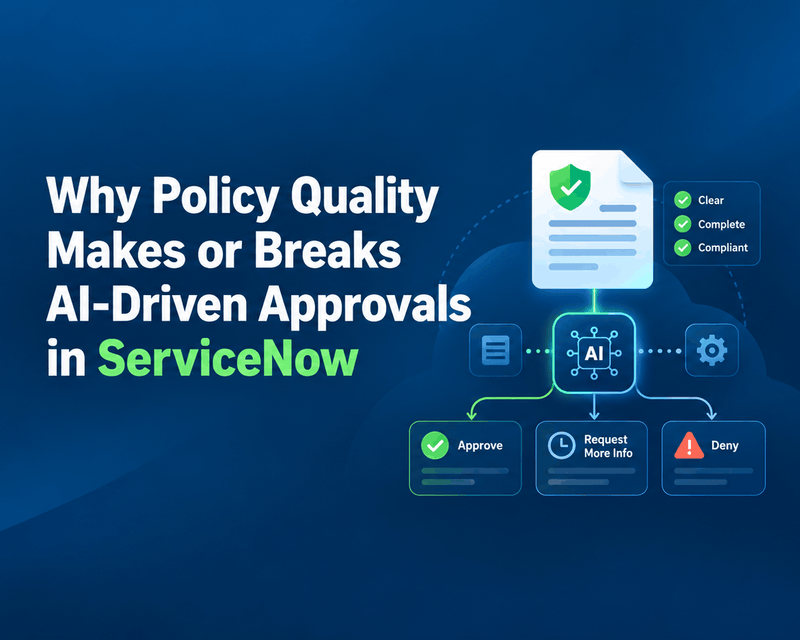
Why Policy Quality Makes or Breaks AI-Driven Approvals in ServiceNow
Why Policy Quality Makes or Breaks AI-Driven Approvals in ServiceNow AI can make approval decisions in seconds. It can also make the wrong ones, consistently, if the policy behind them is vague. As enterprises bring AI-driven approvals into ServiceNow, attention goes straight to automation: faster decisions, fewer manual tasks, shorter approval queues. One factor gets […]
read more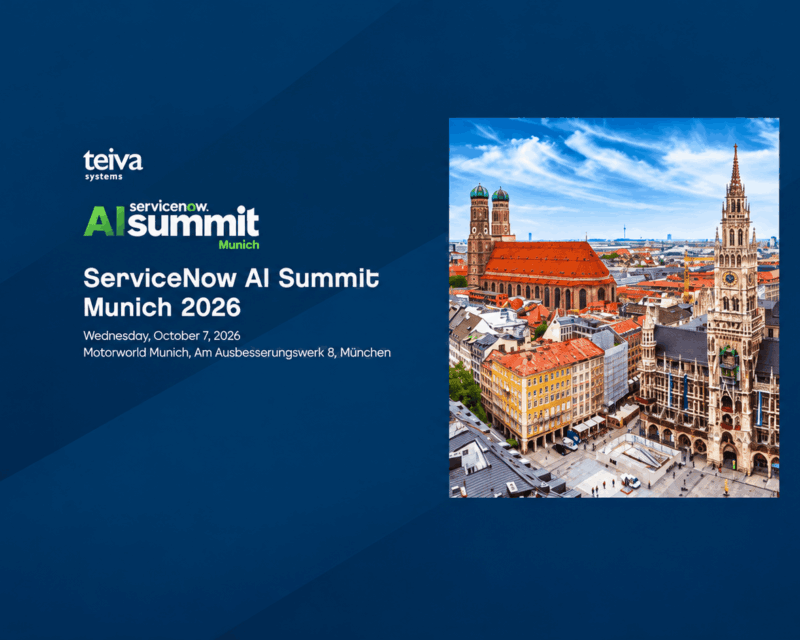
Teiva Systems at ServiceNow AI Summit 2026 — Munich
On October 7, 2026, Teiva Systems joined the ServiceNow AI Summit in Munich, where industry leaders, innovators, and the ServiceNow community came together to explore the next chapter of enterprise AI and intelligent automation.
read more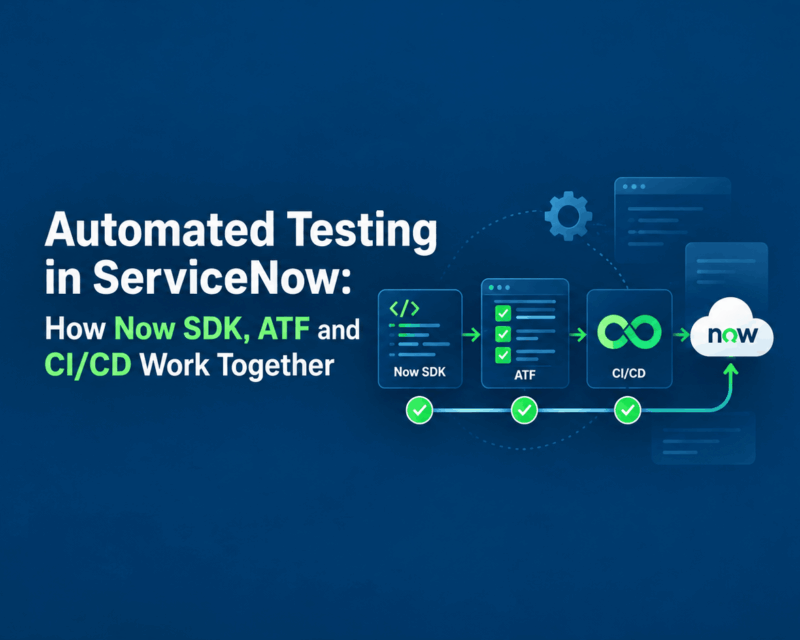
Automated Testing in ServiceNow: How Now SDK, ATF and CI/CD Work Together
Automated Testing in ServiceNow: How Now SDK, ATF and CI/CD Work Together Automated testing in ServiceNow is becoming more important, not because ATF or CI/CD are new concepts, but because the way they can work together is changing the development lifecycle itself. As ServiceNow moves toward a more source-driven engineering model, testing is becoming less […]
read more