
ServiceNow for Fintech Compliance: Simplifying Regulatory Challenges
Introduction: Why Compliance is a Make-or-Break Factor in Fintech
In fintech, compliance isn’t just another box to check—it’s a business-critical necessity. With global financial regulations tightening and cyber threats on the rise, fintech firms need a scalable solution like ServiceNow for Fintech Compliance to ensure regulatory adherence while maintaining seamless operations.
But here’s the problem:
- Manual compliance tracking is slow and error-prone.
- Regulations like GDPR, PCI-DSS, and SOX are constantly evolving.
- Security incidents and compliance failures can lead to hefty fines and reputational damage.
For fintech companies operating at scale, staying ahead of compliance challenges requires automation, real-time tracking, and integrated risk management. That’s exactly what ServiceNow Governance, Risk, and Compliance (GRC) delivers.

In this article, we’ll cover:
- Why fintech compliance is becoming more complex
- How ServiceNow automates compliance tracking & risk management
- How Teiva Systems leveraged ServiceNow to ensure regulatory readiness
For a broader look at how fintech firms are automating workflows, check out our previous article on IT workflow automation.
1. The Growing Complexity of Fintech Compliance
The Global Regulatory Landscape is Evolving
Fintech companies operate in a highly regulated environment, often navigating multiple compliance frameworks, including:
- GDPR – Data privacy laws that affect customer data handling.
- PCI-DSS – Security standards for processing payment transactions.
- SOX – Regulations for financial reporting and fraud prevention.
- FCA & SEC Guidelines – Regulations for trading and investment platforms.
Staying compliant means constantly monitoring regulatory changes, ensuring operational alignment, and proving compliance during audits.
The Risks of Compliance Failures in Fintech
When compliance isn’t managed effectively, fintech firms face:
- Expensive fines: GDPR violations alone can cost companies up to €20 million or 4% of annual revenue.
- Customer trust erosion: A single compliance breach can drive customers away.
- Operational disruptions: Compliance failures often lead to service interruptions and regulatory scrutiny.
Manually tracking compliance is no longer sustainable. Fintech companies need real-time automation, visibility, and proactive risk management.
2. How ServiceNow GRC Automates Compliance & Risk Management
ServiceNow’s Governance, Risk, and Compliance (GRC) module offers a centralized, AI-driven compliance platform that automates regulatory tracking and integrates with IT and security systems.
Real-Time Compliance Monitoring
- Automated compliance tracking eliminates the need for manual spreadsheets.
- Real-time dashboards provide instant visibility into compliance gaps.
- AI-driven risk assessment prioritizes areas needing attention.
Example: If a fintech firm processes credit card payments, ServiceNow automatically monitors PCI-DSS compliance, flagging potential risks and ensuring adherence.
Policy & Audit Automation
- Pre-built regulatory frameworks help firms align with GDPR, PCI-DSS, and other standards.
- Automated audit trails ensure fintech companies are always audit-ready.
- Centralized policy management keeps all compliance documents and updates in one place.
Example: Instead of scrambling before an audit, ServiceNow continuously tracks and documents compliance activities, ensuring fintech firms are always prepared.
Integrated Risk Management
- AI-powered risk scoring helps fintech firms prioritize security vulnerabilities.
- Automated incident response ensures compliance-related security events are handled immediately.
- Cross-functional collaboration between IT, security, and compliance teams.
Example: If a fintech company detects a data breach, ServiceNow automatically triggers an incident response plan, notifying compliance officers and IT teams.
3. Case Study: How Teiva Systems Achieved Compliance Excellence with ServiceNow
The Challenge: Regulatory Burdens & Compliance Tracking Issues
Teiva Systems, a fintech technology provider, struggled with:
- Manual compliance tracking that was time-consuming and error-prone.
- Siloed compliance data spread across different departments.
- Slow audit preparation, leading to compliance risks.
The Solution: Implementing ServiceNow GRC for Automated Compliance
By deploying ServiceNow GRC, Teiva Systems:
- Automated audit reporting, reducing preparation time by 70%.
- Centralized compliance tracking, ensuring full regulatory visibility.
- Integrated IT and compliance workflows, improving efficiency.
The Results: A Streamlined, Audit-Ready Fintech Compliance Strategy
- 50% reduction in compliance-related costs.
- 40% faster risk assessment & response times.
- 100% compliance readiness with real-time tracking.
Want more details? Read the full Teiva Systems case study.
4. Compliance Best Practices for Fintech Firms Using ServiceNow
Automate Compliance from Day One
- Implement automated compliance tracking instead of relying on manual processes.
- Use AI-driven risk assessments to prioritize regulatory actions.
- Set up real-time alerts for compliance violations.
Integrate Compliance with IT & Security Teams
- Use ServiceNow GRC alongside ITSM & SecOps to create a unified compliance ecosystem.
- Ensure security incidents automatically trigger compliance reviews to reduce risks.
- Align compliance policies with IT infrastructure changes to prevent violations.
Leverage Predictive Compliance Analytics
- Identify compliance gaps before they become problems.
- Use machine learning to detect patterns and predict risk areas.
- Generate automated compliance reports for internal and external audits.
Prepare for Audits with Continuous Monitoring
- Ensure all compliance activities are documented in real-time.
- Use ServiceNow’s policy automation to keep track of regulatory updates.
- Run automated compliance checks on a scheduled basis.
5. The Future of Compliance in Fintech: AI & Continuous Compliance
Looking ahead, fintech firms will rely on AI-driven compliance strategies to:
- Automate regulatory updates and instantly adjust policies.
- Use real-time compliance scoring to predict potential risks.
- Integrate compliance data with external regulators for instant reporting.
Companies that invest in compliance automation today will avoid regulatory pitfalls tomorrow.
Up next: Learn how fintech companies seamlessly integrate ServiceNow with banking systems and fintech applications in our next article: How ServiceNow’s Integration Hub Improves Fintech Interoperability.
Final Thoughts: Is Your Fintech Firm Audit-Ready?
For more insights, check out our ServiceNow for Fintech Series:
- Why Fintech Companies Need ServiceNow
- Automating Fintech Workflows
- ITSM in Fintech: Best Practices
- Enhancing Fintech Security with ServiceNow
- The Future of Fintech & ServiceNow
Let’s talk! Get a free consultation on how ServiceNow can automate your compliance strategy.
Oleksii Konakhovych, CTO, Mar 06, 2025
Eager to take the next step? Contact us today!
Latest Articles
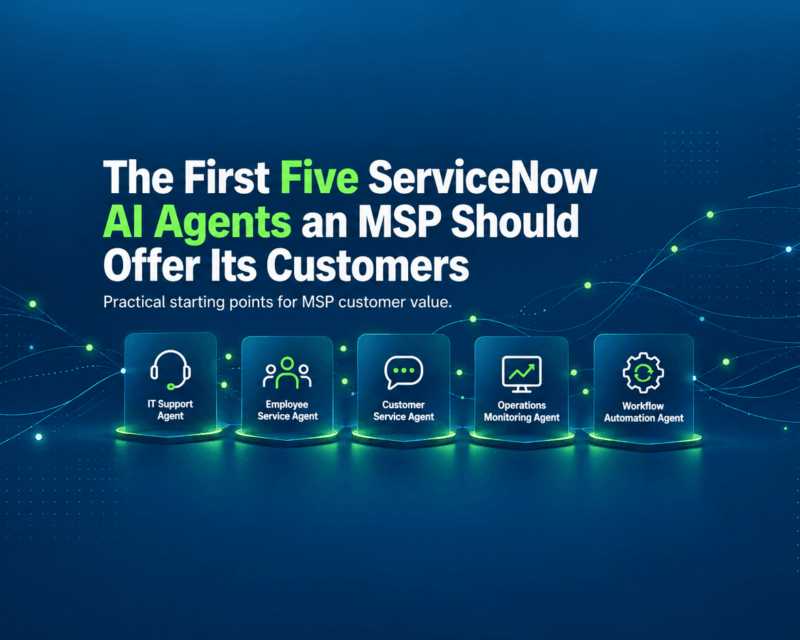
The First Five ServiceNow AI Agents an MSP Should Offer Its Customers
Managed service providers can now package ServiceNow AI agents as repeatable, recurring services — moving from ticket-response capacity to managed outcome delivery. Here is what the first five offerings look like, how each creates value, and what to get right before deploying them.
read more
How to Test a ServiceNow AI Agent Before Giving It Production Access
A successful demonstration proves that an agent can perform a task under specific conditions. It doesn’t prove the agent will behave correctly when faced with incomplete data, conflicting instructions, restricted records, broken integrations, or unexpected user requests.
read more
ServiceNow AI Readiness Assessment: 25 Questions to Answer Before Deploying AI Agents
Your AI agent is only as reliable as the environment it operates in. This assessment covers 25 essential questions across five areas to help IT leaders, architects, and platform owners prepare for production.
read more