
Why Policy Quality Makes or Breaks AI-Driven Approvals in ServiceNow
AI can make approval decisions in seconds. It can also make the wrong ones, consistently, if the policy behind them is vague.
As enterprises bring AI-driven approvals into ServiceNow, attention goes straight to automation: faster decisions, fewer manual tasks, shorter approval queues. One factor gets far less attention: the quality of the policies behind those decisions.
An AI system can interpret business rules, identify approval conditions and decide when a person should step in. But it is only as reliable as the policy it reads. When policies are poorly written, AI does not fix the problem. It can turn existing ambiguity into inconsistent decisions at scale.
For organizations adopting ServiceNow Intelligent Approvals, policy quality is more than a documentation concern. It is the foundation for automation accuracy, governance and operational trust.
This article covers:
- Why approval policies now drive decisions directly
- The hidden risks of poor policy quality
- Five tests every AI-ready approval policy should pass
- How to test, govern and measure policy-driven approvals
From Approval Workflows to Policy-Driven Decisions
Traditional approval processes rely on predefined workflow conditions. A company might require manager authorization for purchases above a set amount. When the threshold changes, administrators or developers update the workflow logic.
This works, but keeping business policy and technical configuration in sync gets harder over time.
ServiceNow Intelligent Approvals introduces a different model. Instead of translating every requirement into manually configured conditions, organizations provide natural-language policy documents that AI interprets to evaluate requests. Depending on how the policy applies, the system can:
- Approve requests that clearly satisfy the policy
- Reject requests that clearly violate defined requirements
- Route ambiguous or exceptional cases to human approvers
- Use updated policy documentation to guide later evaluations
ServiceNow describes this approach in its Intelligent Approvals documentation.
The upside is significant: business policy becomes a direct input into operational decisions. The consequence matters just as much. If the policy document is the decision reference, improving the policy is how you improve the automation.
The Hidden Risks of Poor Policy Quality
Many enterprise policies were written for people, not machines. They contain broad recommendations, undefined exceptions, overlapping responsibilities and language that assumes the reader knows what was meant.
A human reviewer fills those gaps with experience, a quick conversation or organizational context. An AI-driven approval process needs the answer written down.
Example: a procurement policy
“Employees may purchase necessary equipment at a reasonable cost with appropriate management approval.”
It reads well, but it leaves the decisive questions open:
- What counts as necessary equipment?
- What amount is reasonable?
- Which manager has approval authority?
- Do different rules apply to remote employees or contractors?
Without answers, several interpretations are possible. The structured version below defines eligibility, a threshold and an escalation path, so it is easier to test, interpret and apply consistently.
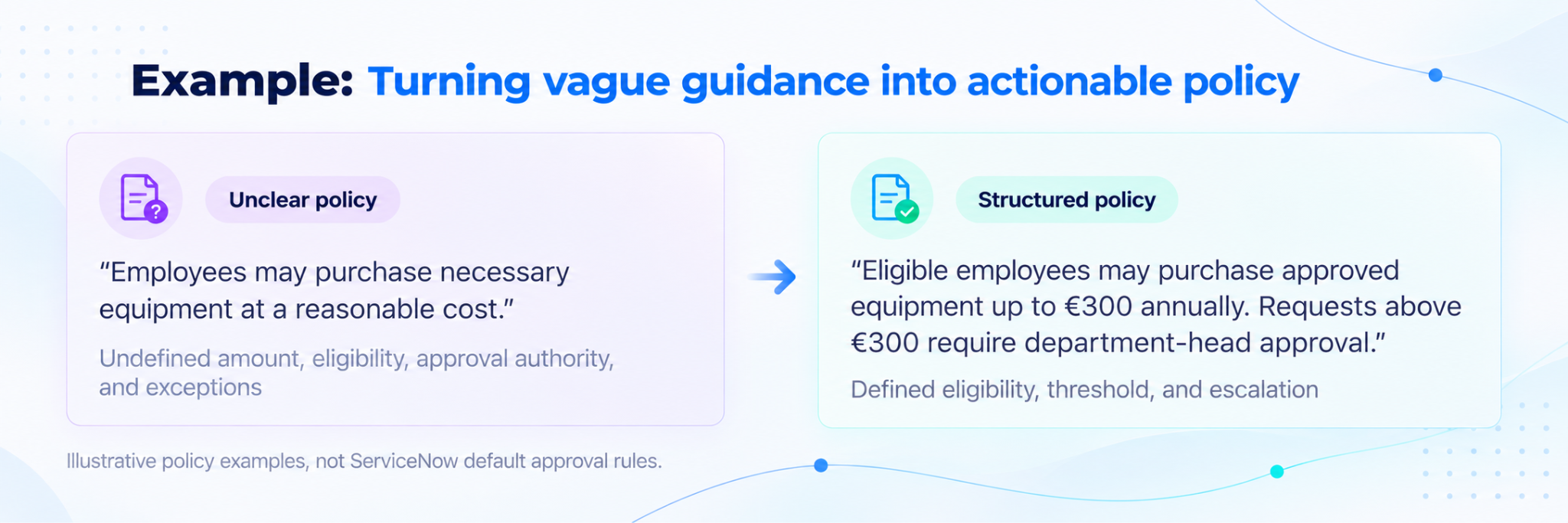
Figure 1. Turning vague guidance into an actionable, testable policy (illustrative).
Four operational risks of vague policies
- Inconsistent decisions: similar requests get different outcomes under ambiguous requirements
- Unnecessary escalations: the policy lacks the detail for an automated decision, so more cases go to people
- Compliance exposure: outdated or conflicting rules shape business approvals
- Lower employee trust: users cannot understand why apparently identical requests are treated differently
Automation alone cannot solve these problems. They require better policy design.
Five Characteristics of AI-Ready Approval Policies
Not every policy is ready to drive automated decisions. Before implementing Intelligent Approvals, check each policy against five characteristics.
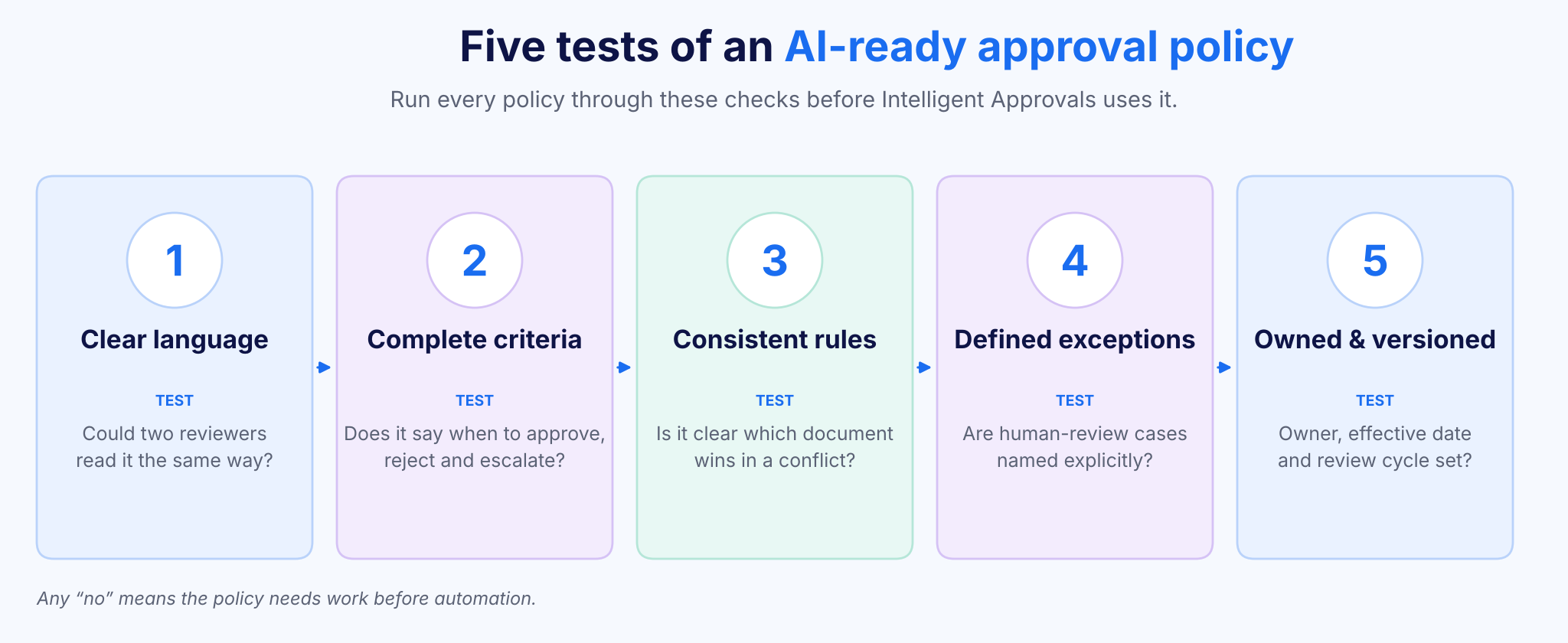
Figure 2. Five tests every approval policy should pass before automation.
1. Clear and unambiguous language
Requirements should be direct and specific. Phrases such as “where appropriate,” “reasonable expenses” or “subject to management discretion” work in broad guidance, but not when an automated decision depends on their meaning.
AI-ready policies set boundaries. Instead of “additional approval may be required for expensive purchases,” define the monetary threshold, currency, organizational scope and responsible approval role.
2. Complete decision criteria
A good approval policy says not only what is permitted, but when restrictions apply. A travel expense policy, for example, may need to define:
- Eligible employees and request categories
- Spending limits and permitted expense types
- Required supporting documentation
- Exceptions requiring additional authorization
- Conditions that trigger rejection or human review
Missing criteria open a gap between what the organization intends and what the AI can confidently evaluate.
3. Consistent rules across documents
Large organizations keep policies across departments, business units and regions. A finance policy may set one spending threshold while an HR document cites another. A regional policy may add an exception without saying whether it overrides the global rule.
These contradictions become serious when AI treats documents as authoritative. Set a clear policy hierarchy, state which document takes precedence and remove conflicting requirements before deployment.
4. Defined exceptions and escalation paths
Not every request should get an automatic decision. Unusual circumstances, incomplete information, regulatory sensitivity and discretionary judgment all call for a person. Strong policies name these situations explicitly.
For example, purchases above a standard threshold may need department-head review rather than automatic rejection. ServiceNow Intelligent Approvals supports routing cases it cannot resolve confidently back to existing human approval workflows, making oversight part of a controlled process rather than a workaround.
5. Version control and ownership
A policy that was accurate six months ago may no longer match the business. Thresholds change, regulations evolve, responsibilities shift. Every policy needs:
- A designated owner
- An effective date
- A review cycle
- A documented change history
Without these controls, you risk automating decisions based on outdated guidance.
How Policy Quality Shapes ServiceNow Intelligent Approvals
Policy quality affects every stage of configuring, testing and operating Intelligent Approvals. According to ServiceNow’s implementation guidance, organizations can upload policy documents, examine AI-generated policy areas, test decision behavior and review recommendations for improving the underlying documentation.
That turns policy improvement into an iterative engineering process, not a one-time compliance exercise:
- Policy document: business rules, thresholds and exceptions
- AI interpretation: identification of applicable approval criteria
- Test scenarios: verify expected decisions and escalations
- Human validation: review conflicts, gaps and unexpected outcomes
- Refine and publish: update the policy and deploy approved changes
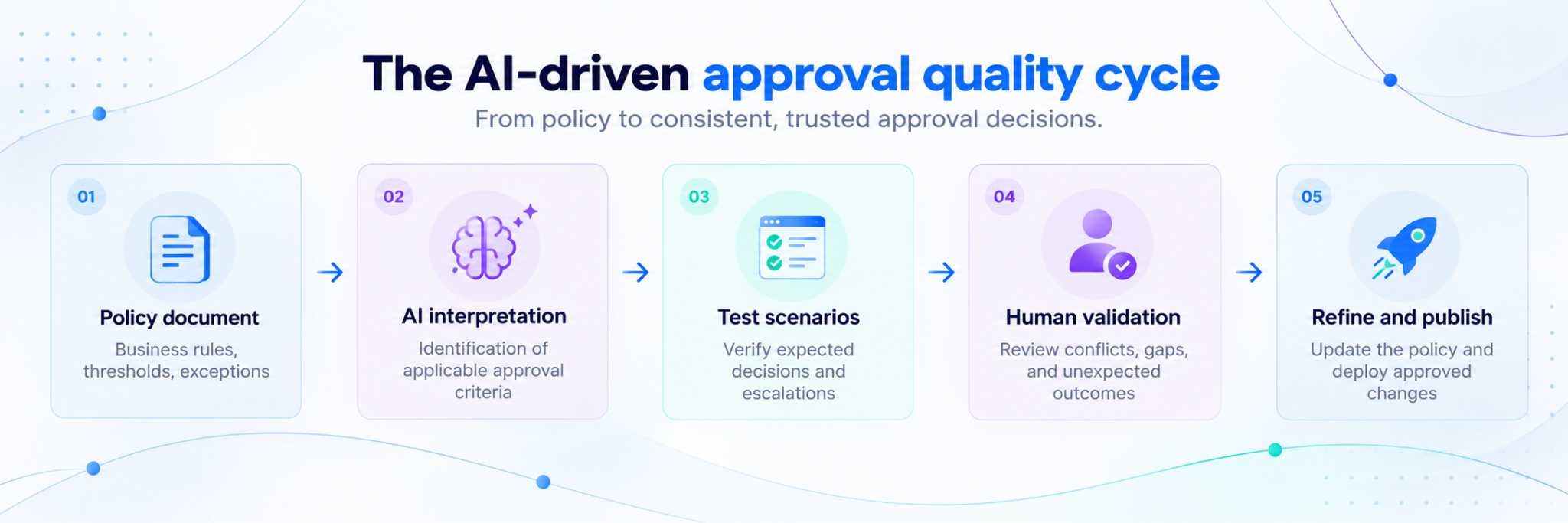
Figure 3. Recommended improvement cycle, based on ServiceNow’s documented policy-building process.
The objective is not the highest possible number of automatic approvals. It is making sure every automated decision reflects an approved business requirement. An organization can automate thousands of requests and still face governance problems if those decisions rest on incomplete or contradictory rules.
Automation volume measures activity. Decision accuracy measures whether automation can be trusted.
Why Testing Must Include the Policy, Not Just the Workflow
Traditional workflow testing checks whether configured conditions trigger the expected actions. AI-driven policy evaluation adds a layer: you must also test how the system interprets the policy itself.
Example: a software purchase request
A thorough test strategy covers:
- Straightforward approvals
- Threshold violations
- Missing documentation
- Unauthorized requesters
- Conflicting exceptions
- Cases where the policy gives no definitive answer
Three questions every test should answer
- Does the system make the correct decision? The outcome must match the organization’s approved requirements.
- Does the system recognize uncertainty? Ambiguous cases should follow the intended human-review path, not be forced into an unsupported decision.
- Can the organization explain the outcome? Reviewers need decision records and policy context to investigate unexpected behavior.
ServiceNow documents that Intelligent Approvals records approval decisions and distinguishes automated outcomes from human approvals through approval-related records and work notes.
At Teiva Systems, we stress structured validation before AI capabilities reach production. Our article ServiceNow AI Agent Testing: 7 Checks Before Production explains why testing authority boundaries, failure scenarios, permissions and human oversight is essential. The same applies here: test not only the expected path, but also the situations where the system must not decide on its own.
Policy Quality Is Also an AI Governance Issue
When AI approves expenses, access requests or procurement activity, its decisions become part of your governance environment. That raises clear accountability questions:
- Who owns the policy that influences automated decisions?
- Who authorizes changes to it?
- Who investigates disputed outcomes?
- Who decides whether a decision category is suitable for automation?
These responsibilities should sit with clearly identified business and governance owners. Organizations should also set the boundaries of AI authority: high-risk requests, sensitive access changes, significant financial commitments and regulatory exceptions may need mandatory human authorization even when the policy language looks unambiguous.
Our related article, The Enterprise AI Governance Blueprint for ServiceNow, explains how to embed ownership, controls, monitoring and accountability into enterprise AI operations.
Responsible approval automation is not about removing people from every decision. It lets AI handle clearly defined routine cases while preserving meaningful oversight where business judgment matters.
Measuring Whether Policy Improvements Actually Work
Once Intelligent Approvals is live, you need visibility into how well your policies perform. Six indicators help:
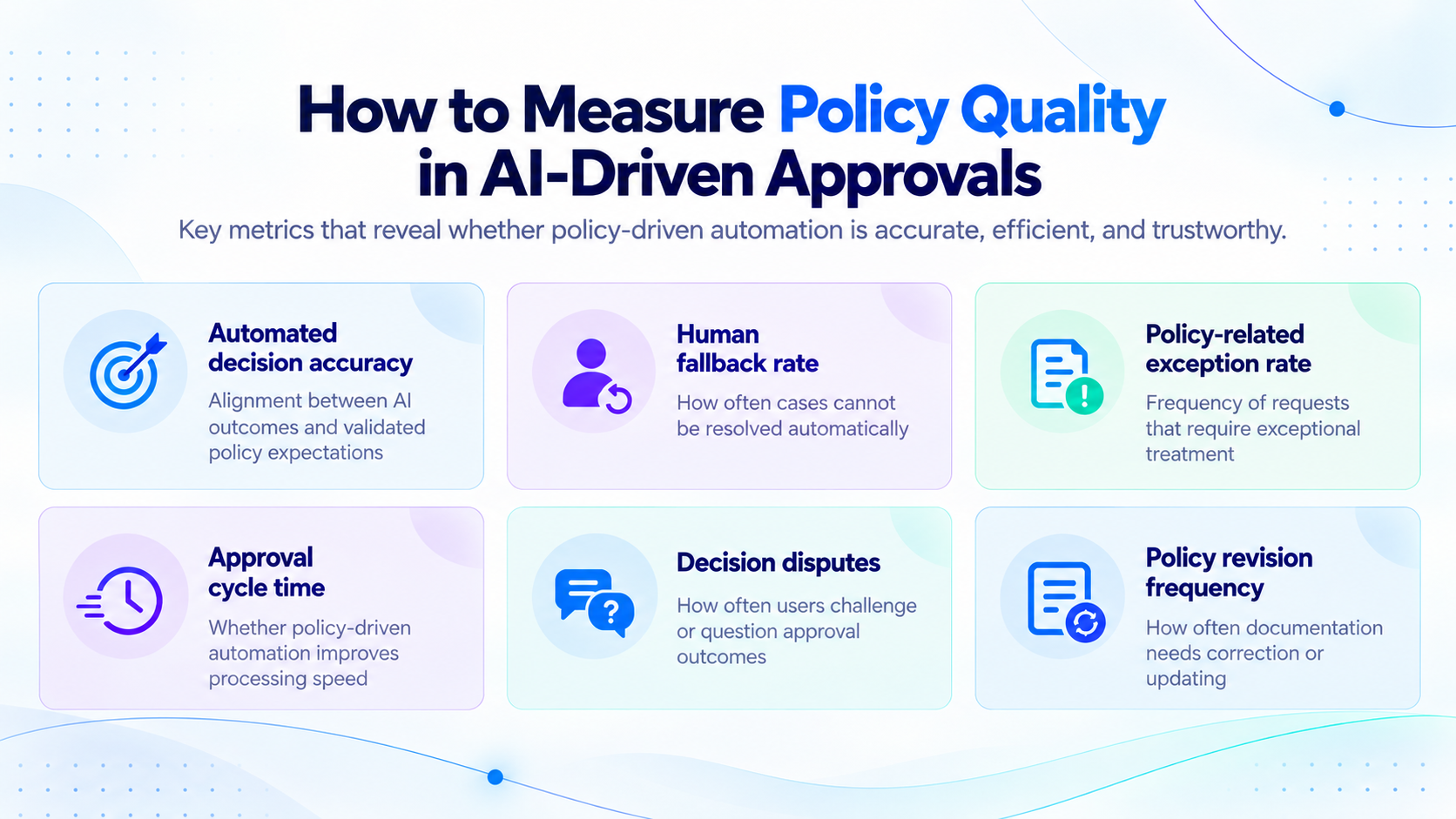
Figure 4. Six indicators of policy quality in AI-driven approvals.
| Metric | What it shows |
|---|---|
| Automated decision accuracy | Alignment between AI outcomes and validated policy expectations |
| Human fallback rate | How often cases cannot be resolved automatically |
| Policy-related exception rate | How often requests require exceptional treatment |
| Approval cycle time | Whether policy-driven automation improves processing speed |
| Decision disputes | How often users challenge or question outcomes |
| Policy revision frequency | How often documentation needs correction or updating |
No single metric tells the whole story. A high fallback rate may point to vague wording, or to appropriate caution with genuinely complex cases. A high automation rate is not a win if decision quality suffers. Aim for a balance of efficiency, accuracy, consistency and control.
How Teiva Systems Helps Build Reliable AI-Driven Approvals
Implementing Intelligent Approvals is more than uploading policy documents and switching on automation. It connects business requirements, policy governance, ServiceNow configuration and quality assurance in one coordinated process.
At Teiva Systems, our ServiceNow work centers on reliable automation backed by clear requirements, effective governance and structured testing. For AI-driven approvals, that means starting with policy readiness before scaling automation:
- Review existing approval rules
- Identify ambiguous or conflicting requirements
- Define human escalation paths
- Validate representative business scenarios
- Establish continuous policy ownership
Addressing policy quality early reduces avoidable rework and builds a stronger foundation for future AI-driven workflows.
Key Takeaways
- In Intelligent Approvals, the policy document is the decision reference
- Vague policies lead to inconsistent decisions, extra escalations and compliance risk
- AI-ready policies are clear, complete, consistent, exception-aware, and owned and versioned
- Test the policy’s interpretation, not just the workflow
- Keep clear owners and AI authority boundaries for governance
- Track accuracy, fallback, exceptions, cycle time, disputes and revisions together
Conclusion: Better Policies Create Better AI Decisions
AI-driven approvals promise a more efficient way to manage enterprise decisions. But those decisions can never be clearer or more complete than the rules behind them.
- Poor policies create uncertainty
- Outdated policies create risk
- Contradictory policies undermine consistency
High-quality policies turn AI-driven approvals from a promising feature into a dependable business capability. As your use of ServiceNow Intelligent Approvals grows, make policy quality a measurable part of AI readiness, alongside configuration, testing, security and governance.
The future of approval automation is not just faster decisions. It is the right decisions, made consistently, transparently and at scale.
Ready to make your approval policies AI-ready? Connect with Teiva Systems to explore how governed, AI-driven workflow automation can support your business.
Oleksii Konakhovych, CTO, Oct 16, 2026
Eager to take the next step? Contact us today!
Latest Articles

Teiva Systems at ServiceNow AI Summit 2026 — Munich
On October 7, 2026, Teiva Systems joined the ServiceNow AI Summit in Munich, where industry leaders, innovators, and the ServiceNow community came together to explore the next chapter of enterprise AI and intelligent automation.
read more
Automated Testing in ServiceNow: How Now SDK, ATF and CI/CD Work Together
Automated Testing in ServiceNow: How Now SDK, ATF and CI/CD Work Together Automated testing in ServiceNow is becoming more important, not because ATF or CI/CD are new concepts, but because the way they can work together is changing the development lifecycle itself. As ServiceNow moves toward a more source-driven engineering model, testing is becoming less […]
read more
ServiceNow CI/CD with Now SDK and GitHub Actions: What Changes for Developers
The Now SDK connects ServiceNow application development to GitHub Actions CI/CD pipelines — bringing pull-request quality gates, automated ATF testing, and controlled release governance to a platform that has historically required its own isolated delivery process.
read more