
AI Without the Overhaul: Smarter ServiceNow Workflows with Hybrid Agentic Activities
What if making your ServiceNow workflows smarter didn’t require rebuilding them?
For years, enterprise automation has followed a familiar formula: define the process, configure the rules, let the system run predictable steps. It works remarkably well, until a workflow hits something that needs interpretation, judgment or context:
- An incident arrives with an incomplete description
- A customer request needs clarification
- A change request has technical detail but no clear risk assessment
Suddenly, automation stops being automatic, and someone has to step in. The traditional answer is more configuration, more decision rules or a whole new process. But what if the smarter approach is to keep the workflow and improve what happens inside it?
With Hybrid Agentic Activities in ServiceNow, organizations add AI directly into existing Playbooks, combining structured process execution with contextual AI assistance. The result: less disruption, more flexibility and a clearer path from experimentation to business value.
In this article:
- What Hybrid Agentic Activities are, and how collaborative and autonomous modes differ
- Five practical use cases
- How they compare with other automation approaches
- A five-step implementation plan, KPIs and governance
The Problem: Traditional Automation Follows Rules, Not Context
ServiceNow automates enterprise processes through Flow Designer, Playbooks, business rules and integrations. These tools excel when the next action is predictable:
- A request meets a condition → route it to the right team
- An approval is required → notify the responsible manager
- A task is completed → advance the workflow
Not every scenario fits an if-this-then-that rule.
Example: a vague IT service request
An employee reports that a business application is not working. The description is vague, the impact unclear, and support needs more detail before assigning it. Traditional automation can create the ticket, populate known fields and route it. What rules alone cannot do is understand what is missing, interpret the user’s explanation and ask the most relevant follow-up questions.
That gap between process automation and intelligent decision-making is what Hybrid Agentic Activities are designed to close.
What Are Hybrid Agentic Activities in ServiceNow?
Hybrid Agentic Activities bring AI agents into the structured execution of ServiceNow Playbooks. Instead of building a separate AI-driven process, organizations add intelligence to specific activities in an existing workflow. Each one combines two elements:
- A structured Playbook activity: defines the information, fields and outputs the process needs
- An AI agent: uses context, instructions and available information to help complete the activity
The AI can research information, suggest field values, interpret complex inputs and prepare responses, while the Playbook keeps control of the overall process.
Two execution modes
According to ServiceNow, AI assistance in Playbook activities can run in two modes (see Getting Started with Agentic Playbooks):
- Collaborative mode: the AI generates or populates information; a human reviews and approves it before the activity completes
- Autonomous mode: the AI completes the configured activity and advances the Playbook automatically, when appropriate and permitted
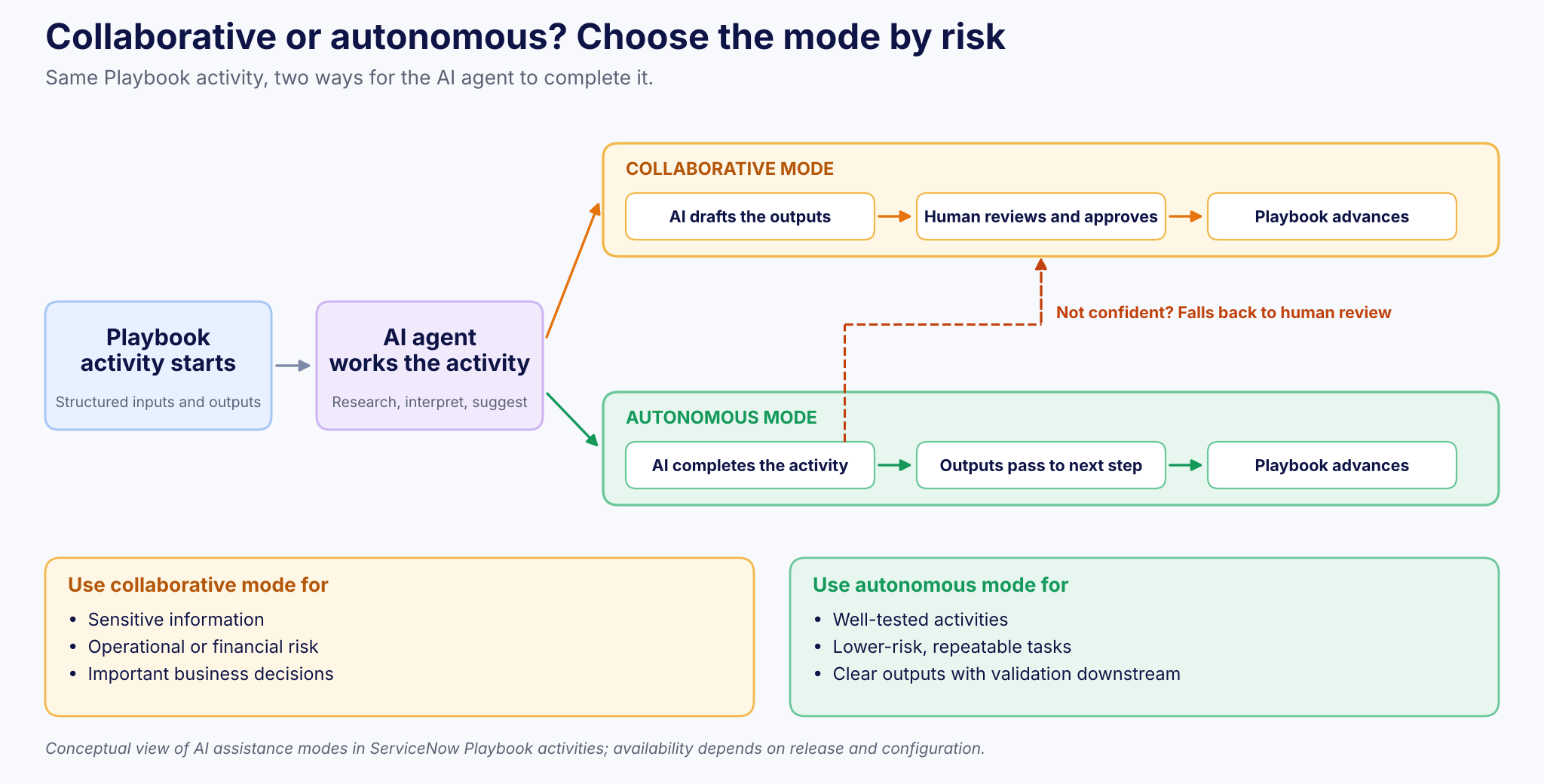
Figure 1. Collaborative or autonomous? Choose the mode by risk.
This lets businesses introduce AI where it adds genuine value without giving up the structure, permissions and approvals already built into their processes.
How Hybrid Agentic Activities Work
The architecture is simple: keep the existing workflow and enhance selected steps with AI.
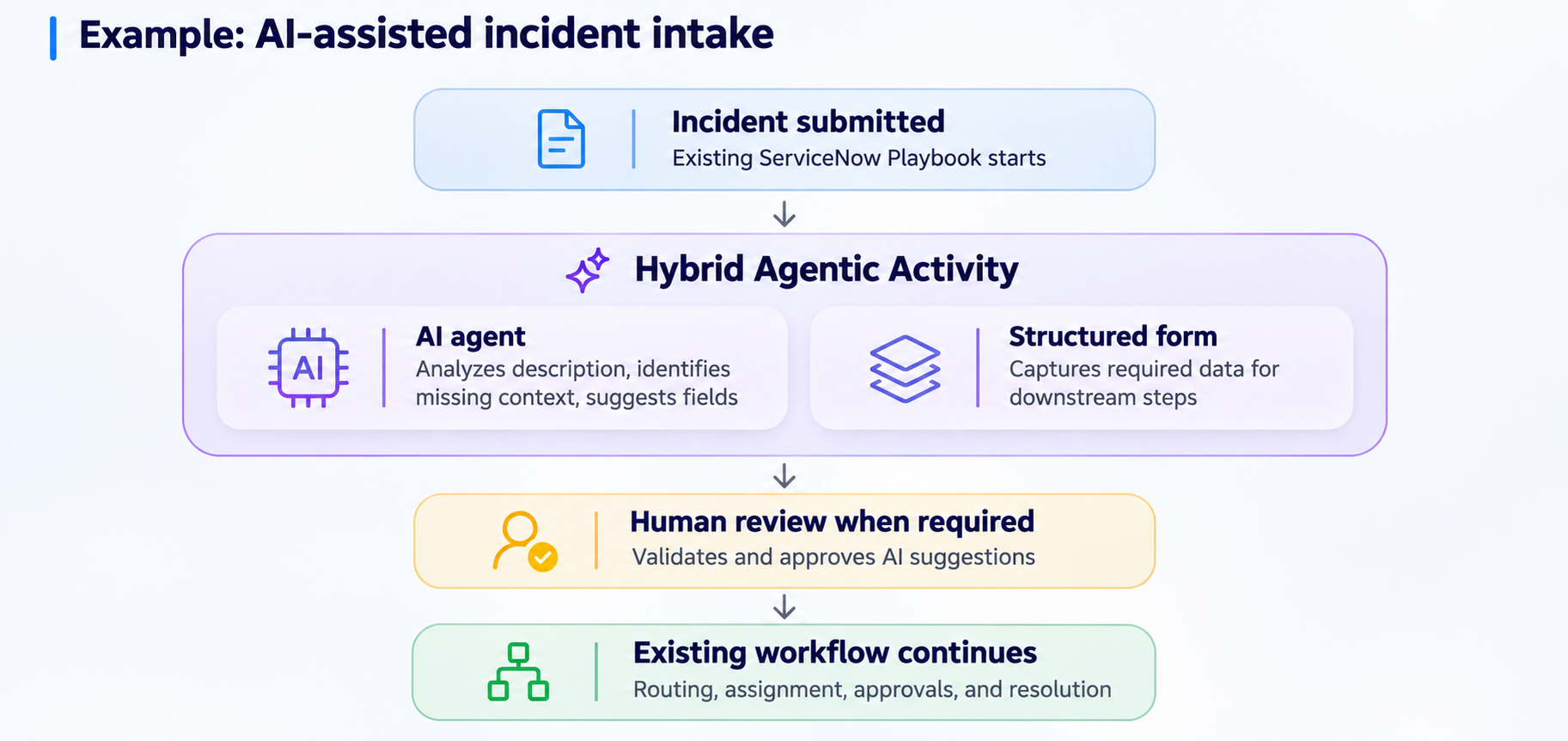
Figure 2. Example: AI-assisted incident intake within an existing Playbook.
Employees do not need to switch to a separate chatbot, copy information between tools or manually turn AI recommendations into workflow actions. The agent works inside the activity, and its output feeds the next Playbook steps.
It also makes adoption manageable: start with one activity, validate its performance and expand gradually. ServiceNow’s AI-guided self-service intake example shows the same pattern.
Five Practical Use Cases for Hybrid Agentic Activities
The biggest opportunity is not replacing whole processes with autonomous agents. It is improving the individual moments where employees interpret information, fill gaps or make routine judgments.
| Use case | What the AI helps with | Business impact |
|---|---|---|
| IT incident intake and triage | Find missing details, suggest category and priority | More complete records, fewer reassignments |
| Customer service | Summarize the case, suggest a response | Faster case preparation |
| Change requests | Check documentation, draft a risk summary | Consistent change records |
| Employee onboarding | Spot missing data, guide exceptions | Less repetitive coordination |
| Request and case documentation | Turn informal text into structured fields | Better input data, fewer clarifications |
1. Smarter IT incident intake and triage
A user submits: “The application is slow, and I can’t finish my work.” Without more context, support may struggle to determine severity, the affected service or the right assignment group. A Hybrid Agentic Activity could:
- Analyze the initial description
- Identify missing information, such as affected users or business impact
- Propose follow-up questions
- Suggest categorization and priority based on configured criteria
- Prepare structured fields for human validation and routing
Business impact: more complete incident records, fewer reassignment cycles, less manual triage effort.
2. More intelligent customer service workflows
Customer cases often contain unstructured descriptions, past interactions and information spread across records. An AI-assisted activity can review the case, summarize the issue, identify missing details and suggest a response. The human agent reviews the recommendation where required.
Business impact: faster case preparation, more consistent documentation, a smoother customer experience.
3. Better change request preparation
Change management needs implementation plans, testing requirements, impact analysis and rollback procedures, which takes time when several systems are involved. A Hybrid Agentic Activity can check documentation against required fields, highlight gaps and prepare an initial risk summary. The change manager or approval authority still reviews and authorizes according to policy.
Business impact: more consistent change documentation, less administrative effort, governance intact.
4. Streamlined employee onboarding
Onboarding spans HR, IT, security and facilities. Many tasks are automated, but exceptions and incomplete information still need manual work. An AI-assisted activity can identify missing information, prepare request details and guide an HR specialist through exceptions, while the Playbook keeps managing access requests, task assignments and approvals.
Business impact: less repetitive coordination, better data completeness, more consistent onboarding.
5. Improved request and case documentation
Many workflows depend on form submissions of varying quality. AI helps turn informal descriptions into structured records: an employee gives a long, unclear explanation, and the agent extracts the relevant details, flags gaps and suggests clearer wording for required fields.
Business impact: higher-quality input, better downstream automation, fewer clarification cycles.
Why Hybrid Agentic Activities Are Different from Traditional AI Automation
Not every process needs an autonomous AI agent. Complex agentic orchestration in a predictable workflow can add unnecessary cost, complexity and risk. The better approach is choosing the right type of automation for each task:
| Approach | Best suited for |
|---|---|
| Traditional workflows | Predictable, rules-based tasks |
| AI skills | Focused tasks such as summarization or classification |
| Hybrid Agentic Activities | AI-assisted completion of structured Playbook activities |
| Autonomous agentic workflows | Variable, multi-step tasks requiring reasoning and planning |
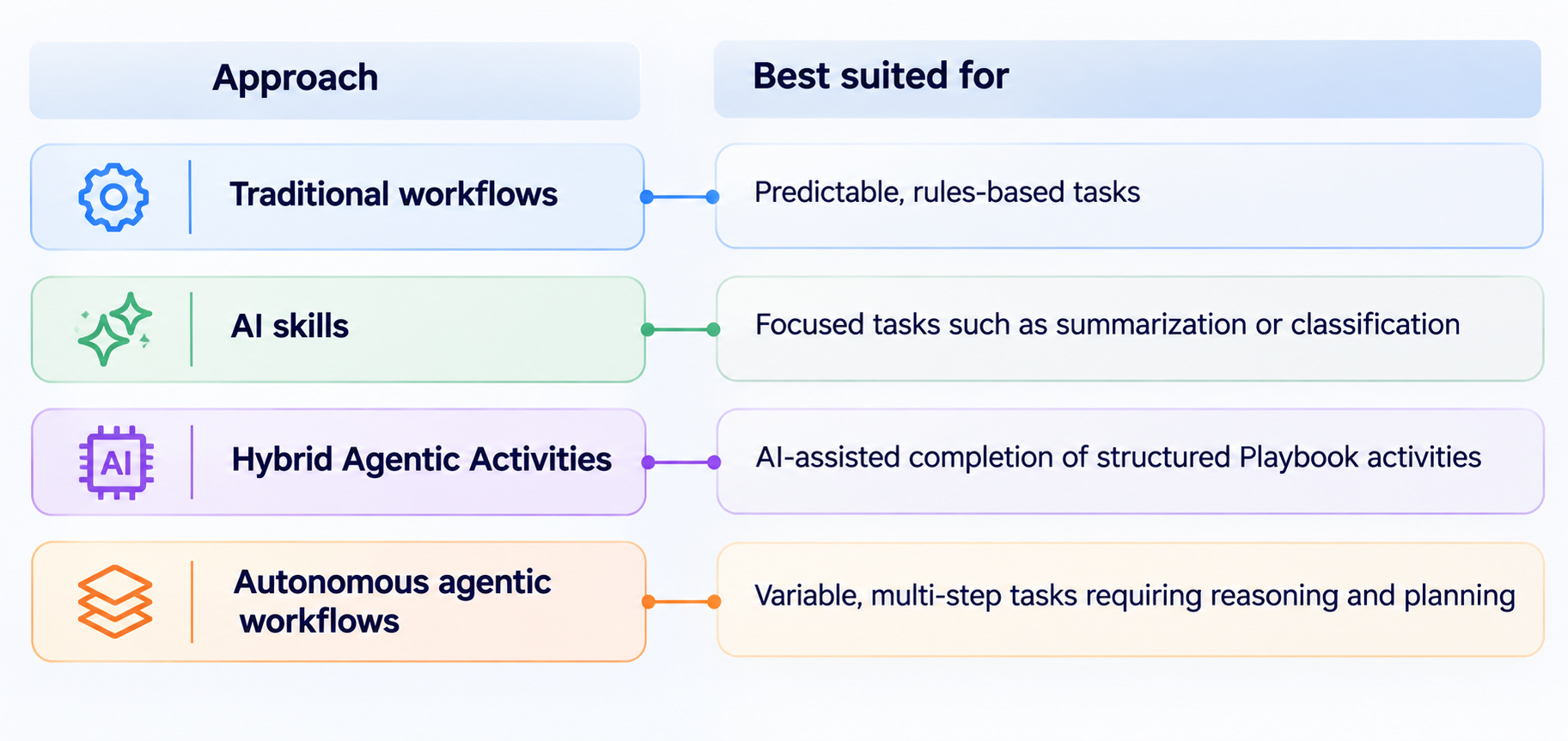
Figure 3. Match the automation approach to the task.
These approaches are complementary, not competing. Example: an incident process might use a Hybrid Agentic Activity to collect and structure information, deterministic rules to assign the incident, and a separate AI agent to investigate an unfamiliar technical issue. Each capability goes where it makes the most sense, without unnecessary architectural complexity.
How to Implement Hybrid Agentic Activities in an Existing ServiceNow Workflow
You do not need an enterprise-wide AI transformation. A targeted implementation builds a foundation for broader adoption.
Step 1: Identify the right workflow
Start with an established Playbook that already delivers value but has manual, information-heavy activities: repetitive analysis, incomplete forms, heavy documentation or frequent clarification requests. The ideal candidate has clearly defined inputs, expected outputs and measurable success criteria.
Step 2: Define what the AI should do
Avoid broad objectives such as “manage the entire incident process.” Define a narrow responsibility instead, for example:
“Analyze the incident description, identify missing information, and suggest values for the category, impact, and urgency fields based on the organization’s incident classification guidelines.”
Specific instructions make it easier to evaluate the agent and catch incorrect outputs.
Step 3: Configure AI assistance in Workflow Studio
In ServiceNow Workflow Studio, a Playbook author opens the activity and configures AI assistance:
- Select the execution mode
- Write the instructions
- Optionally assign a custom AI agent (not required for every activity: ServiceNow provides preconfigured capabilities for Agentic Playbooks)
- Define clear outputs that downstream steps can use
Step 4: Choose the right level of autonomy
Not every AI output should trigger the next action automatically. Use collaborative execution for sensitive information, operational risk, financial impact or important decisions. Use autonomous execution for well-tested, lower-risk tasks. The goal is not to remove humans everywhere, but to focus human attention where judgment and accountability matter.
Step 5: Test, measure and improve
Before expanding, test with realistic scenarios: incomplete information, conflicting inputs and cases outside the intended scope. Check that the AI produces accurate, usable information, respects permissions and escalates uncertainty (see ServiceNow AI Agent Testing: 7 Checks Before Production). Then track six KPIs:
| KPI | What it measures |
|---|---|
| Activity completion time | Time to complete the AI-assisted step |
| Field accuracy | Share of suggested values accepted without correction |
| Reassignment rate | Whether better intake reduces unnecessary ticket transfers |
| Manual intervention rate | How often humans correct or escalate |
| Workflow cycle time | Time from initiation to completion |
| AI consumption per case | Cost efficiency of the AI-assisted process |
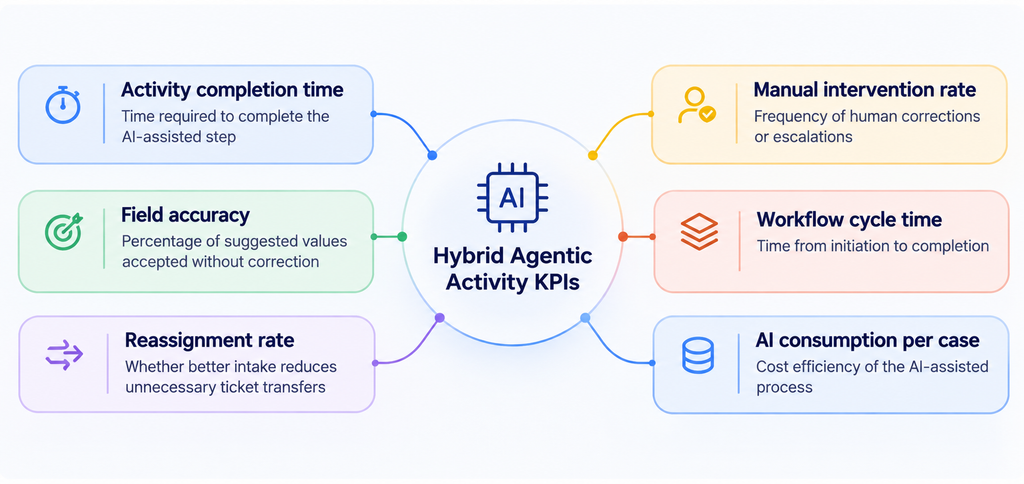
Figure 4. Six KPIs to prove a Hybrid Agentic Activity is working.
These metrics show whether AI is improving workflow performance, not just adding another technology layer.
Governance: Making AI Useful Without Losing Control
A major enterprise AI concern is control: what an agent can access, which actions it can take and how its decisions affect operations. Hybrid Agentic Activities help because AI is introduced inside an existing, governed process. But a structured Playbook does not guarantee every AI output is correct or safe. Successful implementations still need safeguards:
- Keep permissions explicit: agents use approved access rights, with execution identities configured carefully
- Preserve critical approvals: high-impact decisions follow established authorization policies
- Validate AI-generated information: check suggested classifications, summaries and field values against business rules
- Provide a fallback path: when the AI cannot confidently complete an activity, the workflow supports human intervention
- Monitor performance and consumption: review AI accuracy, execution behavior and costs as use cases scale
With these controls, organizations can expand AI while keeping accountability. Our Enterprise AI Governance Blueprint for ServiceNow covers the wider framework.
The Bigger Opportunity: From Automated to Intelligent Processes
The shift to AI-powered workflows is not just replacing human tasks with software. It is improving how work moves through the enterprise:
- Traditional automation answers: what should happen next?
- Agentic AI adds: what information or reasoning makes the next step more effective?
Hybrid Agentic Activities connect the two. The workflow still defines the process, while AI adds contextual understanding at specific points. That reduces manual data entry, improves information quality, speeds routine decisions and frees employees for complex work.
These improvements can be delivered incrementally: one Playbook, one activity, measured impact, then expansion based on results. ServiceNow’s continued development of Agentic Playbooks, including expanded autonomous execution for custom form-based activities in its 2026 releases (see Playbooks in Brazil), supports this approach.
Key Takeaways
- Hybrid Agentic Activities add AI to selected steps of existing Playbooks, with no rebuild
- Each combines a structured activity with an AI agent; the Playbook keeps control
- Collaborative mode = human approves; autonomous mode = AI completes and advances
- Choose the mode by risk; keep a fallback to human review
- Start with one narrow, measurable activity and track six KPIs
- Governance still matters: permissions, approvals, validation, monitoring
Frequently Asked Questions
What are Hybrid Agentic Activities in ServiceNow?
Playbook activities that combine a structured activity, with defined fields and outputs, and an AI agent that uses context and instructions to help complete it. The Playbook keeps control of the overall process.
What is the difference between collaborative and autonomous mode?
In collaborative mode, the AI generates or fills in information and a human reviews and approves it before the activity completes. In autonomous mode, the AI completes the activity and advances the Playbook automatically, when appropriate and permitted.
Do I need to rebuild my workflows to use Hybrid Agentic Activities?
No. AI is added to selected activities inside existing Playbooks, so the process, permissions and approvals stay in place.
Where are Hybrid Agentic Activities configured?
In ServiceNow Workflow Studio: open the Playbook activity, configure AI assistance, choose the execution mode, write instructions and optionally assign a custom AI agent.
How Teiva Systems Helps Organizations Build Smarter ServiceNow Workflows
At Teiva Systems, we believe successful enterprise AI starts with practical business problems, not technology for its own sake. Hybrid Agentic Activities let you build intelligence into processes you already understand, trust and depend on. We help organizations:
- Identify high-value automation opportunities
- Enhance existing Playbooks with AI
- Integrate AI capabilities
- Design workflows that balance efficiency with operational control
Whether the goal is better incident intake, optimized customer service, streamlined internal operations or AI-assisted decision-making, the focus is the same: measurable improvement without unnecessary complexity.
The future of enterprise automation is not replacing every workflow with AI. It is making the workflows you already have intelligent enough to do more. Sometimes the most effective AI transformation does not start with a major overhaul. It starts with one smarter activity.
Ready to enhance your ServiceNow workflows with AI? Talk to Teiva Systems about moving from traditional automation to intelligent, AI-assisted operations.
Slava Trotsenko, CEO, Nov 18, 2026
Eager to take the next step? Contact us today!
Latest Articles
Beyond the ServiceNow Interface: How MCP Brings Enterprise Workflows to AI Assistants
What if your AI assistant could do more than answer questions about your enterprise systems? What if it could actually get work done inside them?
read more
ServiceNow Developer Sandboxes and CI/CD: Automating Development Environments with REST APIs
What if every ServiceNow development task could start with its own isolated environment, connect to a CI/CD pipeline, and disappear when the work is done?
read more
ServiceNow Developer Sandboxes: What’s New in the Brazil Release
Faster sandbox allocation, simpler configuration, automated lifecycle management and safer parallel development: here is what ServiceNow’s Brazil release changes for developers and enterprise teams.
read more