
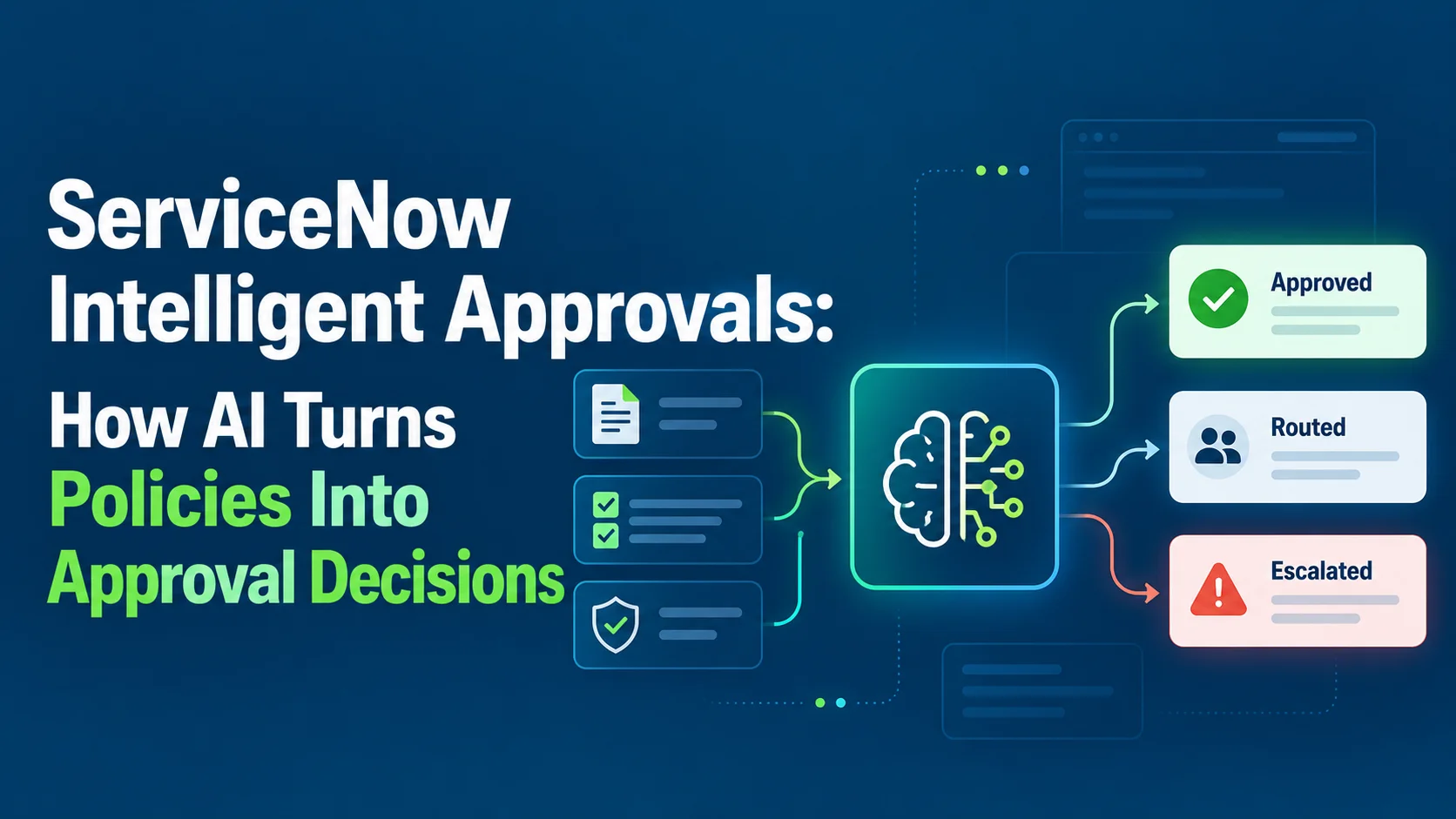
ServiceNow Intelligent Approvals: How AI Turns Policies Into Approval Decisions
What if your approval policies could make decisions, instead of sitting in documents waiting for someone to interpret them?
For years, approval automation has followed the same pattern. Business teams write policies. Developers translate them into workflow conditions. Employees wait for someone to approve or reject their request, even when the outcome is obvious.
ServiceNow Intelligent Approvals challenges that model by bringing AI directly into policy-driven decisions. Instead of translating every business rule into technical logic, organizations can use natural-language policy documents as the basis for automated decisions. AI interprets the policy, evaluates each request and decides whether to approve it, reject it or leave it with a human reviewer.
The bigger shift is not faster approvals. It is turning business policies into an operational part of enterprise automation.
In this article:
- Why policies and workflows drift apart
- How Intelligent Approvals works, step by step
- Where people stay in control, and how to test AI decisions
- Practical use cases and how to prepare
The bigger shift is not simply faster approvals. It is the possibility of turning business policies into an operational part of enterprise automation.
From Static Policies to Intelligent Decision-Making
Most organizations already have detailed approval policies for IT changes, procurement, expenses, access management and more. Writing them is only the beginning. Someone must translate them into technical configuration, define approval conditions and maintain the workflows whenever requirements change.
The result is a persistent gap: the policy lives in one place, the workflow enforcing it in another. Over time, the two drift apart:
- A procurement threshold changes, but the workflow still applies the old limit
- A security policy adds requirements, but requests are still checked against outdated conditions
Intelligent Approvals closes this gap by using the policy document itself as the input for AI-driven decisions.
In the ServiceNow Brazil release Developer Passport demonstration, the capability interpreted policies from PDF documents and Knowledge Base articles. The AI extracted relevant governance rules, identified approval criteria and suggested where those rules should apply in ServiceNow.
Organizations can start from the business intent already written in their documentation, rather than from technical workflow conditions.
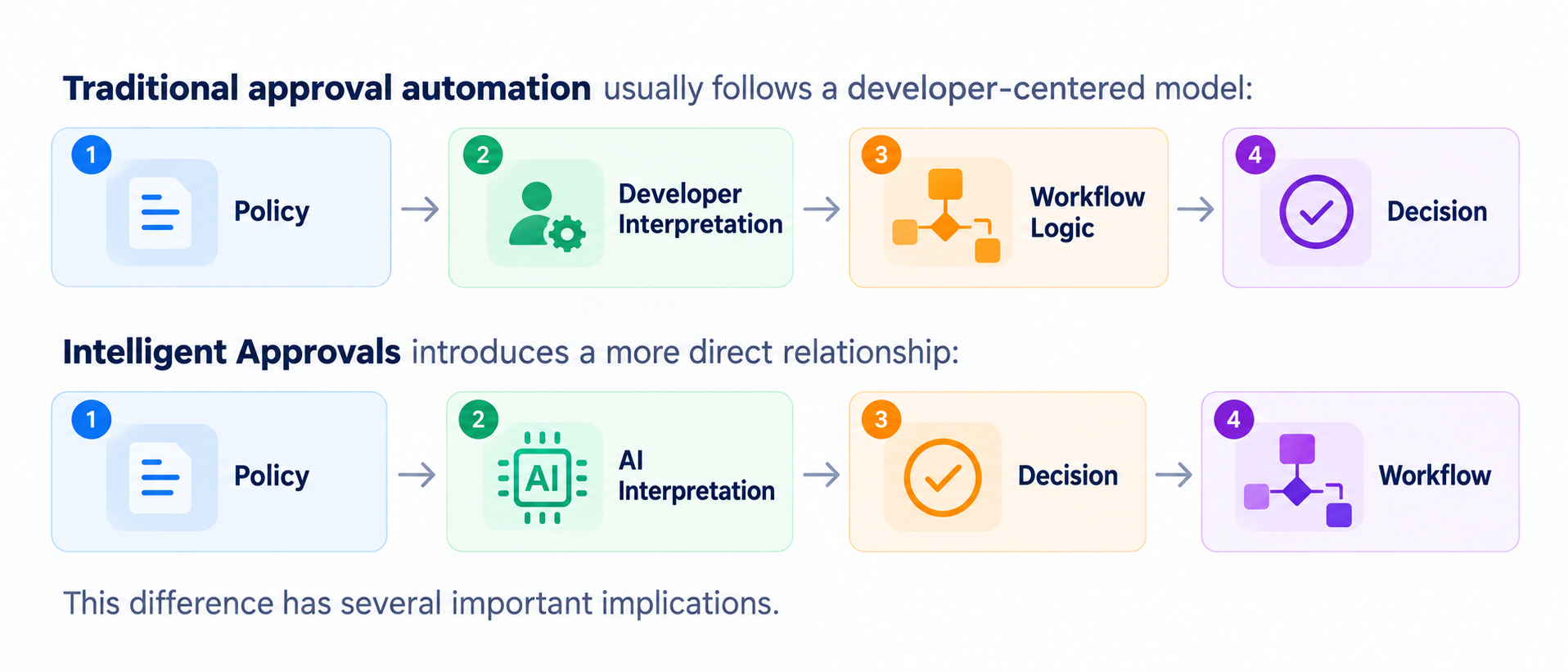
Figure 1. Traditional approval automation versus Intelligent Approvals.
How ServiceNow Intelligent Approvals Works
Intelligent Approvals follows a structured process that combines AI interpretation with administrator oversight:
- Policy document: a policy owner provides a document containing approval requirements, such as a PDF or Knowledge Base article.
- AI interpretation: AI analyzes what the policy governs, which conditions matter and how requests should be evaluated.
- Trigger configuration: the system suggests the ServiceNow table and trigger conditions that decide when the approval runs and which records are in scope.
- Testing: administrators check AI-generated test scenarios and the reasoning behind each decision.
- Review: administrators adjust scope or conditions where needed.
- Publish: the intelligent approval goes live.
- Runtime decision: each matching request is approved, rejected or returned to the existing human approval workflow.
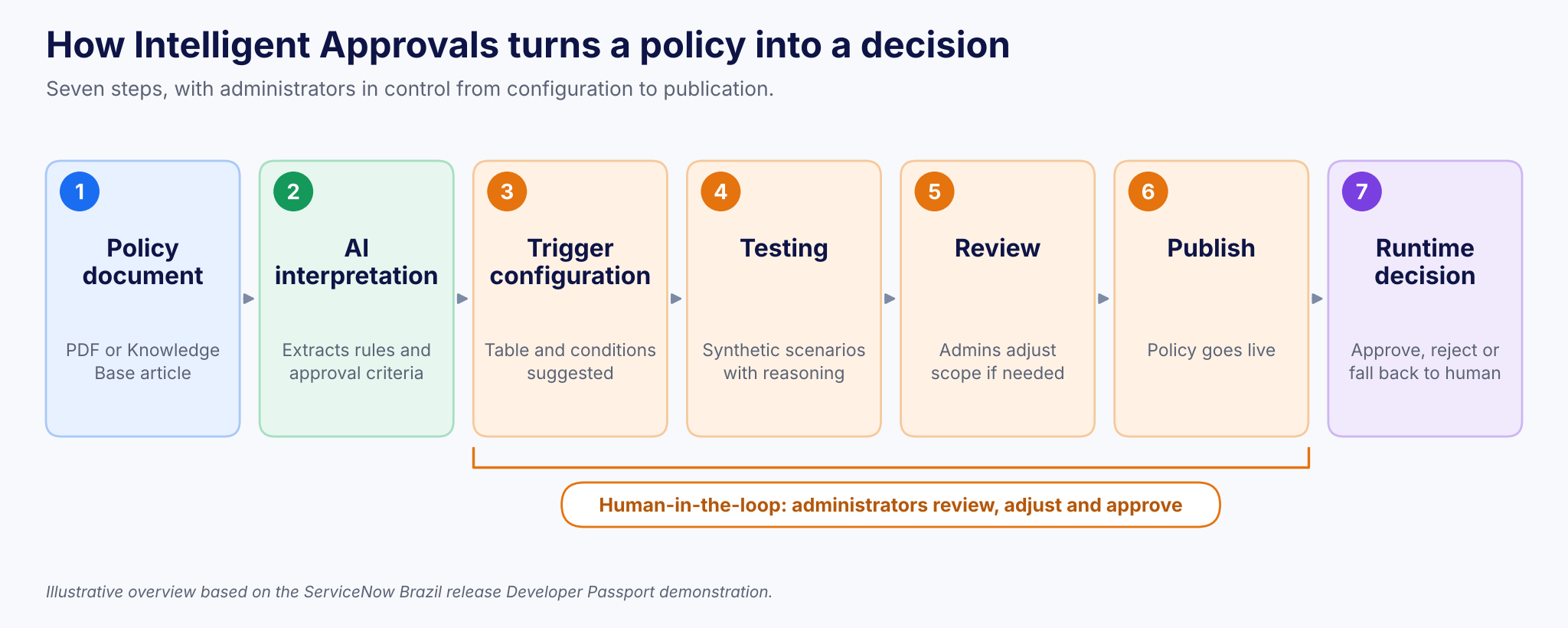
Figure 2. From policy to decision in seven steps, with administrators in control of steps 3–6.
Example: IT change approvals
A company’s policy lets routine, low-risk IT changes proceed automatically but requires human approval for changes affecting critical production services. Intelligent Approvals can interpret that distinction and evaluate each change request against it.
Three possible outcomes at runtime
- Auto-approve: the request clearly meets the policy’s approval criteria
- Auto-reject: the request clearly violates the policy’s defined requirements
- Can’t decide: information is insufficient, or the situation needs human judgment
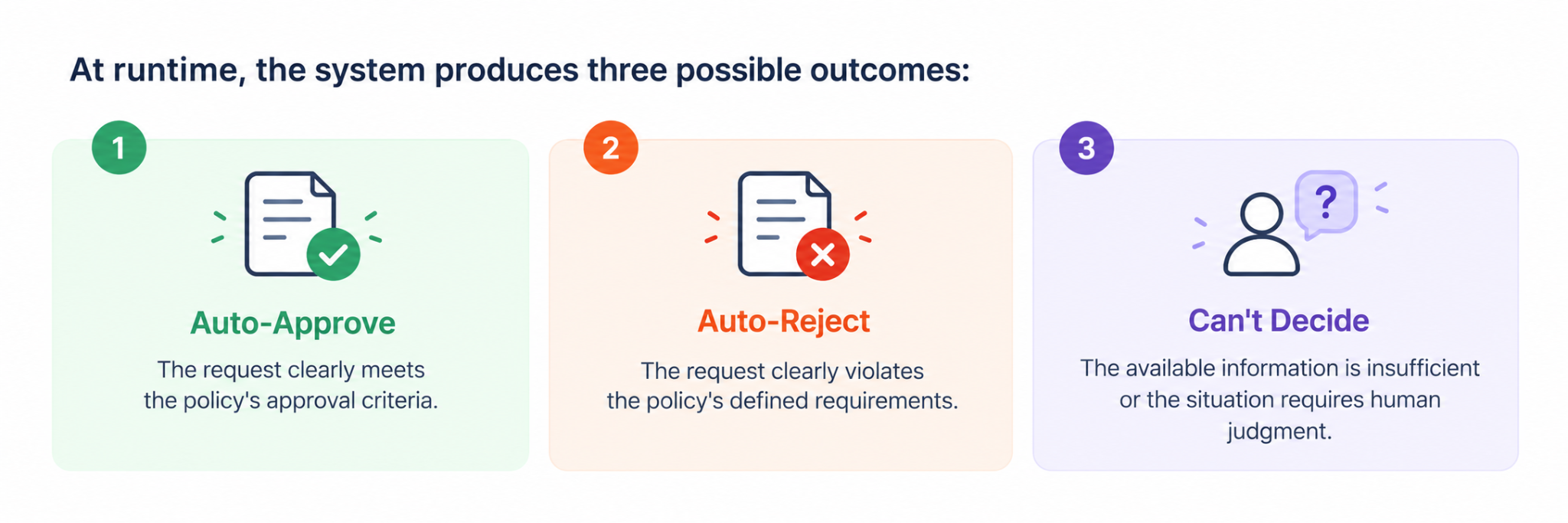
Figure 3. The three runtime outcomes of an intelligent approval.
The third outcome is not an automation failure. The request falls back to the existing human approval workflow, so straightforward decisions are automated while people keep responsibility for the exceptions.
Human-in-the-Loop: Keeping Control Where It Matters
Administrators do not have to accept every AI-generated configuration. After analyzing a policy, ServiceNow suggests the scope and trigger conditions, and administrators can review and adjust how the intelligent approval applies to business records.
This matters because interpreting a policy correctly does not guarantee the right technical scope.
Example: standard vs privileged access
A policy covers standard software access requests. If the AI proposes conditions that also include privileged administrator access, the consequences could be serious. Human review catches and corrects that scope before publication.
The goal is not to remove oversight, but to place human judgment where it adds the most value:
- Validating policy scope
- Managing exceptions
- Governing high-impact decisions
For enterprises with strict security, compliance or operational requirements, this distinction is essential.
Testing AI Decisions Before Production
Understanding a policy is not enough; you need confidence the system will apply it correctly. Intelligent Approvals supports this with AI-generated test scenarios.
Before publishing, administrators review synthetic test cases covering different request situations. Each shows how the system reads the approval criteria and whether it would approve, reject or defer. The interface also explains the reasoning behind each decision, so unexpected outcomes can be investigated.
Example: a procurement policy
A policy sets approval requirements by purchase value, department and expense category. Testing should confirm that:
- Requests meeting every condition are approved
- Prohibited purchases are rejected
- Requests with insufficient information go to manual review
Testing also improves the policy, not just the automation. If many requests produce uncertain results, the cause is often unclear documentation, not wrong configuration.
In this model, testing measures policy clarity, not just workflow functionality.
Synthetic tests cannot guarantee correct behavior in every production scenario. Complement them with representative business cases, exception testing and ongoing monitoring. Our article ServiceNow AI Agent Testing: 7 Checks Before Production covers what to validate before AI goes live.
Why This Changes Enterprise Approval Automation
Moving from developer-translated rules to AI-interpreted policy has four practical implications:
- Less implementation effort: fewer repetitive approval requirements to translate into workflow logic
- A stronger role for policy owners: they shape the link between business rules and automated execution more directly
- Shorter waits: routine decisions move faster while experts focus on requests that need them
- More consistency: similar requests are evaluated against the same documented criteria
Success still depends on policy quality. Ambiguous language, conflicting requirements and missing exceptions can produce unreliable results even when AI interpretation works as designed. Clear documentation remains a basic requirement.
Practical Enterprise Use Cases
Wherever decisions depend on repeatable policy criteria, Intelligent Approvals may reduce unnecessary manual steps:
| Area | Candidate for automation | Keep with people |
|---|---|---|
| IT operations | Routine changes meeting predefined risk, impact and scheduling criteria | Sensitive production changes |
| Access management | Standard application permissions | Privileged or exceptional access |
| Procurement | Purchases within approved budgets and categories | Exceptions needing extra scrutiny |
| HR and employee services | Straightforward requests with documented eligibility | Sensitive or discretionary cases |
Other candidates include expense reimbursements, security exceptions, equipment requests and recurring operational approvals.
These are possible applications, not confirmation that every workflow is supported out of the box. Each needs appropriate configuration, validation and governance.
Teiva Point of View: Policy as an Executable Business Asset
At Teiva Systems, we see Intelligent Approvals as part of a broader evolution in workflow automation.
The real innovation is not that AI can approve requests. It is that business policies can increasingly become direct inputs into executable workflow logic.
That changes how automation should be designed. Beyond building more sophisticated workflows, enterprises need to look at the quality, ownership and structure of the policies driving them.
Before implementing Intelligent Approvals
- Identify high-volume approval processes with clear decision criteria
- Review policies for ambiguity
- Validate proposed triggers and scope
- Set human escalation paths
- Define how automated decisions are monitored, policy changes handled and unexpected results investigated
In regulated environments, auditability, segregation of duties and clear accountability should stay central to the implementation. Our Enterprise AI Governance Blueprint for ServiceNow explains how to build these controls in.
The greatest value comes from combining AI-driven efficiency with disciplined workflow governance.
Key Takeaways
- Intelligent Approvals uses natural-language policy documents (PDF or Knowledge Base) as the input for approval decisions
- The process runs in seven steps, from policy to runtime decision
- Every request is auto-approved, auto-rejected or returned to the existing human workflow
- Administrators review and adjust AI-suggested scope and triggers before publication
- AI-generated tests with reasoning reveal both configuration and policy gaps
- Policy quality and governance determine how reliable the automation is
The Next Step Toward Policy-Driven Automation
Intelligent Approvals is a meaningful shift in how ServiceNow connects business intent with operational execution. Policy documents stop being static references that developers translate again and again, and become a direct part of automated decisions.
Human judgment remains necessary for ambiguous, sensitive or high-risk requests. But routine decisions no longer need the same manual attention.
The future of enterprise approvals is not about removing people from every decision. It is about making sure people spend their time on decisions that need them.
Ready to turn your approval policies into reliable automation? Teiva Systems helps organizations design scalable ServiceNow workflows that connect automation, governance and business outcomes. Talk to our ServiceNow team.
Slava Trotsenko, CEO, Oct 21, 2026
Eager to take the next step? Contact us today!
Latest Articles
ServiceNow Intelligent Approvals: How AI Clears Approval Bottlenecks Without Losing Control
Your automation is fast. Your approvals are not. Organizations invest heavily in automation, AI and digital transformation. Yet many business processes still stall at the same point: waiting for someone to click “Approve.”
read more
Why Policy Quality Makes or Breaks AI-Driven Approvals in ServiceNow
As enterprises bring AI-driven approvals into ServiceNow, attention goes straight to automation: faster decisions, fewer manual tasks, shorter approval queues. One factor gets far less attention: the quality of the policies behind those decisions.
read more
Teiva Systems at ServiceNow AI Summit 2026 — Munich
On October 7, 2026, Teiva Systems joined the ServiceNow AI Summit in Munich, where industry leaders, innovators, and the ServiceNow community came together to explore the next chapter of enterprise AI and intelligent automation.
read more