
AI Agent: Everything You Need to Know
The implementation of AI solutions into business workflows was inevitable, as it’s evident that these tools bring many benefits to enterprises. Besides, they are evolving constantly, and the introduction of ServiceNow AI Agent is a great showcase of that. Providing new understanding of automation and resilience, AI agents are changing the landscape of digital ecosystems.

What is an AI Agent in ServiceNow?
To cut a long story short, Agentic AI in ServiceNow is an innovative AI solution that can be considered the next stage of the generative AI evolution. The concept of Agentic AI is based on the following ideas:
- Independent Decision-Making: Agentic AI needs only a general framework to act independently; it doesn’t require your constant instructions. Thanks to this, the workflow becomes more autonomous, and manual involvement is reduced to a minimum.
- Context-Aware Adaptation: By leveraging the machine learning features, AI is able to adjust them to new contexts and conditions. Thanks to this, your digital ecosystem is constantly evolving, and new challenges don’t put it to a permanent stop.
- Data-Driven Consulting: AI agents work as independent consultants that analyze huge clusters of data and provide relevant information without human involvement. This enhances the overall productivity and boosts the autonomy of basic workflows within the ecosystem.
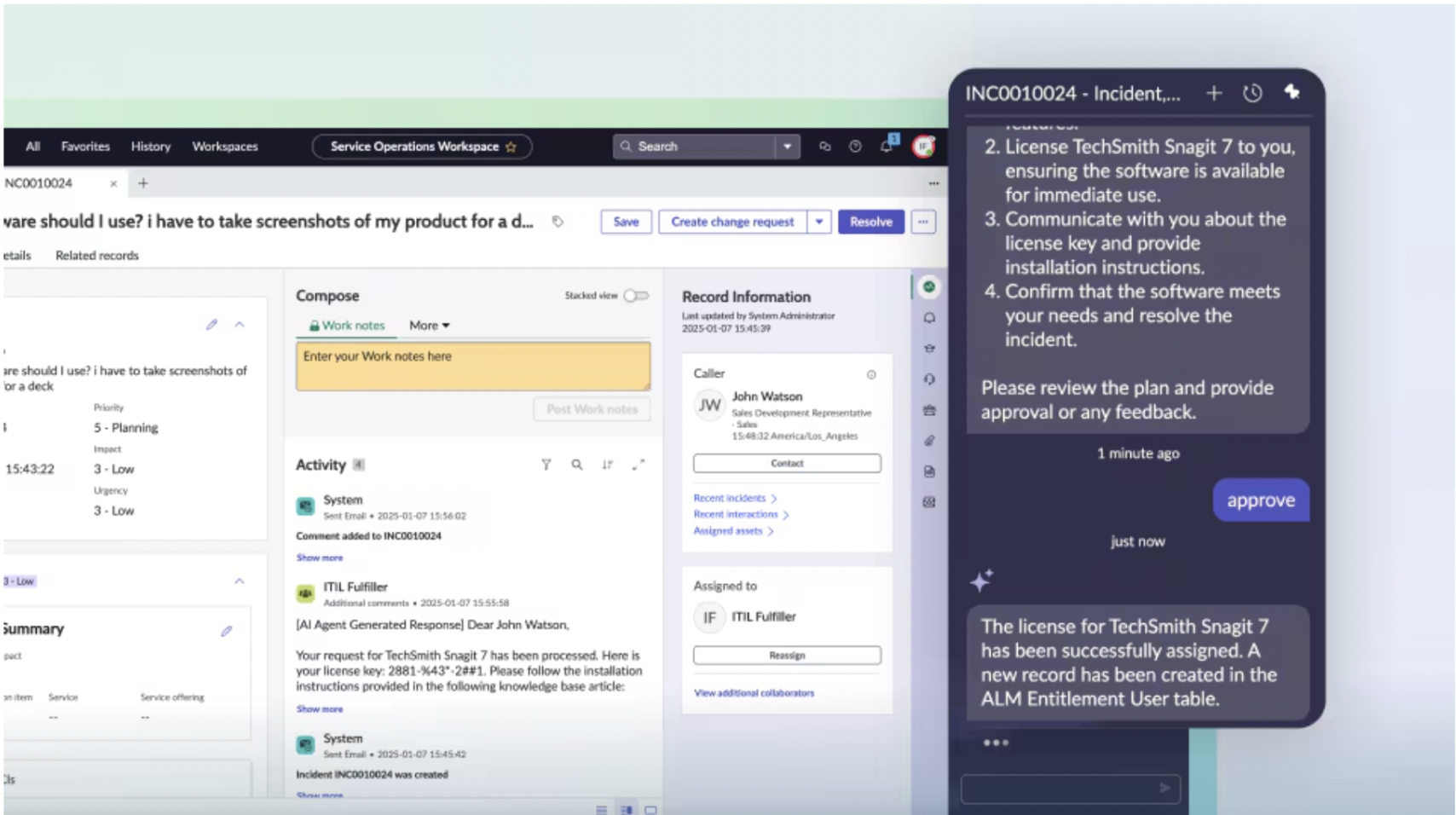
Typically, the model of AI agents is described through the perceive, reason, act, and learn model. This is widely used across the industry.
That means that Agentic AI first gathers data from various sources, including databases, sensors, and digital interfaces, incl. other AI Agents. It identifies what is relevant from these sources and starts reasoning what the next steps are to be executed. Large language models (LLMs) act as orchestrators for agentic AI. They devise plans, compile the tasks needed to fulfill requests, and assign them to agents.
AI agents execute the planned tasks. Here, humans should serve as guardrails to ensure that tasks are appropriately performed. The concept is often called human-in-the-loop. Agentic AI continuously improves and evolves through a feedback loop known as the data flywheel. This loop occurs when the AI system analyzes the data it generated from the act phase.
Now Assist Skills vs. AI Agents vs. Virtual Agent
Some might confuse AI Agents from ServiceNow with its other solutions, like Now Assist Skills and Virtual Agent. The major difference between Agentic AI and Now Assist Skills is that Now Assist is based on Generative AI. It can be used for receiving intelligent recommendations in ITSM, CSM, HR, or development processes, and while it also enhances productivity, it doesn’t work autonomously.
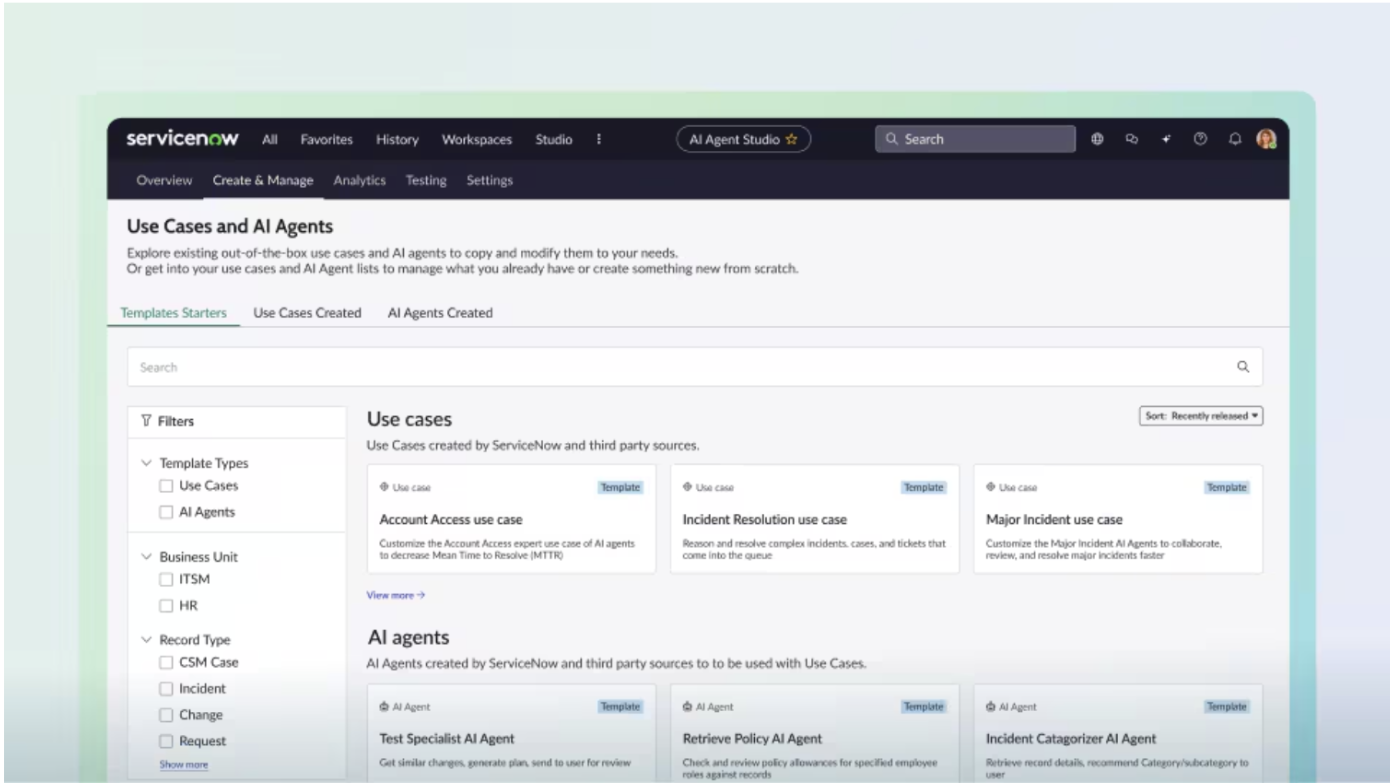
Virtual Agent, on the other hand, is just the conversational interface that interacts directly with end users, capturing intent and guiding them through processes. AI Agents act more autonomously. They are capable of not only conversing but also executing tasks and orchestrating workflows across systems. Besides, now different AI agents of ServiceNow can be put to work together under the rule of a single central intelligence, which is the AI Agent Orchestrator.
Agentic AI vs. Generative AI
As mentioned above, Agentic AI is the next step in the evolution of Generative AI. Gen AI is still a useful feature, but since Agentic AI was introduced, it has become a supportive solution. That acts as one of many instruments within an extended Agentic AI ecosystem.
Generative AI cannot make independent decisions and operate according to them using data-driven modules. Additionally, it lacks the constant adoption of machine learning capabilities. Thus, when compared to Agentic AI, Gen AI can only be considered as a helper but not an independent tool.
Core components of an AI Agent
To build a use case from scratch with Agentic AI, you need to be aware of those three core components of an AI agent.
Skills & knowledge grounding
To perform effectively and autonomously, the AI Agent by ServiceNow needs to have domain knowledge and receive clear tasks. One way to do this is to make it powered by Now Assist Skills within the same ecosystem. External LLM grounding can also be of use, depending on the tasks you want to set an AI agent to perform.
Guardrails and policies
One of the pitfalls of the Agentic AI technology is that it causes safety issues as well as ethical ones. That’s why it’s mandatory to set rules that ensure the agent acts safely, ethically, and in line with organizational governance, including “human-in-the-loop” oversight. Guardrails include things like restricting access to sensitive data, setting approval checkpoints, and requiring human review before high-impact actions are executed. This will help to prevent and control risks that might occur in the course of Agentic AI operations.
Integration with ServiceNow Data & Workflows
Such tools by ServiceNow as the Control Tower, Agentic Fabric, and AI Agent Orchestrator, help to ensure a systematic approach in the work of Agentic AI. By integration with ServiceNow data and processes, you ensure deep connections to CMDB, processes, and apps. So the agent can not only reason but also take action within enterprise workflows.
Summary
Don’t wait when your competitors adopt all the innovations and boost their productivity before you even understand what AI means. Act first, and explore the efficiency of Agentic AI not just from brief guides and short webinars. Explore it by implementing them into the workflows of your digital ecosystem.
Kostya Bazanov, Managing Director, Sep 16, 2025
Eager to take the next step? Contact us today!
Latest Articles
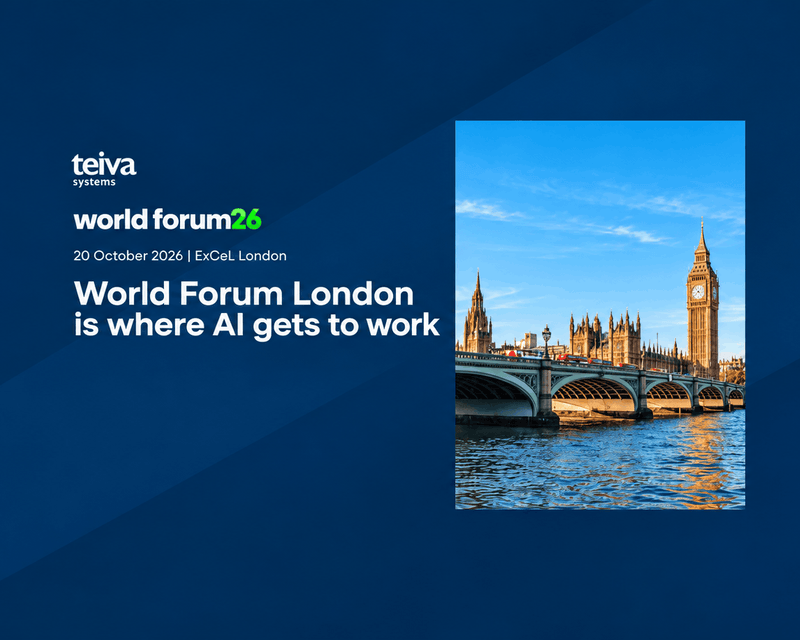
Teiva Systems at ServiceNow World Forum 2026 — London
On October 20, 2026, Teiva Systems attended ServiceNow World Forum London at ExCeL London, where industry leaders, technology experts, and the ServiceNow community came together to explore how AI, intelligent automation, and digital workflows are transforming enterprise operations.
read more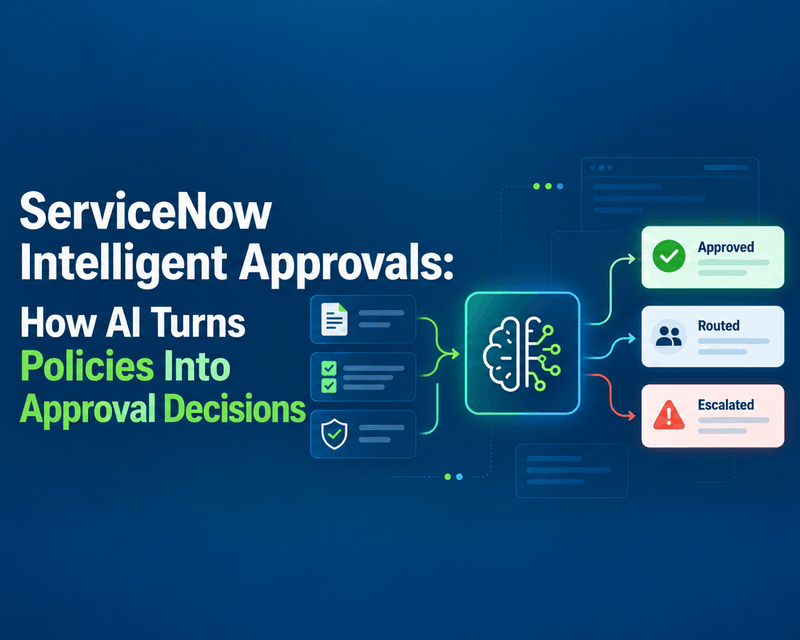
ServiceNow Intelligent Approvals: How AI Turns Policies Into Approval Decisions
What if your approval policies could make decisions, instead of sitting in documents waiting for someone to interpret them? For years, approval automation has followed the same pattern. Business teams write policies. Developers translate them into workflow conditions. Employees wait for someone to approve or reject their request, even when the outcome is obvious.
read more
ServiceNow Intelligent Approvals: How AI Clears Approval Bottlenecks Without Losing Control
Your automation is fast. Your approvals are not. Organizations invest heavily in automation, AI and digital transformation. Yet many business processes still stall at the same point: waiting for someone to click “Approve.”
read more