
ServiceNow vs Salesforce vs Jira Service Management (2026): Which One Is Right for Your Business?
ServiceNow vs Salesforce vs Jira Service Management (2026)
Which One Is Right for Your Business?
Choosing a platform in 2026 isn’t about ticking feature boxes anymore. It’s about aligning technology with how your business operates, scales, and delivers value.
At Teiva Systems, we consistently see the same issue: companies don’t fail because they chose the wrong tool — they fail because they chose the right tool for the wrong problem.
This guide breaks down the real differences in a way that’s clear, structured, and decision-focused.
1. Quick Summary
| Platform | Best For | Complexity | Time to Deploy |
|---|---|---|---|
| ServiceNow | Enterprise workflows & automation | High | 9–18 months |
| Salesforce | Customer experience & revenue growth | Medium–High | 3–9 months |
| Jira Service Management | Agile IT & fast execution | Low–Medium | 1–3 months |
2. Platform Positioning (2026)
Think of these platforms as operating in different layers of your business:
         BUSINESS FOCUS MAP (2026)   Internal Operations        Customer Experience
            |                          | ServiceNow |--------------------------| Salesforce
            |
            |
            |
     Jira Service Management
 (Speed, DevOps, Execution Layer)
How to read this:
- ServiceNow dominates internal operations and workflows
- Salesforce leads customer-facing processes
- Jira Service Management sits closest to execution and engineering
3. Platform Overviews
ServiceNow → Enterprise Workflows & Automation
ServiceNow acts as the operational backbone of large organizations.
Best fit when you need to:
- unify IT, HR, and security operations
- standardize processes globally
- reduce operational friction
Real-world example:
A global enterprise reduces ticket volume by 30–40% through cross-department automation.
- Strength: unmatched depth and scalability
- Risk: overengineering without a clear roadmap
Salesforce → CRM & Growth Engine
Salesforce connects customer data, sales pipelines, and support into one ecosystem.
Where it excels:
- customer journeys
- personalization at scale
- revenue-driven workflows
Teiva insight:
Companies often try to stretch Salesforce into ITSM — and hit limits. It performs best when focused on front-office transformation.
Jira Service Management → Agile IT Teams
Jira Service Management is built for speed and tight integration with development teams.
Ideal when:
- IT and engineering must stay closely aligned
- fast deployment matters more than deep customization
- teams operate in agile environments
Typical use case:
Scaling startups implementing ITSM in weeks, not months.
4. Feature Comparison (Real-World View)
ITSM Capabilities
ITSM DEPTH COMPARISON
ServiceNow       ██████████████  (Enterprise-grade)
Jira SM          ██████████      (Strong + DevOps)
Salesforce       ██████          (Limited ITSM depth)
- ServiceNow → strongest structured ITSM
- Jira → balance of ITSM + agility
- Salesforce → customer service focus, not IT ops
AI & Automation
- ServiceNow → Operations AI (automation, prediction)
- Salesforce → Customer AI (engagement, insights)
- Jira → Execution AI (automation, routing)
Key insight:
AI only delivers value when aligned with process maturity — tools alone don’t create impact.
Integration Ecosystem
- Salesforce → largest marketplace and ecosystem
- ServiceNow → enterprise-grade integrations
- Jira → highly flexible for technical teams
Reality check:
Integration complexity is often the hidden cost in transformation programs.
Custom App Development
- ServiceNow → enterprise low-code platform
- Salesforce → low-code + pro-code ecosystem
- Jira → configuration-focused
If your strategy includes building internal platforms, Jira alone is rarely enough.
UX & Adoption
ADOPTION CURVEEasy -------------------------- ComplexJira SM
Salesforce        ServiceNow
Teiva insight:
Adoption is the most underestimated risk.
A simpler tool often delivers faster ROI.
5. Decision Framework
Instead of asking “Which platform is better?”, ask:
Where is your primary value driver?
- Operations Efficiency → ServiceNow
- Customer Growth → Salesforce
- Execution Speed → Jira Service Management
6. Teiva Systems Recommendations (Based on Real Projects)
Choose ServiceNow if:
- you’re consolidating multiple tools into one platform
- processes are fragmented across departments
- automation and cost reduction are top priorities
Choose Salesforce if:
- customer experience drives revenue
- sales, service, and marketing must be aligned
- you need a unified customer data platform
Choose Jira Service Management if:
- you need fast ITSM deployment
- your teams already use Jira
- DevOps integration is critical
Final Thought
In 2026, leading organizations are not standardizing on a single platform.
They are building connected ecosystems:
- ServiceNow for operations
- Salesforce for customers
- Jira for execution
The competitive advantage comes from how well these platforms are integrated and aligned with business strategy.
Oleksii Konakhovych, CTO, Apr 30, 2026
Eager to take the next step? Contact us today!
Latest Articles

ServiceNow AI ROI: What Should You Measure After the Pilot?
Your AI pilot worked. That proves the technology can work. It does not yet prove ROI. Here are the six metrics that separate “the demo impressed leadership” from “we can prove measurable business value.”
read more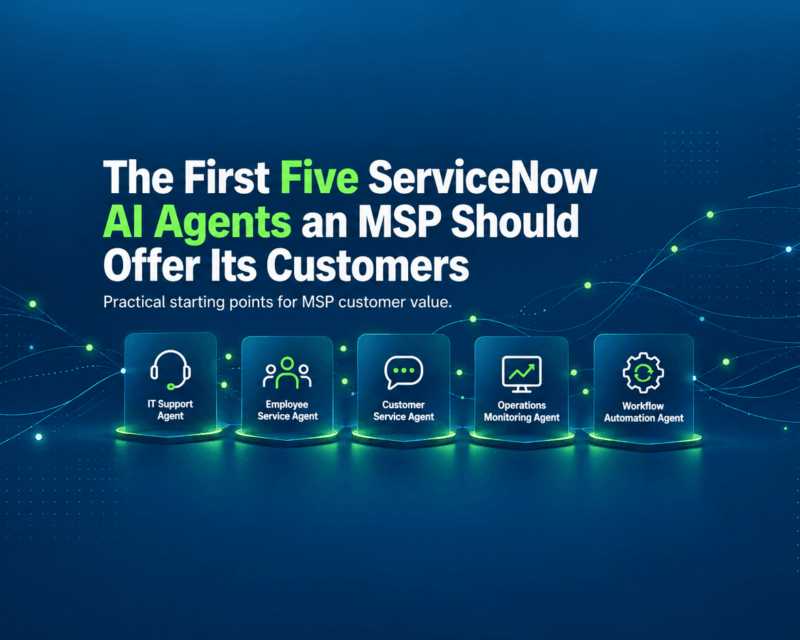
The First Five ServiceNow AI Agents an MSP Should Offer Its Customers
Managed service providers can now package ServiceNow AI agents as repeatable, recurring services — moving from ticket-response capacity to managed outcome delivery. Here is what the first five offerings look like, how each creates value, and what to get right before deploying them.
read more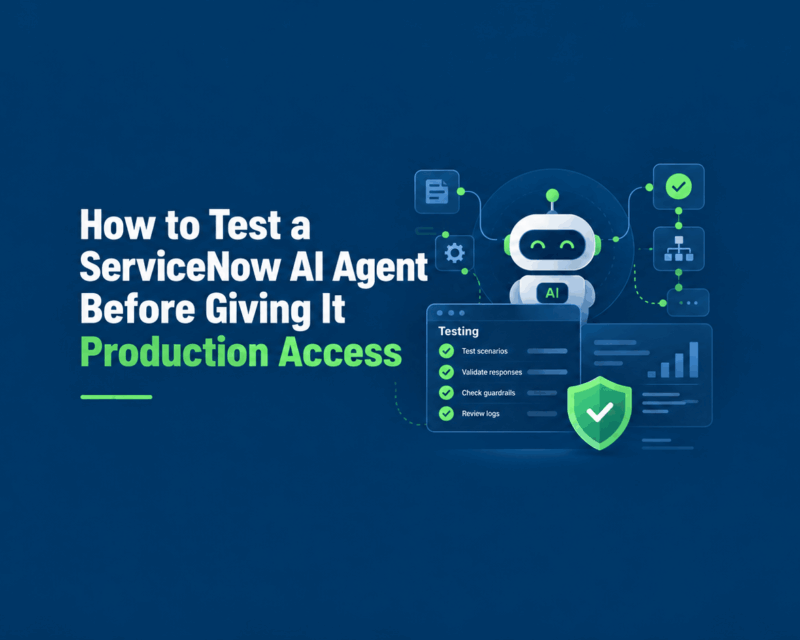
How to Test a ServiceNow AI Agent Before Giving It Production Access
A successful demonstration proves that an agent can perform a task under specific conditions. It doesn’t prove the agent will behave correctly when faced with incomplete data, conflicting instructions, restricted records, broken integrations, or unexpected user requests.
read more