
Operational Excellence Through Governance Topology: How Manufacturers Use ServiceNow to Control Risk and Automation
Manufacturers use the ServiceNow platform to achieve operational excellence by implementing a comprehensive governance approach that can be described as a “governance topology.” This approach allows them to centralize management, automate processes, and effectively manage risks.
The rise of digital governance in Industry 4.0
The development of digital management in the concept of “industry 4.0 governance” is the integration of digital technologies into production processes to increase efficiency, flexibility and quality of production.
The implementation of Industry 4.0 technologies requires a systematic approach and a long-term strategy. The procedure includes changes in technology, processes, infrastructure, and government support.
Some key technologies underlying Industry 4.0:
- The Internet of Things (IoT data governance)
- Artificial Intelligence (AI)
- Big Data
- Cloud Computing
The goal is to create “smart factories” where all devices, machines and systems are interconnected and data is exchanged in real time.
Managing safety, maintenance, and risk in one ServiceNow ecosystem
Various modules and solutions are used to manage safety compliance automation, maintenance, and risks in the ServiceNow ecosystem:
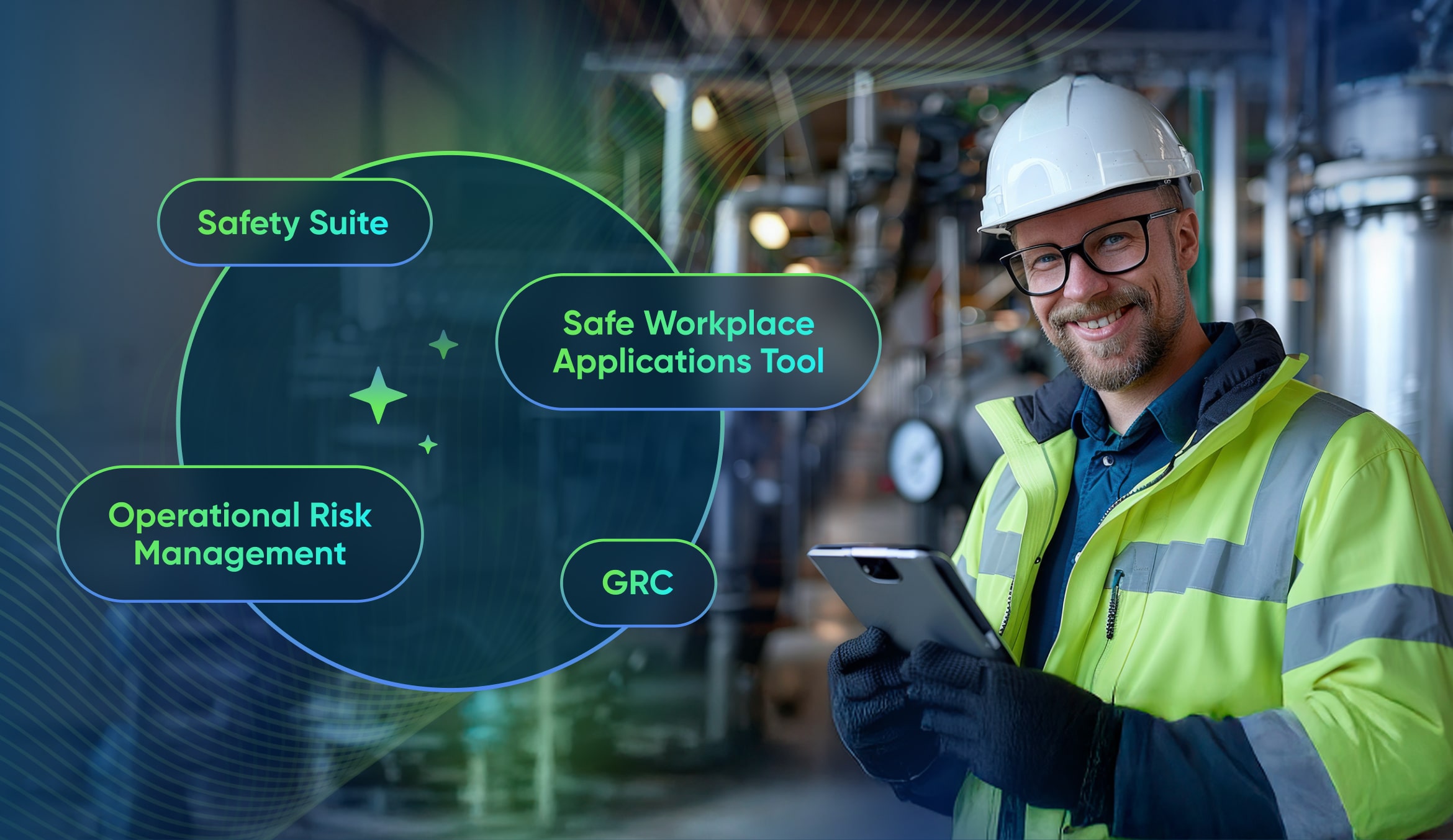
- Safety Suite. Ensures the safety of employees and the workplace. It has applications for employee health and safety testing, personal protective equipment inventory management, safe travel, and others.
- Safe Workplace Applications Tool. It helps in creating a safe workplace for employees and evaluates their willingness to return to work, their health status, and other safety measures in real time.
- GRC (Governance, risk, and compliance). The module helps organizations effectively use risk management and compliance with regulatory requirements. It offers ServiceNow governance manufacturing tools for identifying, assessing, and reducing risks in an enterprise.
- Operational Risk Management. This tool helps to assess and manage risks, report incidents, and maintain comprehensive risk reporting. It allows you to reduce operational losses.
These effective tools increase business productivity through consistent and repeatable processes.
Governance Topology Structure
Governance Topology is an approach that considers an organization’s activities as a system of interrelated processes, functions, structures, rules and regulations.
The visibility map, which connects the Factory Floor, Operations, and Compliance levels, is a concept that assumes transparency of processes at different levels of the production management system. It includes data collected at the production floor level, information on processes at the operations level, and data on compliance with norms and standards.
- Factory Floor visibility is the transparency of production processes in real time.
- Operations visibility is the transparency of processes and work flows that helps identify bottlenecks, inefficiencies, and risks.
- Compliance Visibility is the transparency of processes that comply with regulations established by law and regulatory authorities, as well as industry standards.
These actions help to analyze the relationships between participants and organizations, as well as understand how decisions in one area affect activities in another.
AI and predictive maintenance: balancing autonomy and control
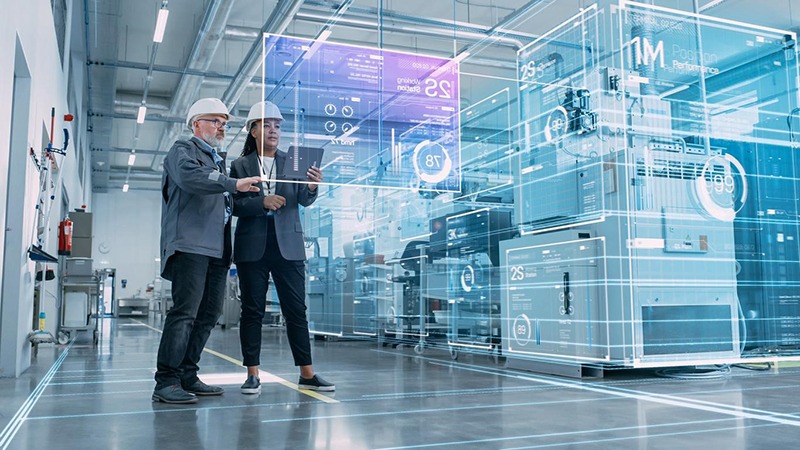
Balancing autonomy and control in the context of AI and predictive maintenance implies:
- Autonomy, which is achieved through the use of autonomous AI-based maintenance systems. These systems can detect, diagnose, and perform maintenance tasks without human intervention. For example, if an engine has a high risk of wear on a certain part, the system automatically generates a service order in the ERP system.
- Control, which is carried out through the integration of predictive maintenance results with other systems. These can be, for example, ERP systems, CMMS, or maintenance tools.
Thus, the balance between autonomy and control in the context of AI and predictive maintenance lies in the fact that AI allows you to predict equipment failures, providing control over the maintenance processes.
Lockout/Tagout digitalization features
Digitalization of Lockout/Tagout (LOTO) processes is the introduction of digital solutions to automate and standardize procedures.
Key advantages of LOTO digitalization in ServiceNow manufacturing:
- Improved accessibility. The digital representation of procedures allows each employee to access up-to-date instructions. This minimizes the risks associated with outdated or incorrectly executed protocols.
- Increased operational risk control and monitoring. LOTO solutions provide real-time transparency of energy isolation status, allowing security managers and operational teams to precisely monitor isolation and de-identification processes.
- Improving compliance with standards. Digitalization helps ensure compliance with industry norms and standards by automating and standardizing the blocking/disconnection process.
- Reducing errors. Providing accurate instructions with visual support helps to reduce the likelihood of errors that may occur when performing dangerous operations alone.
LOTO digitalization provides isolating and locking energy sources during equipment maintenance.
Governance-ready apps for industrial clients by Teiva
Teiva team has developed an industrial governance-ready automation application on ServiceNow that combines incident reporting, equipment isolation, and compliance approvals into a single flow.
Automated safety triggers are:
- Role-based access and audit logs
- Integration with existing OT systems
- Customizable dashboards for safety managers
This is how the ServiceNow governance manufacturing application engine enables engineers to transform their industrial safety system from reactive to proactive.
Oleksii Konakhovych, CTO, Jan 02, 2026
Eager to take the next step? Contact us today!
Latest Articles
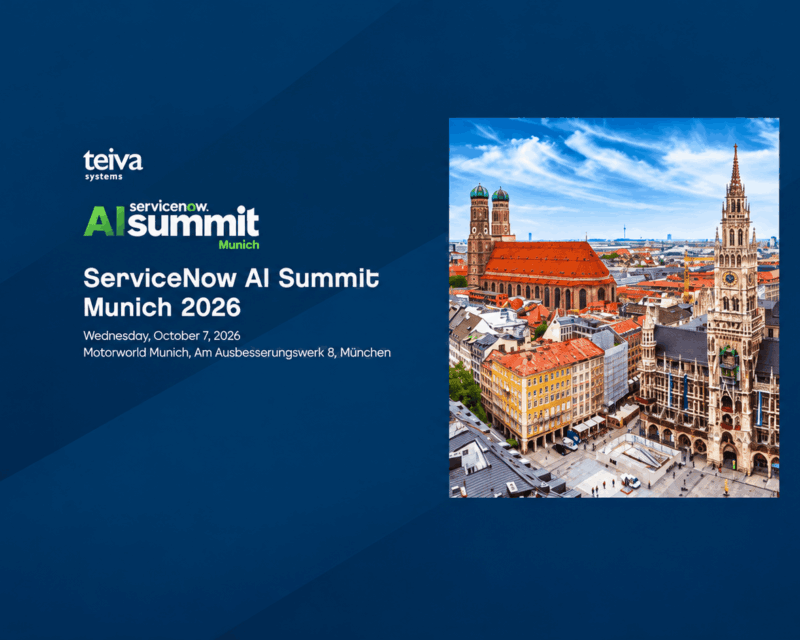
Teiva Systems at ServiceNow AI Summit 2026 — Munich
On October 7, 2026, Teiva Systems joined the ServiceNow AI Summit in Munich, where industry leaders, innovators, and the ServiceNow community came together to explore the next chapter of enterprise AI and intelligent automation.
read more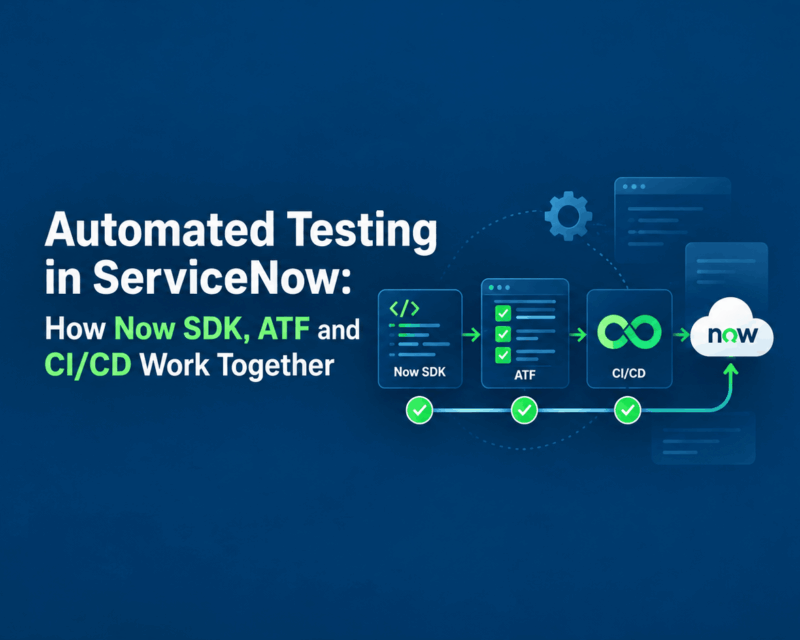
Automated Testing in ServiceNow: How Now SDK, ATF and CI/CD Work Together
Automated Testing in ServiceNow: How Now SDK, ATF and CI/CD Work Together Automated testing in ServiceNow is becoming more important, not because ATF or CI/CD are new concepts, but because the way they can work together is changing the development lifecycle itself. As ServiceNow moves toward a more source-driven engineering model, testing is becoming less […]
read more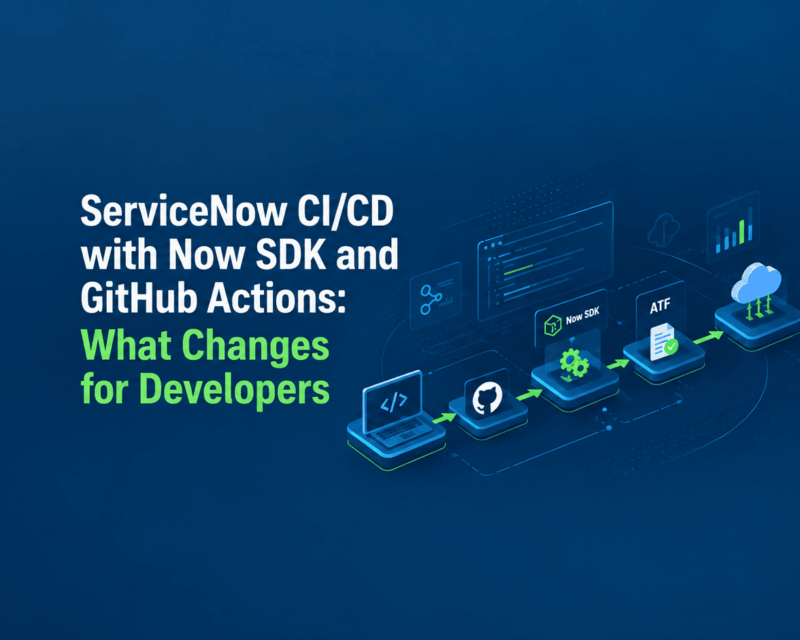
ServiceNow CI/CD with Now SDK and GitHub Actions: What Changes for Developers
The Now SDK connects ServiceNow application development to GitHub Actions CI/CD pipelines — bringing pull-request quality gates, automated ATF testing, and controlled release governance to a platform that has historically required its own isolated delivery process.
read more