
Next-Gen ServiceNow Workflows: The Role of AI in Automation
ServiceNow Predictive Intelligence integration is a great step forward for every enterprise, especially those who strive for automation of workflows within different departments. ServiceNow Virtual Agent and chatbot development is a next generation of AI solutions compared to generative AI.

Let’s discuss its advantages and compare previous and modern generations.
ServiceNow AI & Automation in Apps with Agentic AI
There’s nothing to be wondering about the fact that 29% of enterprise claim to have integrated AgenticAI into their ecosystem. This is a whole new approach to the workflow automation, and ServiceNow process optimization is a great example of that.
Basically, this new generation of AI solutions has everything presented by generative AI but adds independence. AI agents for ServiceNow IT service automation used advanced machine-learning capabilities to record huge volumes of data and later use them for autonomous analysis-based predictions and independent decision-making.
This type of SeviceNow intelligent automation is perfect for service management enhancement. Explore more advantages of Agentic AI.
Agentic AI Advantages
- Autonomous Performance: ServiceNow business process solutions based on Agentic AI don’t need human oversight for efficient and productive performance.
- Capabilities for Strategic Application: ServiceNow digital workflow solutions are capable of processing, storing, and learning vast amounts of data, which is why Agentic AI can be involved for complex tasks.
- Smooth Integration: AI agents involved in ServiceNow process automation can be integrated within both different ecosystems separately and the whole enterprise digital ecosystem. When applying it to scoped apps, you ensure better focus on specific issues.
Agentic AI vs Generative AI: The Better Choice
| Feature | Agentic AI | Generative AI |
| Purpose | To act autonomously to complete tasks or achieve objectives. | To generate new content based on learned patterns. |
| Capabilities | – Task planning – Decision-making – Goal-directed behavior | – Text generation – Image creation – Music & video synthesis |
| Autonomy Level | High — can operate without constant human input. | Moderate — responds to prompts but does not independently initiate actions. |
| Core Technologies | Planning algorithms, reinforcement learning, memory systems | Transformers, deep learning, diffusion models |
| Interaction Style | Interactive and goal-driven over time | Prompt-based and reactive |
| Use Cases | – Autonomous research – Personal task automation – Complex workflows | – Content creation – Language translation – Image synthesis |
| Risks | – Unintended actions – Misalignment with goals | – Misinformation – Copyright issues – Bias in output |
Slava Trotsenko, CEO, May 06, 2025
Eager to take the next step? Contact us today!
Latest Articles
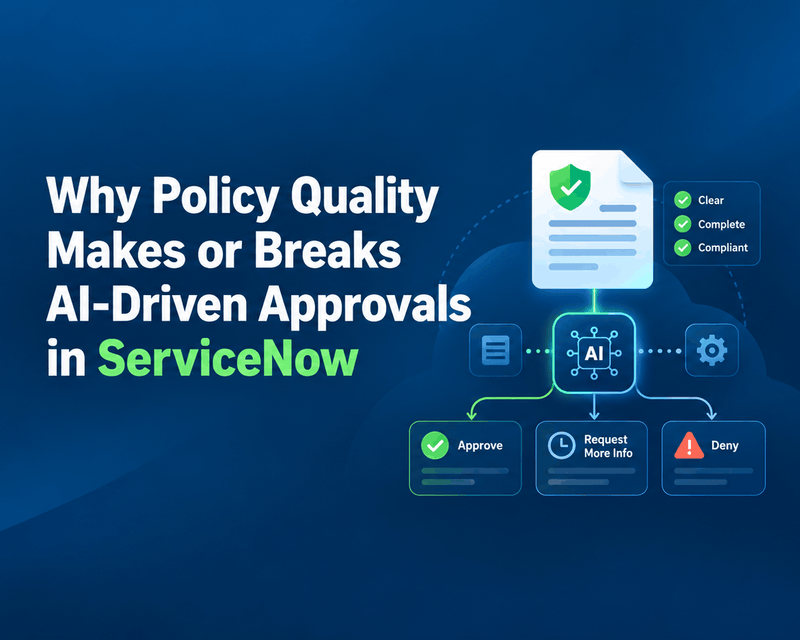
Why Policy Quality Makes or Breaks AI-Driven Approvals in ServiceNow
Why Policy Quality Makes or Breaks AI-Driven Approvals in ServiceNow AI can make approval decisions in seconds. It can also make the wrong ones, consistently, if the policy behind them is vague. As enterprises bring AI-driven approvals into ServiceNow, attention goes straight to automation: faster decisions, fewer manual tasks, shorter approval queues. One factor gets […]
read more
Teiva Systems at ServiceNow AI Summit 2026 — Munich
On October 7, 2026, Teiva Systems joined the ServiceNow AI Summit in Munich, where industry leaders, innovators, and the ServiceNow community came together to explore the next chapter of enterprise AI and intelligent automation.
read more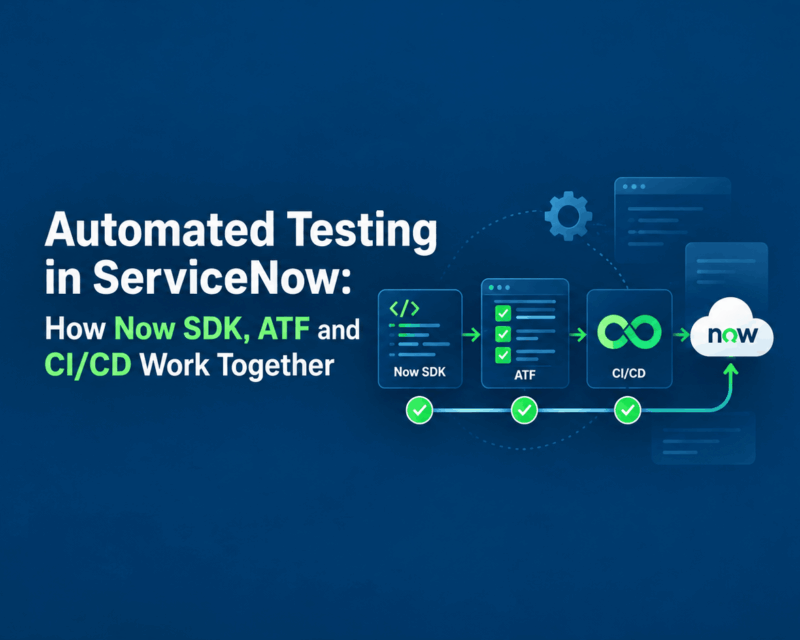
Automated Testing in ServiceNow: How Now SDK, ATF and CI/CD Work Together
Automated Testing in ServiceNow: How Now SDK, ATF and CI/CD Work Together Automated testing in ServiceNow is becoming more important, not because ATF or CI/CD are new concepts, but because the way they can work together is changing the development lifecycle itself. As ServiceNow moves toward a more source-driven engineering model, testing is becoming less […]
read more