
Citizen Development on ServiceNow: Benefits, Pitfalls, and Governance
Software development does not stand still. The new-age IT field optimizes the user experience, allowing people with any skill level to work with technologies.

Day by day, IT devices become more powerful and easier to deal with. Today, for example, programming is no longer the exclusive prerogative of experienced software engineers. Thanks to the ServiceNow citizen development governance tools we can implement today, people with any skill level can become application developers, or rather, civilian developers.
Citizen Developers: Who Are They?
The growing demand for software has given rise to quasi-programmers. Who, without being professional developers, create applications that increase their productivity. These so-called “citizen developers” are engaged in app-making as IT departments are not able to create the required software in the required time frame.
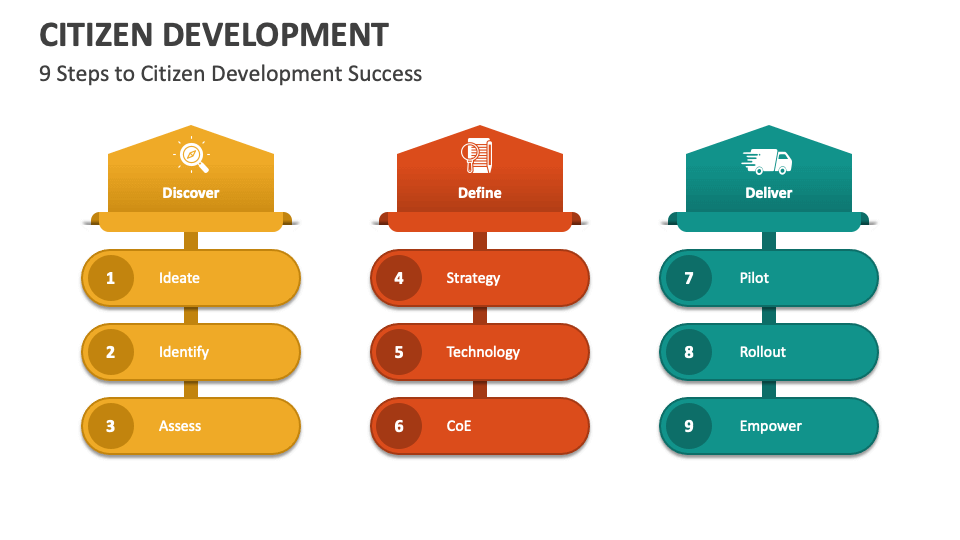
Citizen Development Benefits
Citizen development has advantages in many business areas, from employee empowerment to cost reduction and innovation.
- IT usage
We know that citizen app creation meets the growing need of modern businesses for IT, machine learning tools, and software resources of ServiceNow risk management.
- App-making effectiveness
With the help of given development programs, creating business and mobile applications for your customers becomes easier and more cost-effective.
- Employee empowerment
Citizen development can put important application software tools in the hands of ordinary makers.
- Reducing the price
When you don’t need to hire an application development team or professionals, you and your business can save a lot of money. ServiceNow best practices provide excellent tools that make work easier, smoother, and shorten and simplify the testing and verification stages of the code.
- Victory over personnel shortage
With ServiceNow process automation strategy, it becomes easier to cover the shortfall. As it is easier to acquire the skill that allows motivated employees to become citizen developers.
- Increased productivity
ServiceNow citizen development is a convenient constructor that is suitable for non-specialists, and has several tariff plans for publication in official stores.
It belongs to the category of services without a code. That is, you specify data about the site, and the system automatically performs the transformation.
Pitfalls of Citizen Development on ServiceNow
Developers who create ServiceNow governance mobile citizen apps may face risk and compliance (GRC):
- It is not possible to adapt progressive technologies quickly.
- In terms of security, the software may be inferior to applications created by professionals.
- There is a possibility of technical failures.
- ServiceNow enterprise workflows specialists may have difficulties with management and access.
You can avoid difficulties if you take seriously the selection of a designer or other service that ensures well-coordinated teamwork and rapid integration of the latest innovations.
Summary
Citizen developers are well-aware of their critical needs, which helps them focus on applications that can support and optimize business processes.
No-code/low-code platforms are visual processes using ready-made modules. This means that citizen development on ServiceNow can help users to not only create applications pretty fast, but also test them.
Make Apps without Code with Teiva Systems on ServiceNow! Discover Benefits and Details from our Managers.
Oleksii Konakhovych, CTO, Jul 08, 2025
Eager to take the next step? Contact us today!
Latest Articles
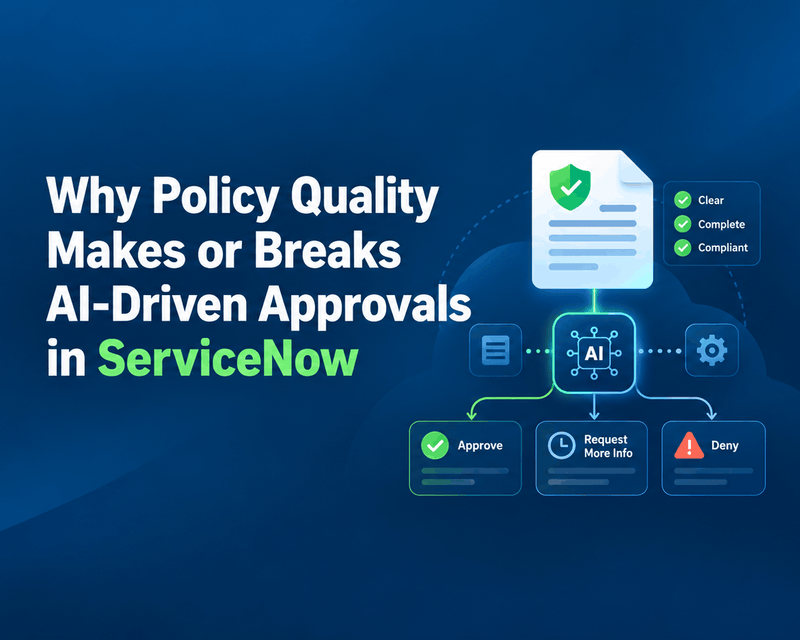
Why Policy Quality Makes or Breaks AI-Driven Approvals in ServiceNow
Why Policy Quality Makes or Breaks AI-Driven Approvals in ServiceNow AI can make approval decisions in seconds. It can also make the wrong ones, consistently, if the policy behind them is vague. As enterprises bring AI-driven approvals into ServiceNow, attention goes straight to automation: faster decisions, fewer manual tasks, shorter approval queues. One factor gets […]
read more
Teiva Systems at ServiceNow AI Summit 2026 — Munich
On October 7, 2026, Teiva Systems joined the ServiceNow AI Summit in Munich, where industry leaders, innovators, and the ServiceNow community came together to explore the next chapter of enterprise AI and intelligent automation.
read more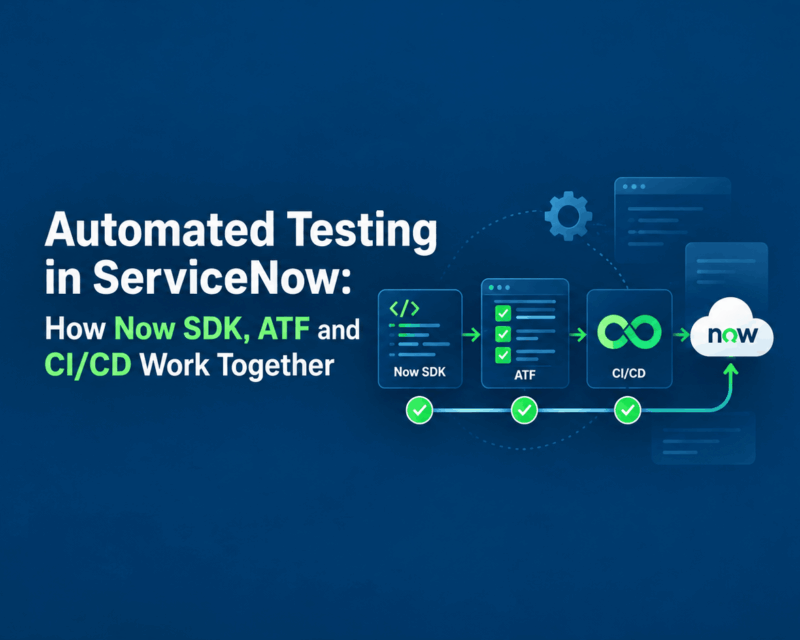
Automated Testing in ServiceNow: How Now SDK, ATF and CI/CD Work Together
Automated Testing in ServiceNow: How Now SDK, ATF and CI/CD Work Together Automated testing in ServiceNow is becoming more important, not because ATF or CI/CD are new concepts, but because the way they can work together is changing the development lifecycle itself. As ServiceNow moves toward a more source-driven engineering model, testing is becoming less […]
read more