
Agentic AI Meets Governance Topology: Embedding Ethical and Compliant AI Agents in ServiceNow
Implementing AI in telecommunications systems can be pretty challenging. One of the main obstacles is integrating AI agents with legacy infrastructure.
Besides, it is crucial to ensure a seamless flow of data between them. Managing the performance and coordinating multiple specialized AI agents requires a unified orchestration layer to prevent complexity.
Let’s explore how agentic AI meets governance topology and how to use ethical and compliant ServiceNow agentic AI governance.
The shift from automation to autonomy — why governance must evolve
The transition from automation (performing tasks based on rules under human supervision) to autonomy (advanced decision-making systems that are able to perform various tasks without human participation) requires removement from static control to dynamic organization based on trust. The key challenge in this sense lies in managing systems that can easily operate in unforeseen environments and have decision-making processes that may not be fully transparent, which requires the creation of new legal, ethical, and regulatory aspects.
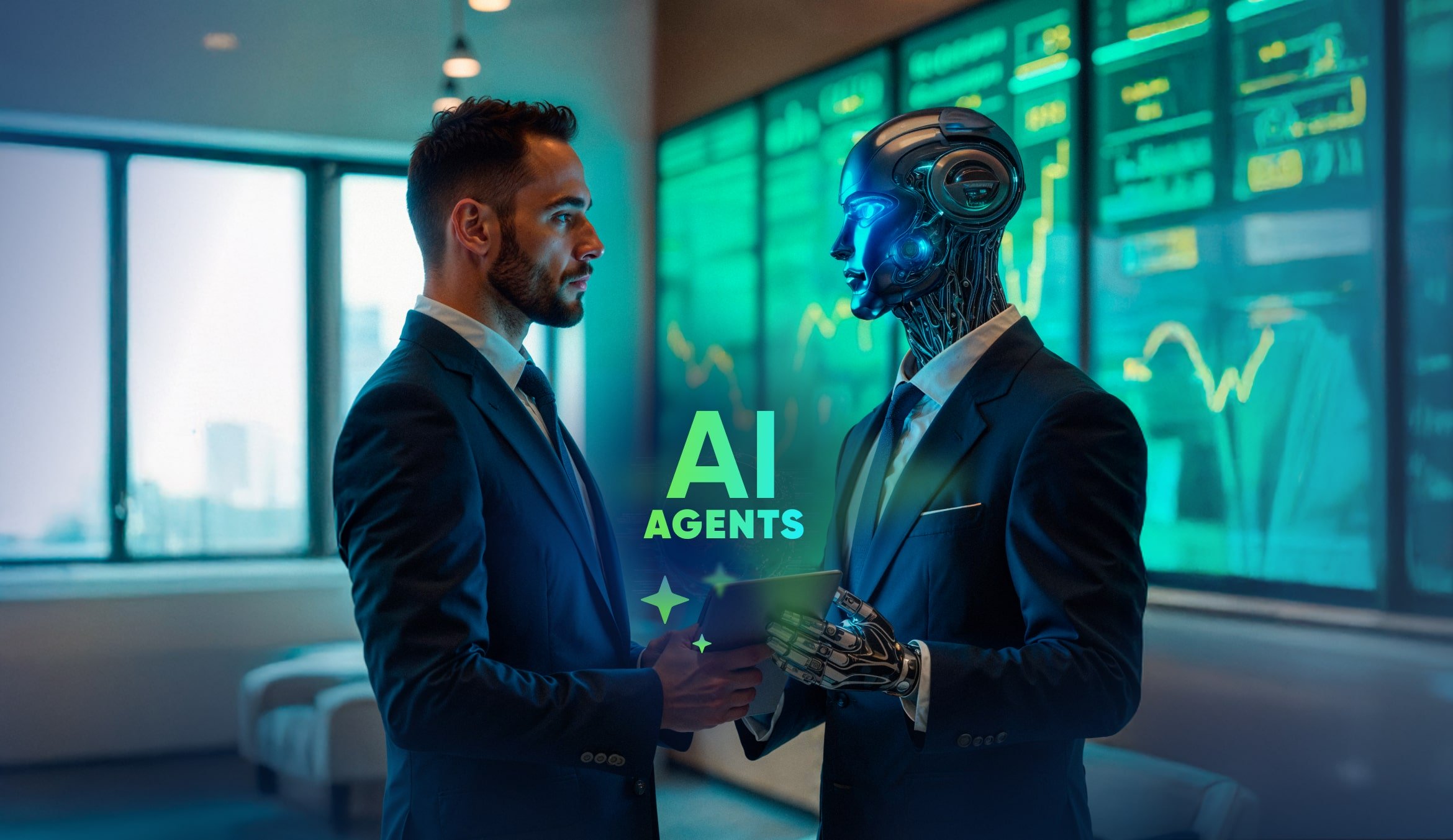
The governance must evolve as automated systems that work under predefined rules increase the efficiency, accuracy, and speed of business flows. Automation reduces the impact of human error, reduces costs, standardizes tasks, and increases competitiveness, ultimately leading to better management of complex systems and processes.
Defining Agentic Governance Topology
In fact, the agentic governance topology for AI can be visualized as follows:
| Agentic Governance Topology Components | Description |
| Domain | The key conceptual frameworks are strategic, portfolio, and technical management, which are based on classical management rules. |
| Function | There are some crucial elements within domains (e.g., technical council, design council). Note that this structure distinguishes between two management functional types. Specifically, councils and functions. |
| The Charter | The charter is the basic rules determining what a function is, why and how it is performed. One can view the definitions of the charter templates in the introduction to the management guide. |
| Metrics | Managed metrics show how effectively a specific AI governance component uses its authority (for example, the number of non-conformances, the number of requests). |
| Policy | Agreed-upon forms that govern how a management function should use its authority (for example, when to accept a custom solution design). |
| Authority | The management function comes as a set of permissions that detail the decision-making capabilities built into it, including thresholds for when it is necessary to delegate authority to a higher authority. |
| Input data | It is the ideas/requirements/requests/end results that are to be evaluated by the governance functions with the appropriate permissions (for example, a draft solution is submitted for approval). |
| Output data | The end result of the governance system is the management and control of dynamics. Elements that are accepted, processed, and displayed by the control components under the permissions granted in a particular file. |
Embedding guardrails: roles, permissions, explainability in ServiceNow AI Agents
The AI guardrails become a critical infrastructure when implementing agent-based AI. These ServiceNow agentic AI agents must act strictly within the framework of goals, ethics and security.
- Role-based access control provides data on which systems and files a particular role can access. For example, a purchasing manager and a sales management software analyst may have access to the same turnover accounting system, depending on their roles.
- Permissions ensure that each user accesses only to data that corresponds to their role and the required context.
- Explainability aims to create systems and models capable of explaining their actions and making decisions in a way that is understandable to humans.
These mechanisms control actions, prevent erroneous chains of actions, ensure data security, and comply with regulations.
Continuous compliance through GRC and AI integration
The integration of artificial intelligence into risk management and AI compliance (GRC) systems ensures continuous compliance. For example, instead of manually analyzing logs and data at the end of each quarter, an AI-based system can track any monitor anomalies and determine potential security and compliance violations.
However, implementing AI in GRC is a repetitive activity requiring every-day planning, picking the right automation vendor, and effective implementation with change management in mind.
AI workflow approvals with human oversight
The system uses a “human in the loop” approach.
Given AI option allows you to:
- Automate processes, but at the same time maintain accuracy, compliance with existing frameworks, rules and strategic control.
- Use the human element in difficult cases where AI cannot make decisions on its own. For example, in a credit approval system, AI evaluates creditworthiness based on data, but a human can intervene in exceptional cases or check the data for ethical issues.
Thus, AI agents perform repetitive tasks to provide higher productivity in key decision points.
The future: policy-as-code and self-regulating AI agents
Modern enterprises are increasingly expanding the use of agent-based AI and autonomous systems, but without effective governance, this development poses risks related to compliance, security, and trust. As autonomous workflows expand on private cloud AI platforms, hybrid environments, and critical sites, traditional control models are no longer sufficient. Manual audits and static controls cannot match the speed and complexity of modern AI governance systems.This is where policy as code (PaC) comes as a truly bright solution. By expressing ServiceNow agentic AI governance, compliance, and security rules in machine-readable code, enterprises can implement a context-aware infrastructure that consistently applies policies across all AI agents and systems.
Kostya Bazanov, Managing Director, Jan 06, 2026
Eager to take the next step? Contact us today!
Latest Articles
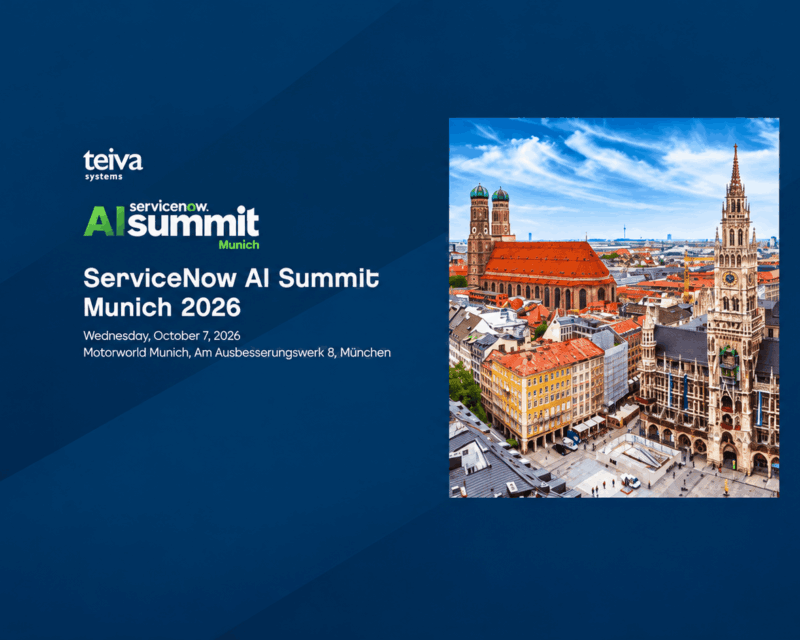
Teiva Systems at ServiceNow AI Summit 2026 — Munich
On October 7, 2026, Teiva Systems joined the ServiceNow AI Summit in Munich, where industry leaders, innovators, and the ServiceNow community came together to explore the next chapter of enterprise AI and intelligent automation.
read more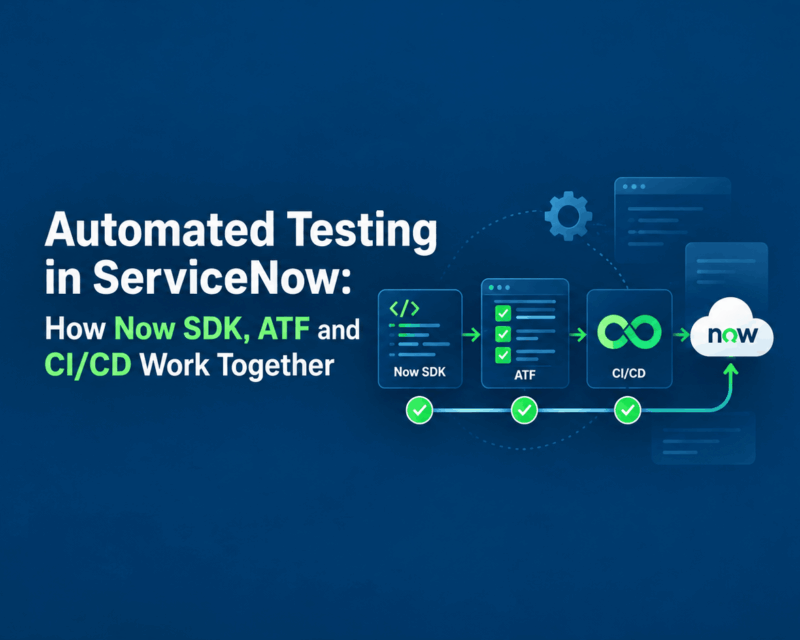
Automated Testing in ServiceNow: How Now SDK, ATF and CI/CD Work Together
Automated Testing in ServiceNow: How Now SDK, ATF and CI/CD Work Together Automated testing in ServiceNow is becoming more important, not because ATF or CI/CD are new concepts, but because the way they can work together is changing the development lifecycle itself. As ServiceNow moves toward a more source-driven engineering model, testing is becoming less […]
read more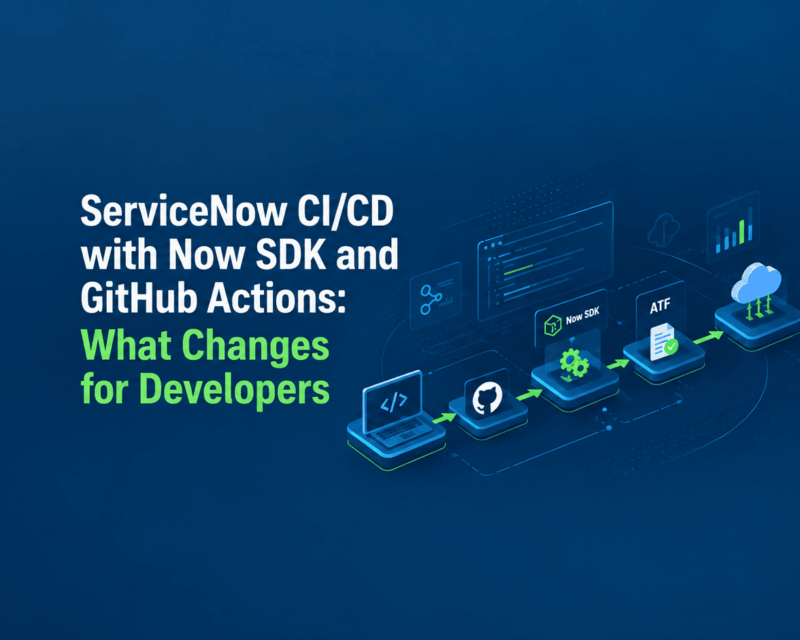
ServiceNow CI/CD with Now SDK and GitHub Actions: What Changes for Developers
The Now SDK connects ServiceNow application development to GitHub Actions CI/CD pipelines — bringing pull-request quality gates, automated ATF testing, and controlled release governance to a platform that has historically required its own isolated delivery process.
read more