
ServiceNow Intelligent Approvals: How AI Clears Approval Bottlenecks Without Losing Control
Your automation is fast. Your approvals are not.
Organizations invest heavily in automation, AI and digital transformation. Yet many business processes still stall at the same point: waiting for someone to click “Approve.”
- A routine access request sits in a manager’s inbox.
- A low-risk change waits for a review that adds little value.
- A standard purchase passes through several approval stages, even though policy already defines the outcome.
Approvals themselves are not the problem. The problem is asking people to make decisions their policies have already made.
ServiceNow Intelligent Approvals tackles this by using your existing policy documents to guide approval decisions. AI interprets the policy, moves clear-cut requests forward automatically and routes the rest to people. The result: fewer delays, with accountability intact.
This article explains how it works, where it pays off, why policy quality decides success, and how to measure the impact.
Why Traditional Approval Workflows Become Bottlenecks
Approval workflows exist for good reasons. They protect sensitive systems, enforce financial controls, support compliance and give important decisions proper oversight.
As organizations grow, approval chains grow with them. Simple requests pick up extra review steps, even when the conditions for approval are clear.
Example: a company processes hundreds of routine access requests each month. A manager reviews every one, even though the access policy already answers the question. The same predictable decision is made again and again.
Classic workflow automation helps, but it adds its own cost. Developers must translate policies into conditions, decision tables and approval logic, then revisit that configuration whenever requirements change.
That leaves two sources of friction:
- Employees wait for approvals
- Development teams maintain the rules behind them
The real opportunity is not to remove approvals. It is to remove unnecessary approval work.
What Is ServiceNow Intelligent Approvals?
ServiceNow Intelligent Approvals is a policy-driven approach to approval automation. Instead of developers encoding every policy condition by hand, AI interprets existing approval policies and supports automated decisions.
According to ServiceNow’s platform updates, Intelligent Approvals can read policy documentation and automate routine approval handling. ServiceNow confirmed general availability beginning in May 2026.
Three possible outcomes for every request
- Automatic approval: the request clearly satisfies the policy’s conditions
- Automatic rejection: the request clearly violates the policy’s requirements
- Human review: the policy cannot confidently determine the outcome, or the case requires manual authorization
Oversight stays in place. Only the repetitive decisions leave your employees’ queues.
How Intelligent Approvals Works in Practice
The principle is simple: let established policies drive routine decisions instead of rebuilding the same rules manually.
- Provide the policy: a supported source, such as a PDF document or a ServiceNow Knowledge Base article.
- Let AI interpret it: AI identifies the relevant approval rules and suggests where the policy should apply.
- Review and configure: your team checks the interpretation and sets up the appropriate triggers.
- Test, then publish: results are validated before the policy goes live.
- Decide at runtime: each request is evaluated against the published policy, then approved, rejected or routed to a person.
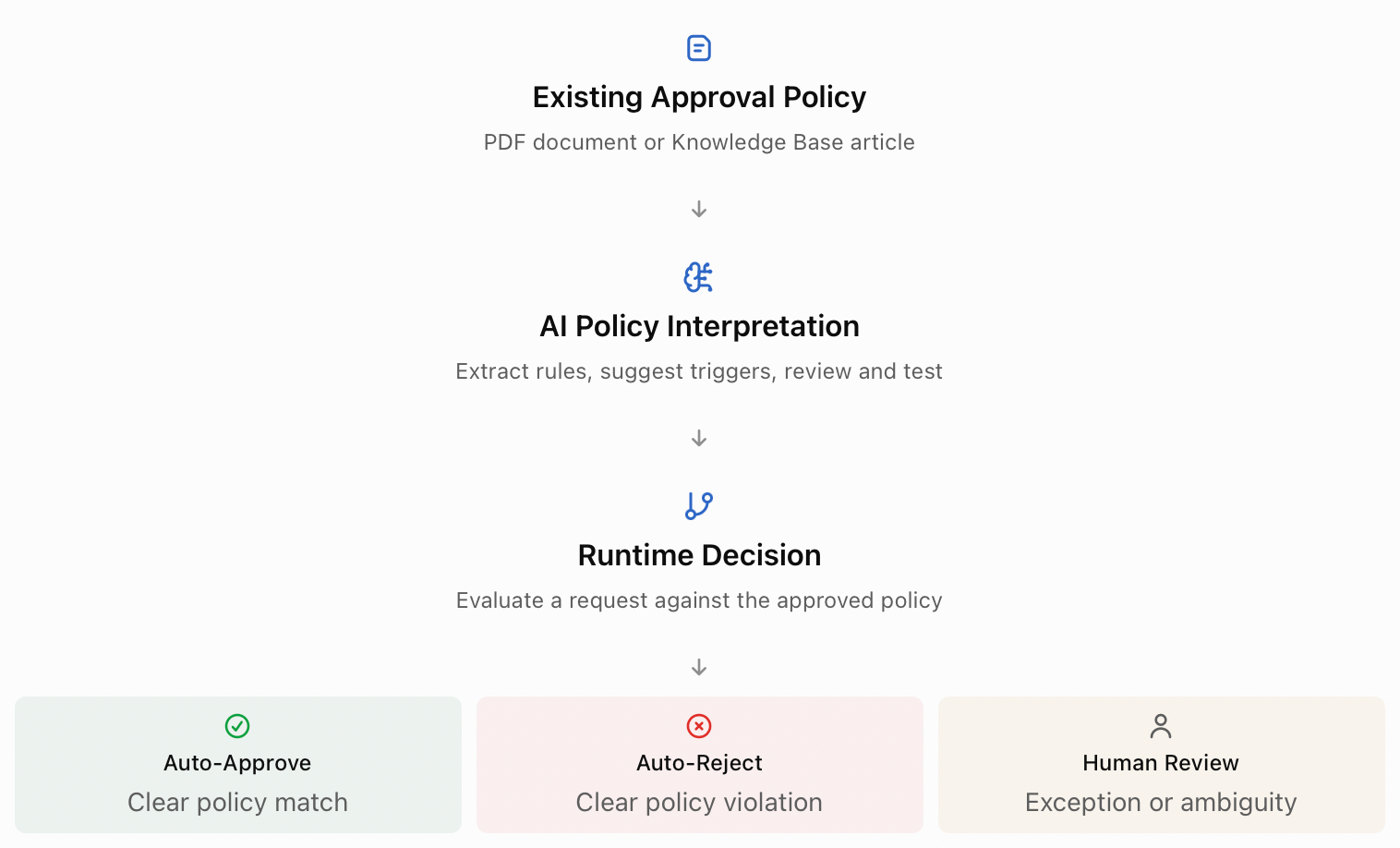
Figure 1. Intelligent Approvals turns an existing policy into three runtime outcomes.
ServiceNow’s Intelligent Approvals documentation covers policy creation, permission requirements and testing. Its developer walkthrough also shows how Intelligent Approvals works alongside existing approval workflows, so organizations do not have to rebuild them.
Illustrative example: a software access request
Imagine an access policy that allows a standard application for employees in a named department, but reserves elevated privileges for manual authorization:
- Standard access, all conditions met → automatic approval; no waiting for a manager
- An application the policy explicitly excludes → automatic rejection
- A request for admin rights → human review by an authorized approver
Where Intelligent Approvals Delivers Real Business Value
The best candidates combine high request volumes, clearly documented policies and predictable decision criteria.
IT service management and change approvals
IT teams process access requests, service changes and operational approvals every day. High-risk changes need careful assessment, but low-risk requests often follow predefined policies.
If certain standard changes may proceed once they meet set requirements, Intelligent Approvals can check each request against that policy. Eligible cases move forward; sensitive changes go to authorized reviewers.
Employee services and internal requests
HR and employee service teams handle repetitive approvals too. Leave requests, standard employee services and other policy-governed processes may suit automation when eligibility rules are clear. Exceptions and sensitive personnel decisions should keep human oversight.
Procurement and financial workflows
Purchasing typically involves spending limits, authorized requesters and approval thresholds. When the policy clearly separates permitted purchases from exceptions, Intelligent Approvals can cut unnecessary review cycles.
A routine purchase within an approved budget may be handled automatically, while an unusually expensive or non-standard request still needs extra authorization.
Across all three areas, the aim is the same: reserve human attention for decisions where it adds value.
Why Policy Quality Matters More Than Ever
Intelligent Approvals changes how policies are used, but it cannot make outdated or ambiguous policies reliable. Unclear language, conflicting requirements or undefined exceptions create uncertainty during AI interpretation.
Take a policy stating that a request “may be approved under appropriate circumstances.” It leaves the key questions open:
- Which circumstances qualify?
- Who makes the decision?
- What information must be available?
Before you deploy
- Review policy documents and make conditions explicit
- Remove conflicting or outdated clauses
- Assign a clear owner to every policy
- Keep documentation and approval configuration aligned when requirements change
Policy quality now directly drives workflow performance. The clearer the policy, the more requests can be automated consistently. Ambiguous policies will keep generating exceptions for human review.
Human Oversight Is Still Essential
Automating routine approvals does not mean letting AI make every enterprise decision. Requests involving sensitive information, financial exposure, security risk or regulatory requirements may demand explicit human authorization.
A well-designed implementation separates decisions that can safely follow documented rules from those that need judgment. This matters because Intelligent Approvals can make final automated decisions for cases its configured policy covers. Teams should not assume a completed decision can simply be reversed afterwards.
Pre-production checklist
- Validate how the policy is interpreted
- Test with incorrect and incomplete data
- Review escalation behavior
- Confirm sensitive requests cannot bypass required controls
Our article ServiceNow AI Agent Testing: 7 Checks Before Production explains why approval workflows, permissions and exception handling must be tested before AI-driven processes go live.
The goal is controlled automation, not uncontrolled autonomy.
How Teiva Systems Approaches Approval Automation
At Teiva Systems, we see Intelligent Approvals as part of a wider shift toward policy-driven, AI-enabled enterprise operations. Success takes more than switching a feature on. Our approach:
- Find the right opportunities: separate approvals that add business value from those that only add delay.
- Assess readiness: policy quality, workflow dependencies, permissions and governance requirements.
- Prepare the policies: clarify conditions and assign owners.
- Validate outcomes: test decisions before go-live.
- Embed and monitor: integrate the workflows into a sustainable operating model.
Start with one focused use case
We recommend starting with a single high-volume, low-risk workflow with well-defined rules, rather than automating every approval at once. Teams can set performance baselines, measure automation coverage, review exceptions and refine policies before expanding.
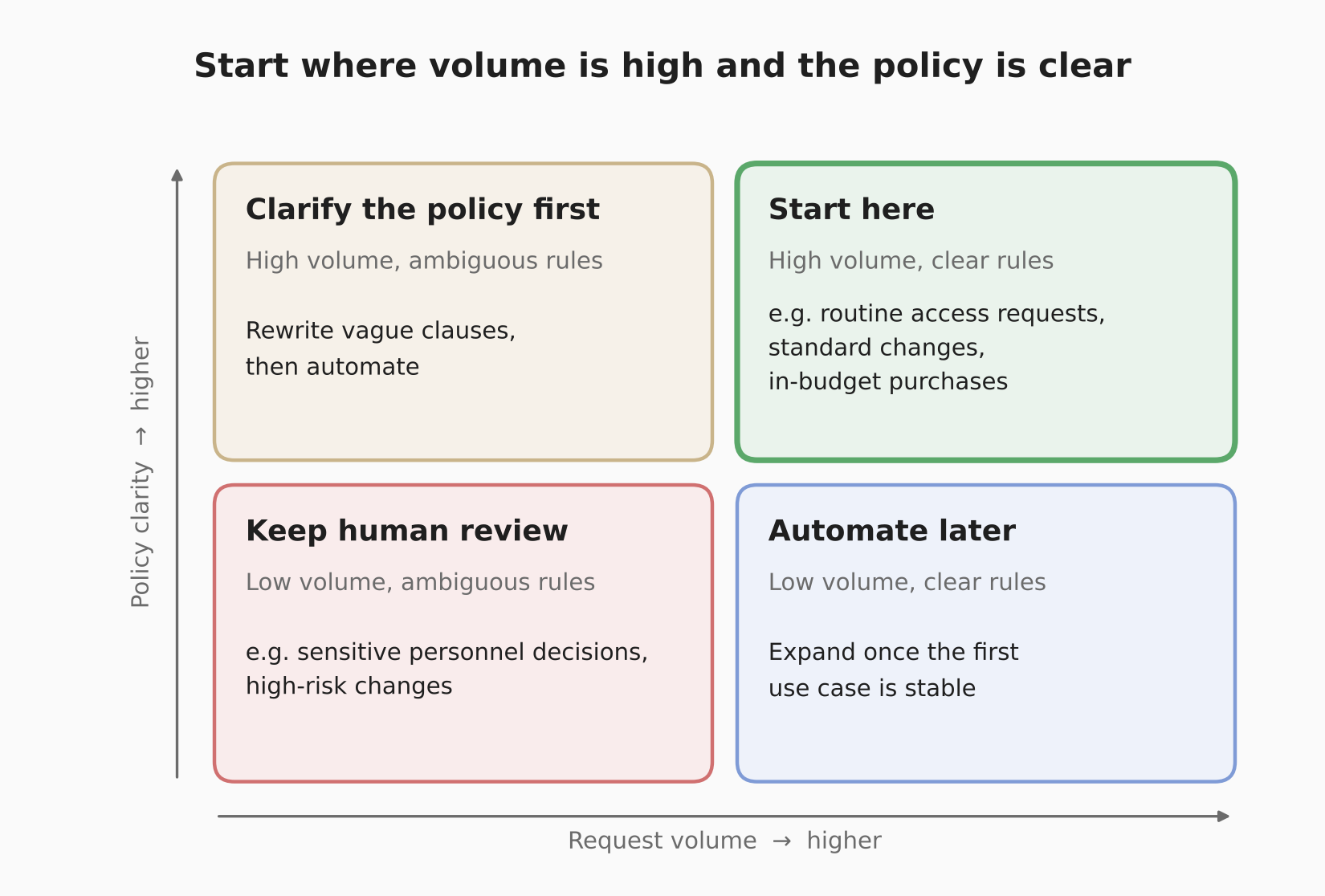
Figure 2. Pick the first use case by request volume and policy clarity.
This reflects our wider view on enterprise AI governance in ServiceNow: effective automation needs clear ownership, operational controls and continuous monitoring.
How to Measure the Impact of Intelligent Approvals
Judge success by business outcomes, not by the number of decisions automated. Four metrics give a solid starting point:
| Metric | What it answers |
|---|---|
| Approval cycle time | How long does a request take from submission to decision? |
| Automation coverage | What share of eligible requests receives an automated decision? |
| Exception rate | How often do requests need human intervention? |
| Decision quality | Do outcomes match approved policy, with errors caught through testing and review? |
Read them together. A high automation rate means little if incorrect decisions raise operational risk. Faster processing adds little if exception queues stay overloaded. The strongest results combine efficiency, policy accuracy and clear accountability.
The Bigger Picture: From Approval Queues to Intelligent Governance
For years, enterprise automation focused on executing tasks faster. Intelligent Approvals improves how organizations make the decisions that let those tasks proceed.
Policies are applied consistently, and human attention goes to exceptional or sensitive cases. That also lays the groundwork for more autonomous AI workflows, where every automated action must stay tied to defined policies and accountable decisions.
The future of enterprise approvals is not about removing people from the process. It is about involving them when their judgment truly matters.
Key Takeaways
- Many approval bottlenecks are routine decisions the policy already answers
- Intelligent Approvals uses existing policy documents, such as PDFs or Knowledge Base articles, to guide decisions
- Every request ends in one of three outcomes: auto-approve, auto-reject or human review
- Policy clarity determines how much can be automated
- Test interpretation, edge cases and escalation before production
- Start with one high-volume, low-risk workflow and track four metrics
Ready to Clear Your Approval Queue?
Teiva Systems helps organizations assess approval workflows, prepare their policies and implement ServiceNow Intelligent Approvals with the right controls in place. Talk to our ServiceNow team to identify your first use case.
Oleksii Konakhovych, CTO, Oct 19, 2026
Eager to take the next step? Contact us today!
Latest Articles
Why Policy Quality Makes or Breaks AI-Driven Approvals in ServiceNow
As enterprises bring AI-driven approvals into ServiceNow, attention goes straight to automation: faster decisions, fewer manual tasks, shorter approval queues. One factor gets far less attention: the quality of the policies behind those decisions.
read more
Teiva Systems at ServiceNow AI Summit 2026 — Munich
On October 7, 2026, Teiva Systems joined the ServiceNow AI Summit in Munich, where industry leaders, innovators, and the ServiceNow community came together to explore the next chapter of enterprise AI and intelligent automation.
read more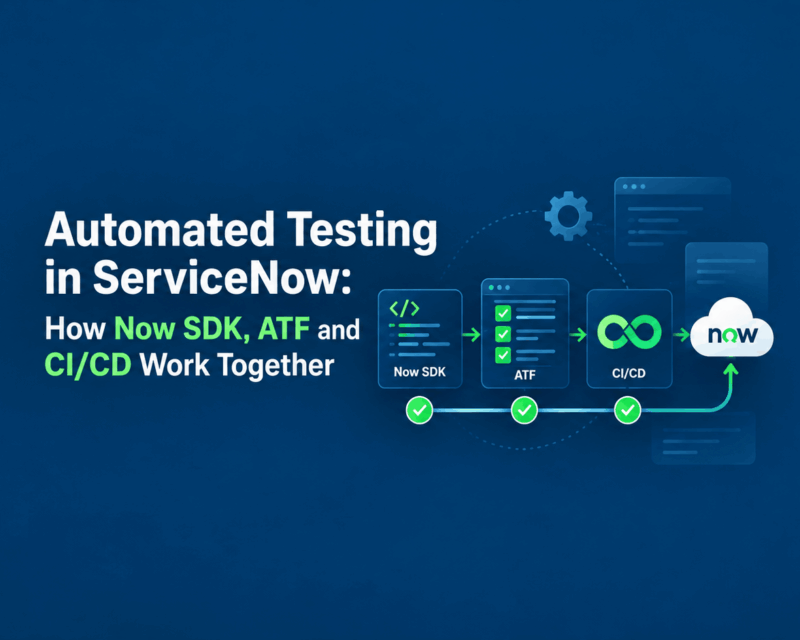
Automated Testing in ServiceNow: How Now SDK, ATF and CI/CD Work Together
Automated testing in ServiceNow is becoming more important, not because ATF or CI/CD are new concepts, but because the way they can work together is changing the development lifecycle itself. As ServiceNow moves toward a more source-driven engineering model, testing is becoming less of a separate activity at the end of development and more of a built-in part of the delivery process.
read more