
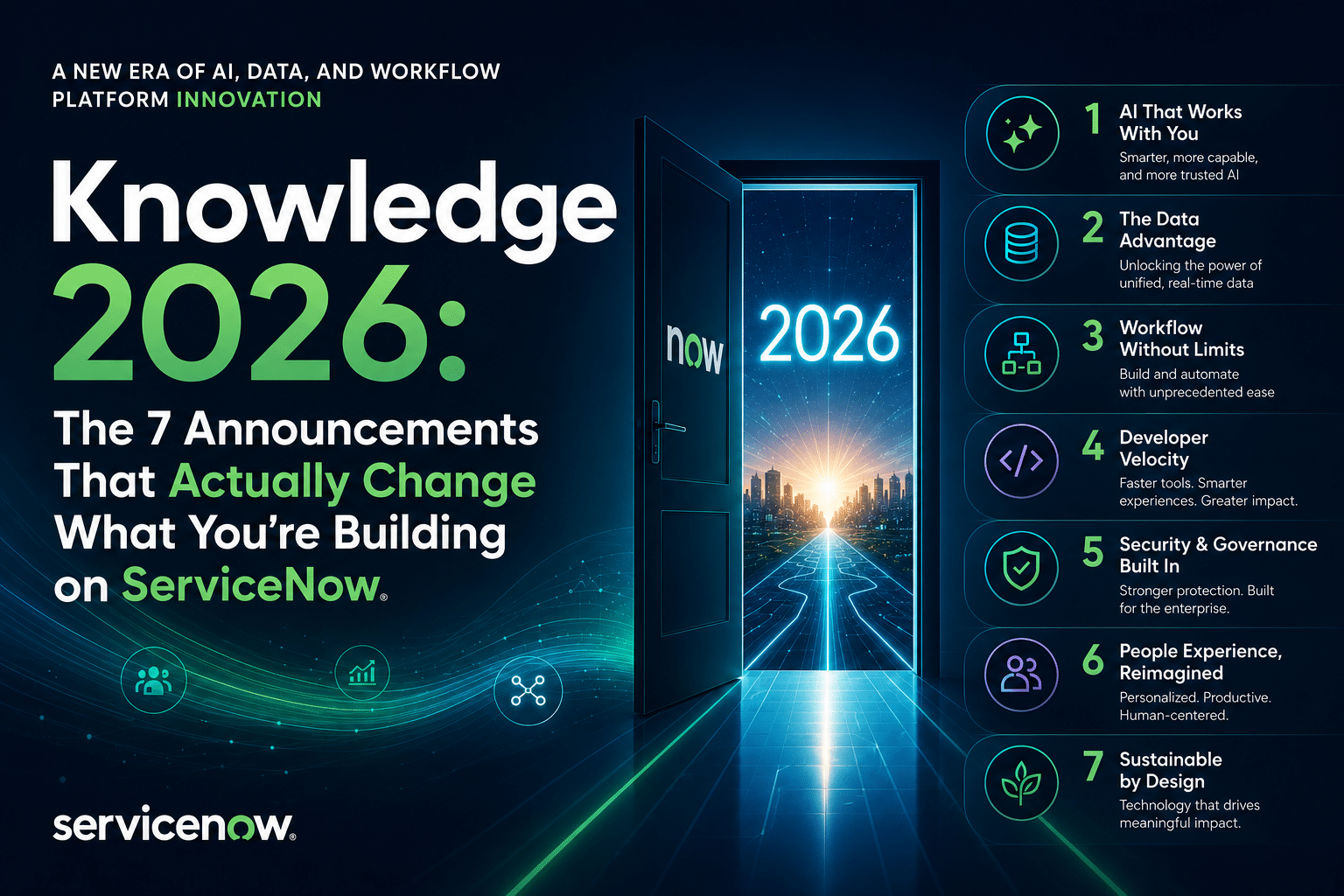
Knowledge 2026: The 7 Announcements That Actually Change What You’re Building on ServiceNow
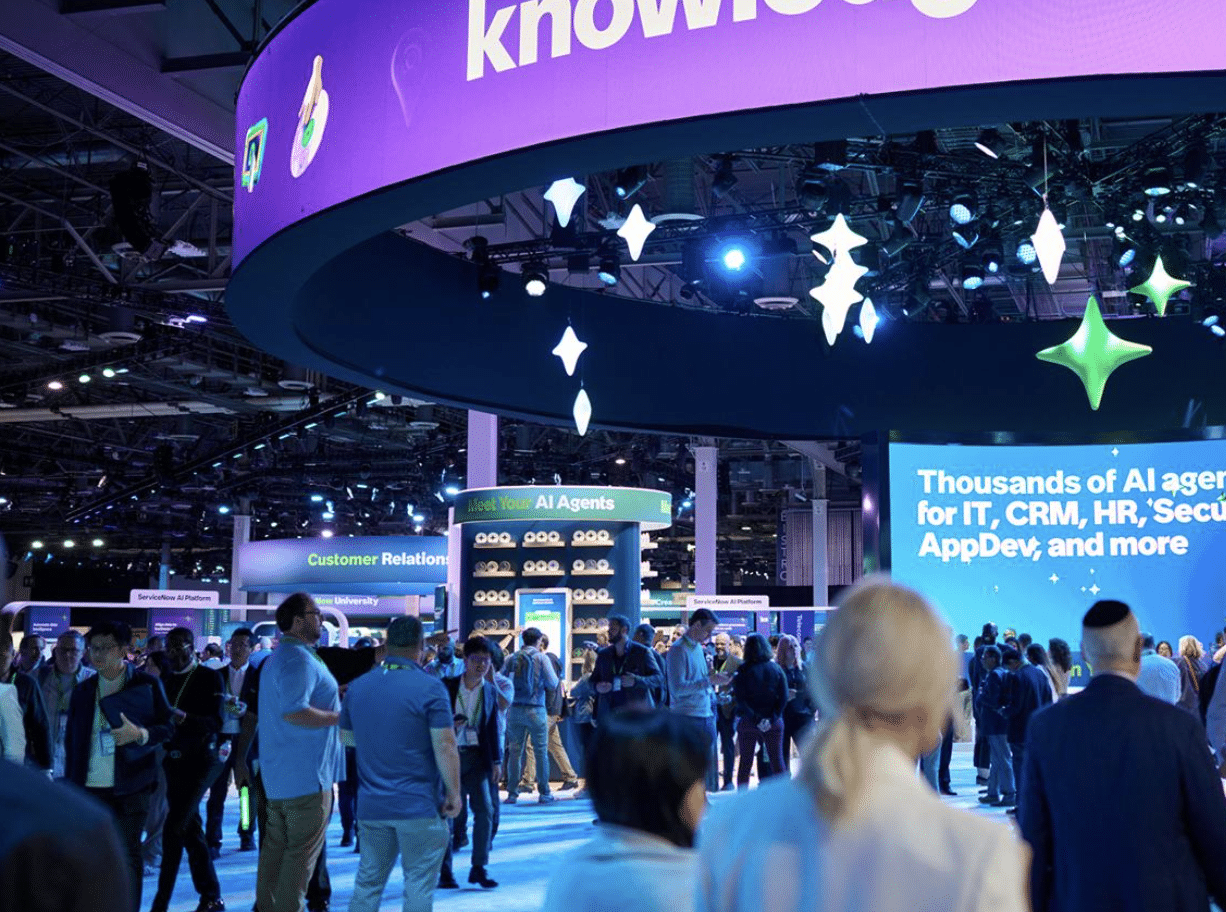
25,000 people. Three days in Las Vegas. One signal that’s impossible to ignore: the era of AI that advises but stops short of execution is over. Here’s what actually matters — and what you need to do about it now.
“Digital transformation is no longer the headline. That debate is over.”
At ServiceNow Knowledge 2026, the real question was more practical: how do companies actually build, govern, and scale AI-powered work across the enterprise?
Not in disconnected pilots. Not in isolated chatbots. Not in tools that create more operational noise.
ServiceNow’s message was clear: the future belongs to companies that can connect AI, data, workflows, and governance in one execution layer. The official Knowledge 2026 announcements page highlights major updates across Otto, Action Fabric, AI Control Tower, Autonomous Workforce, Project Arc, and the Australia release.
Here are the seven announcements that actually change what companies should be building on ServiceNow right now.
1. Action Fabric
Any AI agent — Claude, Copilot, or your own build — can now execute governed work inside ServiceNow
Action Fabric may be one of the most important announcements for architects and platform owners.
It opens ServiceNow’s system of action to AI agents built on ServiceNow, Claude, Microsoft Copilot, or a company’s own internal stack. ServiceNow says agents can connect through its generally available MCP Server and trigger secure, governed enterprise actions headlessly.
That matters because this is not just data access. It is workflow execution.
An AI assistant that can read information is useful. An AI agent that can trigger approvals, launch playbooks, update records, or initiate service requests becomes part of your operating model.
What to build now: review every AI agent or assistant in your environment and identify where governed ServiceNow execution could replace manual handoffs.
Teiva insight: “This is the most architecturally significant announcement of Knowledge 2026. The question it creates for every project you’re running: where does governance live — in the model, in a bolt-on compliance tool, or in the workflow execution layer where work actually happens? Action Fabric makes the third option available to any agent in your stack. Before connecting external agents, audit your flows. Action Fabric will execute exactly what your workflows say. If your workflows are wrong, agents will execute wrong work — quickly and at scale.”
2. ServiceNow Otto
Now Assist + Moveworks + AI Experience unified into one AI that stops advising and starts completing work
ServiceNow Otto brings conversational AI, enterprise search, multimodal interaction, and autonomous workflow orchestration into one unified AI experience.
According to ServiceNow, Otto is designed to understand intent, route work to the right agent, and execute tasks to completion across systems and departments. It is also governed by AI Control Tower, which can log interactions, enforce policies, and provide explainability.
This changes the user experience dramatically. Employees should no longer need to know which portal, form, module, or workflow to use. They should be able to describe the outcome they need and let the platform coordinate the work.
What to build now: clean your knowledge base before rolling out Otto. Poor knowledge articles will become poor AI answers.
Teiva insight: “Otto changes the relationship between your employees and the ServiceNow platform. They no longer need to know which portal, module, or form to open. They describe what they need and the platform orchestrates the rest. The implication most organisations are underestimating: if your knowledge articles are outdated, Otto will surface that failure visibly and instantly — in front of your employees. Knowledge article quality is no longer a back-office concern. It is the front-facing experience your people will judge your IT team by.”
3. AI Control Tower
Five dimensions: Discover, Govern, Secure, Observe, Measure — now governs every agent regardless of where it runs
AI governance was one of the strongest themes of Knowledge 2026.
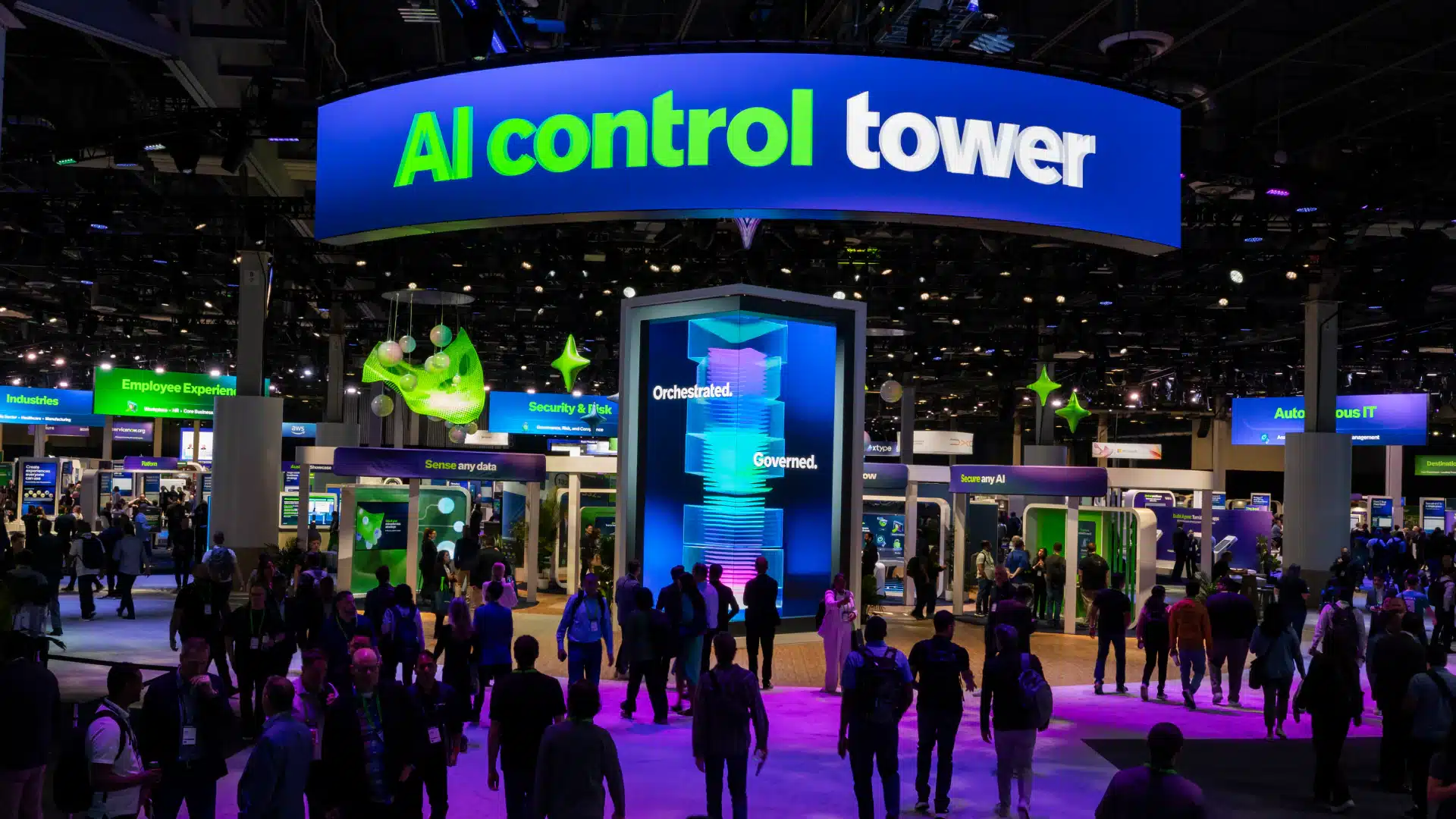
AI Control Tower expanded from a governance dashboard into a full enterprise AI command centre. Five dimensions: Discover (30 new integrations across AWS, Azure, Google Cloud, SAP, Oracle, Workday), Govern (risk assessment and policy enforcement), Secure (AI identity via Veza’s 30-billion-permission access graph), Observe (real-time runtime monitoring via Traceloop), and Measure (ROI dashboards tied to business outcomes). The keynote demo showed the kill switch catching a prompt injection attack attempting to override pricing rules and suppress its own audit logs. That demo was theatrical. It was also technically honest.
What to build now: define governance policies before scaling agents. AI Control Tower should not be added after the first incident.
Teiva insight: 44% of enterprise AI leaders have only moderate confidence that agents can act autonomously without supervision — yet two-thirds have already deployed multi-agent systems in live workflows. That gap is exactly what AI Control Tower addresses. The critical point we tell every client: it does not govern itself. It requires policy definition, configuration, and active ownership. Organisations that activate it from day one are the ones that scale agents without incidents. Everyone else eventually has a story about why they didn’t. The kill switch is only useful if it’s already set up when you need it.
4. Autonomous Workforce
AI Specialists Become Digital Teammates
ServiceNow’s Autonomous Workforce announcement signals a shift from general AI assistants to role-specific AI specialists.
ServiceNow announced new AI specialists for IT, CRM, employee service teams, and security and risk, describing them as AI specialists that work alongside humans to complete end-to-end processes.
The strategic point is not just the number of specialists. It is the shared foundation underneath them: data, workflows, context, and governance.
That means your CMDB quality, process maturity, knowledge base, and workflow design now matter even more. The cleaner your foundation, the faster you can activate useful AI specialists.
What to build now: start with the function that has the cleanest data and highest ticket volume. Prove value there, then expand.
Teiva insight: “The shared foundation is the strategic insight most organisations miss. This is not a portfolio of point solutions — it is one execution layer applied across every business function. That means your data readiness work in one area compounds across all others. A CMDB you clean for your IT Specialist directly accelerates your HR Specialist activation. A governance framework you build for Security directly governs Finance. Organisations that treat each specialist as an independent implementation will pay the data debt multiple times. Those that invest in the shared foundation will activate subsequent specialists at a fraction of the cost and time.”
5. Autonomous CRM
ServiceNow challenges legacy CRM directly — from system of record to system of action
Autonomous CRM is ServiceNow’s challenge to traditional CRM architecture.
The idea is simple: CRM should not only record customer activity. It should help complete the work — from lead qualification and quoting to order fulfillment, renewals, invoice disputes, and case resolution.
ServiceNow has positioned its CRM approach around connecting workflows across departments and reducing inefficient processes held together by spreadsheets, shared inboxes, and human middleware.
For companies already using ServiceNow for ITSM, CSM, HRSD, or operations, this creates a serious consolidation question. Do you want customer work split across separate systems, or do you want one execution layer connecting service, sales, operations, and fulfillment?
What to build now: map your CRM-to-service handoffs. Wherever context is lost, delays happen, or employees become “human middleware,” ServiceNow now has a stronger native argument.
Teiva insight: This is an architectural argument, not a feature announcement. If your organisation runs ServiceNow for ITSM, HRSD, and customer service — and a separate CRM for sales — Knowledge 2026 is the first time ServiceNow has given you a credible reason to challenge that separation. Not as a migration project. As a consolidation question: do you want two execution layers, or one? That conversation will happen in your organisation in the next 12 months whether you start it or not. Map your CRM-to-service handoffs now. Wherever context is lost or employees become human middleware, ServiceNow now has a native argument that didn’t exist a year ago
6. Project Arc
An autonomous desktop agent that navigates a computer like a human — governed by AI Control Tower
Project Arc may be early, but it points to where enterprise automation is going next.
ServiceNow and NVIDIA announced Project Arc: an enterprise autonomous desktop agent for knowledge workers, developers, and IT teams. Unlike task-based automation, Arc navigates a desktop the way a human does — reading screens, writing code, executing commands, adapting when things go wrong — completing complex multi-step work across enterprise tools without pre-built workflows. Every action runs inside NVIDIA OpenShell (sandboxed runtime) and is governed by ServiceNow AI Control Tower. All files read, commands executed, and APIs called are fully logged and auditable. Jensen Huang on the Knowledge 2026 stage: “ServiceNow is essentially the AI enterprise operating system — and that is really coming true.”
What to build now: brief IT security and endpoint management teams early. This is not just a platform topic — it is a governance topic.
Teiva insight: “Project Arc is early preview — not in your production environment yet. But the architecture it represents has implications for your planning today. Autonomous agents will not stay inside workflows and forms. They will move to endpoints: navigating applications, reading screens, completing tasks that currently require a human with a keyboard. Your IT security architecture, endpoint management policies, and acceptable-use frameworks need to account for this before the agents arrive — not after an incident forces the conversation.”
7. Australia Release
The platform baseline for agentic AI — and a $30B signal every ServiceNow partner needs to read
The Australia is the first ServiceNow platform version designed around agentic AI execution rather than retrofitted onto an existing architecture. It brings L1 IT Service Desk AI Specialist to GA, RaptorDB performance improvements (PayPal: database tasks 2x faster, longest operations 5x faster), and AI Control Tower v2 as the platform default. At Analyst Day on May 4, ServiceNow set a 2030 target: $30 billion-plus in subscription revenues, with AI representing over 30% of annual contract value. That is not a financial projection. It is a platform commitment.
What to build now: assess your upgrade readiness. If your instance is more than one release behind, fix that before launching serious AI initiatives.
Teiva insight: A company targeting $30B at 30%+ AI ACV contribution will invest heavily in the partnerships, certifications, and co-selling motions that make those numbers possible. For Teiva and for every organisation building on ServiceNow: this de-risks long-term investment in ServiceNow-native AI capabilities. The Australia release also sets a practical baseline. If your instance is more than one release behind, you are now running behind the AI execution layer. That gap compounds with each subsequent release. Upgrading to Australia is not an IT housekeeping task — it is a prerequisite for everything announced this week.
The Real Message from Knowledge 2026
“Knowledge 2025 was about proving ServiceNow had an AI strategy. Knowledge 2026 was about proving it has an execution strategy. That distinction is not semantic — it changes what you should be building, and how fast.”
— Kostya Bazanov, Managing Director, Teiva Systems
The biggest takeaway from Knowledge 2026 is not that ServiceNow announced more AI.
Everyone is announcing AI.
The real message is that ServiceNow is building the control layer for enterprise AI work: where agents are governed, actions are auditable, workflows are connected, and outcomes are measurable.
That changes what companies should prioritize.
Not another disconnected AI pilot.
Not another chatbot sitting outside the operating model.
Not another integration that moves data but leaves people chasing the work.
The companies that move fastest will be the ones that treat ServiceNow as the execution layer for AI-powered operations — and clean up the foundation now.
Because the question after Knowledge 2026 is no longer whether AI will change enterprise work.
The question is whether your ServiceNow platform is ready to let AI actually do it.
The 3 Things to Get Right Before You Build Anything
Before activating any Knowledge 2026 capability — do these three things first:
→ Fix your CMDB. Every AI Specialist, every Action Fabric workflow, every Otto answer depends on it. A CMDB below 80% accuracy is not a foundation — it is a liability that will execute at agent speed.
→ Assign an AI governance owner. AI Control Tower does not govern itself. One named individual — not a committee — who owns agent policy, monitors behavior, and has the authority to pause deployment.
→ Define success metrics before you build. The organisations winning AI budget approval in 2026 are the ones who can answer “what happens to our P&L in Q2?” before they are asked.
Kostya Bazanov, Managing Director, May 19, 2026
Eager to take the next step? Contact us today!
Latest Articles
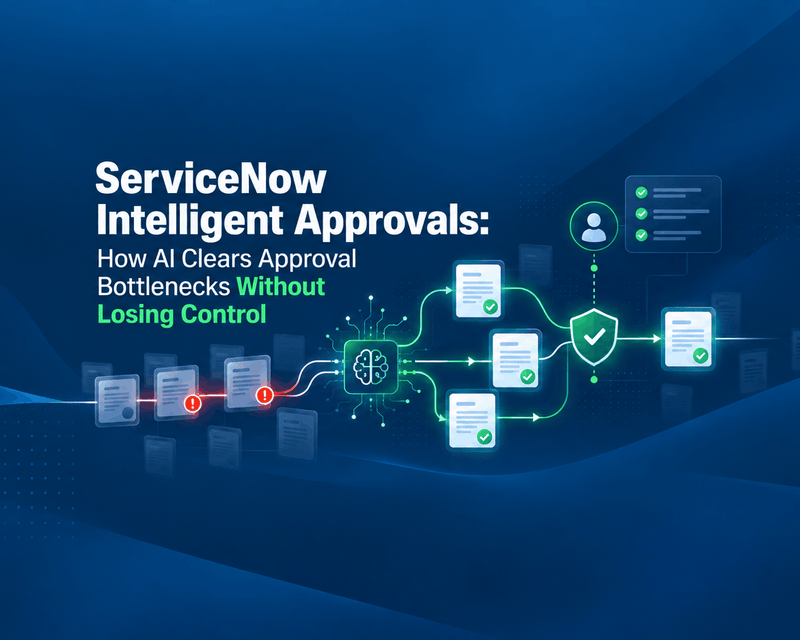
ServiceNow Intelligent Approvals: How AI Clears Approval Bottlenecks Without Losing Control
Your automation is fast. Your approvals are not. Organizations invest heavily in automation, AI and digital transformation. Yet many business processes still stall at the same point: waiting for someone to click “Approve.”
read more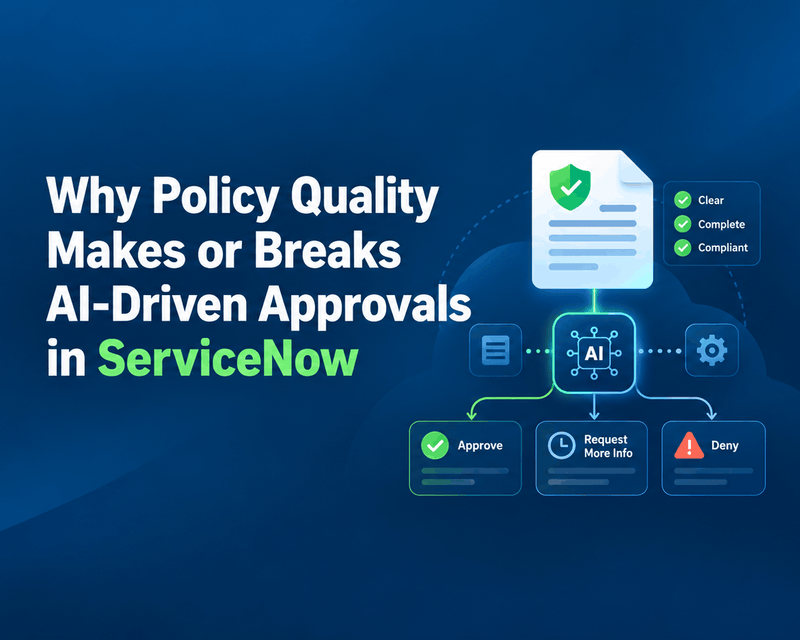
Why Policy Quality Makes or Breaks AI-Driven Approvals in ServiceNow
As enterprises bring AI-driven approvals into ServiceNow, attention goes straight to automation: faster decisions, fewer manual tasks, shorter approval queues. One factor gets far less attention: the quality of the policies behind those decisions.
read more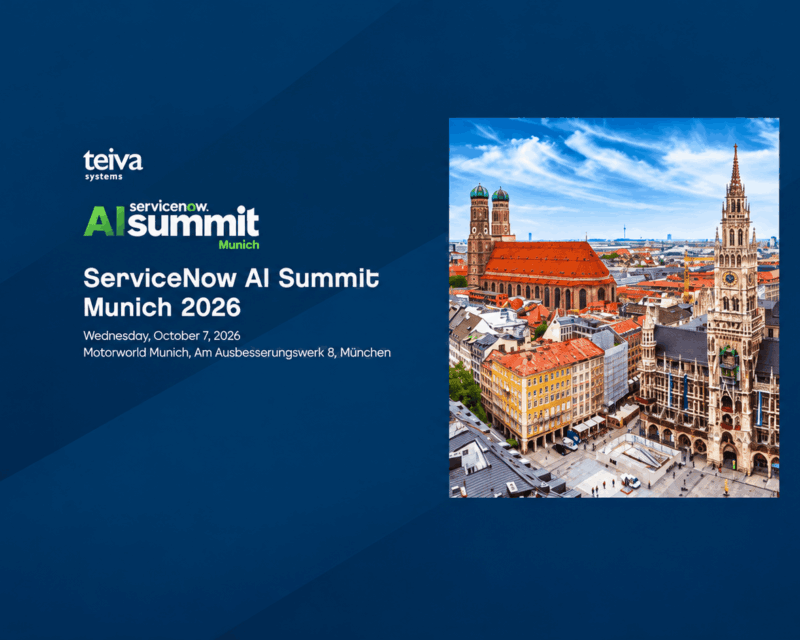
Teiva Systems at ServiceNow AI Summit 2026 — Munich
On October 7, 2026, Teiva Systems joined the ServiceNow AI Summit in Munich, where industry leaders, innovators, and the ServiceNow community came together to explore the next chapter of enterprise AI and intelligent automation.
read more