
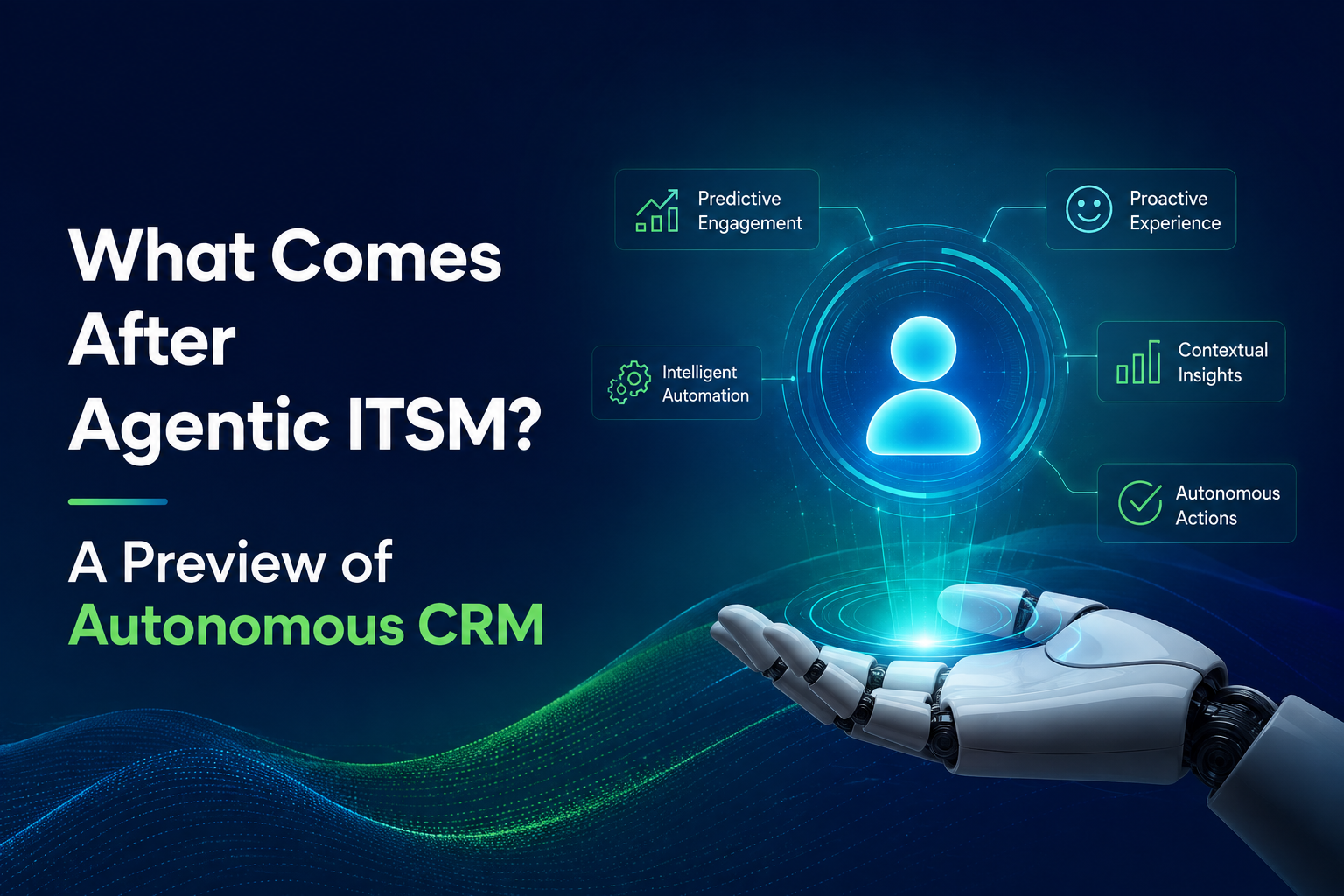
What Comes After Agentic ITSM? A Preview of Autonomous CRM
How ServiceNow’s next AI evolution could transform customer operations — and why organizations should prepare before Autonomous CRM arrives.
Over the past year, enterprise AI conversations have revolved around Agentic ITSM.
Organisations have watched AI evolve from a helpful assistant into something much more capable. Instead of merely recommending actions, AI specialists are beginning to resolve incidents, classify requests, execute workflows, and coordinate operational work with minimal human intervention. The Australia release accelerates this transformation by introducing AI specialists that can complete end-to-end work while remaining governed by enterprise controls.
But if you’ve been following the ServiceNow roadmap carefully, one message becomes clear:
IT Service Management is not the destination. It is the proving ground.
The next major shift is not happening inside IT. It is happening inside Customer Relationship Management.
ServiceNow has already previewed Autonomous CRM as part of its broader Autonomous Workforce vision. While many capabilities are still evolving, the direction is unmistakable: customer-facing operations are becoming the next environment where AI does not simply assist employees — it begins executing work itself.
From AI Assistance to AI Execution
The first generation of CRM AI focused on productivity. It made employees faster. It did not fundamentally change how work happened. Someone still had to review every suggestion, decide what to do next, and execute every task manually.
That is exactly where ITSM stood before Agentic AI arrived. Today, ServiceNow AI specialists are beginning to complete operational work — not simply recommend it. CRM appears to be following the same path.
| Generation 1 — AI Assistance | Generation 2 — AI Execution (Autonomous CRM) |
| Summarise customer conversations | Route cases and trigger workflows autonomously |
| Draft follow-up emails | Execute approvals and follow-up actions |
| Recommend next-best actions | Update CRM records and resolve standard cases |
| Generate account summaries | Coordinate across Sales, Support, and Finance |
| Surface customer insights | Escalate exceptions to humans with full context |
The Next Stage: Autonomous CRM
If Agentic ITSM taught us anything, it is that AI does not stop after making recommendations.
Eventually, it starts making decisions within clearly defined guardrails. The employee no longer spends time performing routine coordination. Instead, they supervise, approve, and optimise work that AI has already started.
That represents an entirely different operating model.
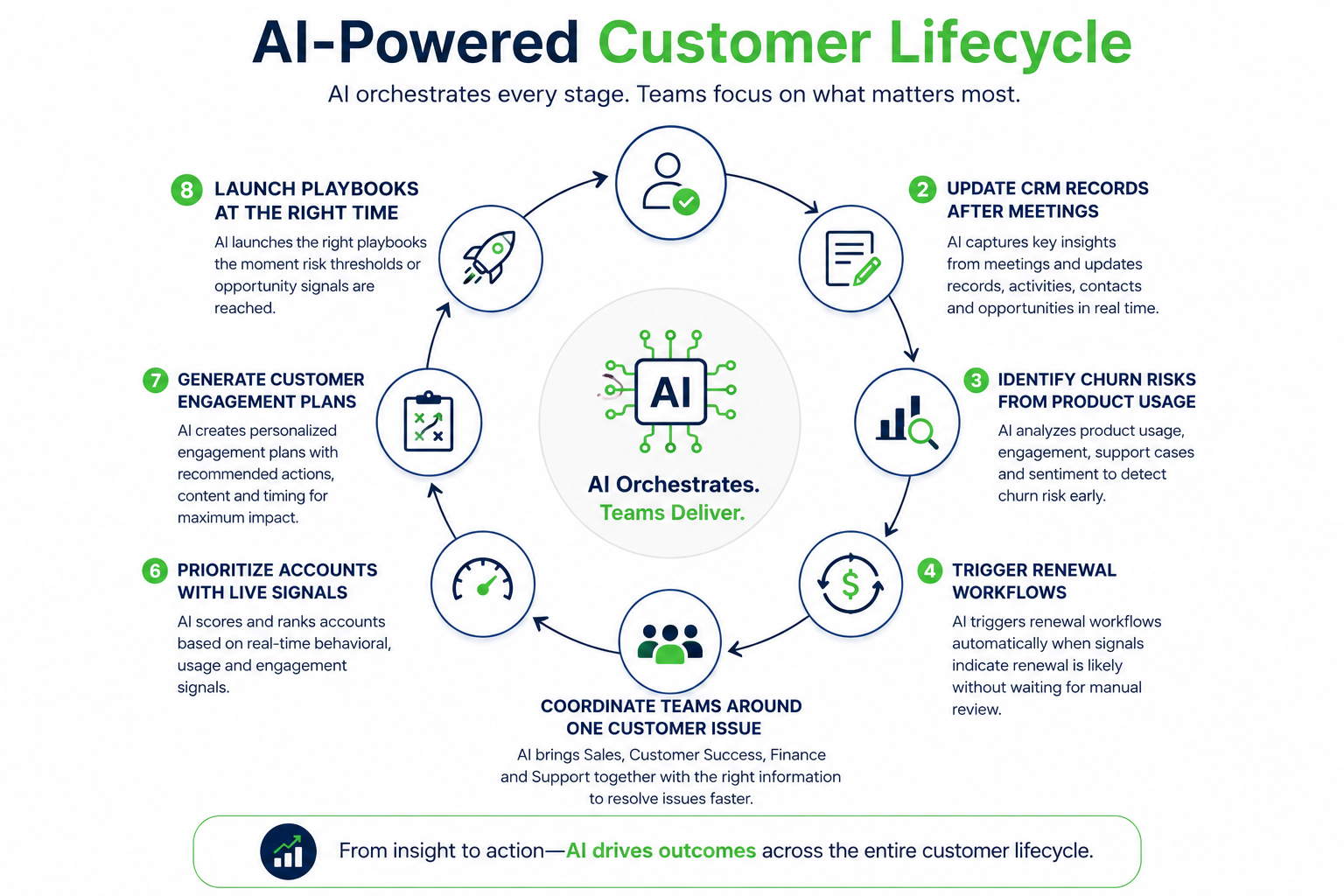
AI Isn’t Replacing CRM Teams
One of the biggest misconceptions surrounding autonomous AI is that it removes people from the process. In reality, it changes where people create value.
| Where CRM teams spend time today — | Where they will create value with Autonomous CRM ✔ |
| Updating CRM records | Validating AI decisions |
| Routing cases | Resolving complex exceptions |
| Assigning follow-ups | Strengthening customer relationships |
| Coordinating departments | Improving business processes |
| Preparing customer summaries | Governing AI behaviour |
The work becomes more strategic — not less human.
Governance Will Determine Success
Technology is only half of the equation. Governance is what determines whether Autonomous CRM succeeds.
ServiceNow has consistently emphasised that autonomous AI must operate inside enterprise guardrails rather than acting as an uncontrolled automation engine. The Autonomous Workforce strategy is built around governed AI specialists that execute work with enterprise oversight, security, and auditability.
Before organisations activate autonomous customer workflows, they need answers to six questions. These are not future questions. They are today’s governance questions:
| Governance questions — answer these before Autonomous CRM goes live | |
| Who owns an AI-generated customer decision? | How are autonomous actions audited? |
| When should AI require human approval? | Which customer records can AI modify? |
| How are compliance policies enforced? | How do you explain AI decisions to regulators? |
Lessons Learned from Agentic ITSM
One reason Autonomous CRM feels more achievable today is because organisations have already begun solving these governance challenges in IT.
Autonomous CRM does not require organisations to start over. It extends the governance foundation they already built for IT operations. The investments compound:
| ITSM investment | What you built it for | How CRM reuses it |
| AI agent governance model | Governing L1 AI Specialist, AIOps | Governing Autonomous CRM agents |
| Approval policy framework | Change and incident approval workflows | Customer decision approval chains |
| AI Control Tower setup | Discover, Govern, Observe — ITSM | Extend to CRM agents, same platform |
| CMDB data quality investment | Service relationships, CI ownership | Customer data quality, account ownership |
| Permission scoping patterns | Agent access to ITSM tables | Agent access to CRM records, not broader |
| Audit trail infrastructure | ITSM agent action logs | Customer decision and action logs |
As we covered in our Agentic AI for ITSM, blog, successful AI adoption begins with mature processes — not with AI itself. That lesson applies equally to CRM. The organisations that built strong ITSM AI foundations in 2025 and 2026 are the ones who will activate Autonomous CRM fastest when it becomes generally available.
Data Will Become Your Competitive Advantage
There’s another lesson organizations shouldn’t ignore.
AI can only make decisions using the information it receives.
Poor customer data produces poor customer decisions.
Duplicate records.
Incomplete account histories.
Disconnected systems.
Outdated ownership information.
These aren’t simply CRM problems anymore.
They’re AI problems.
Organizations that invest in clean customer data today will gain a significant advantage when autonomous workflows become mainstream.
Why This Matters Now
Some leaders will argue: “Autonomous CRM is not generally available yet. Why prepare today?”
Because history repeats itself.
Organisations that waited until Agentic ITSM became production-ready often discovered they first needed to fix CMDB quality, workflow governance, permissions, operational ownership, knowledge management, and approval processes. Those foundational projects took months.
Autonomous CRM will likely follow the same pattern. The organisations that move fastest will not necessarily be the ones that activate AI first. They will be the organisations whose customer operations are already governed.
Preparing for Autonomous CRM
Organisations can begin preparing today without waiting for every feature to become generally available. These initiatives create value immediately while laying the groundwork for autonomous customer operations:
- standardizing customer workflows
- improving CRM data quality
- defining ownership across Sales, Customer Success, Support, and Finance
- documenting approval policies
- strengthening auditability
- establishing AI governance
- identifying repetitive customer operations suitable for AI execution.
Continue the Journey
Autonomous CRM doesn’t exist in isolation.
It’s part of a broader shift toward AI-native enterprise operations.
If you’re exploring this evolution, we recommend reading our related articles:
- ServiceNow Australia Release: What to Deploy First, What to Wait On, and What Most Teams Get Wrong
- Agentic AI for ITSM
- Explore the Teiva Systems Blog
Together, these resources provide a roadmap for moving from AI-assisted work toward fully governed autonomous operations.
Final Thoughts
Agentic ITSM proved that AI can do more than assist—it can execute.
Autonomous CRM will test whether that same model can transform customer-facing operations.
The technology is advancing rapidly.
The governance questions remain the same.
Organizations that treat AI as an enterprise capability—not a departmental feature—will be in the strongest position to adopt Autonomous CRM when it becomes a mainstream reality.
The future of CRM isn’t simply faster software.
It’s intelligent systems that understand customer context, make governed decisions, and collaborate with humans to deliver better outcomes—at enterprise scale.
Kostya Bazanov, Managing Director, Aug 20, 2026
Eager to take the next step? Contact us today!
Latest Articles
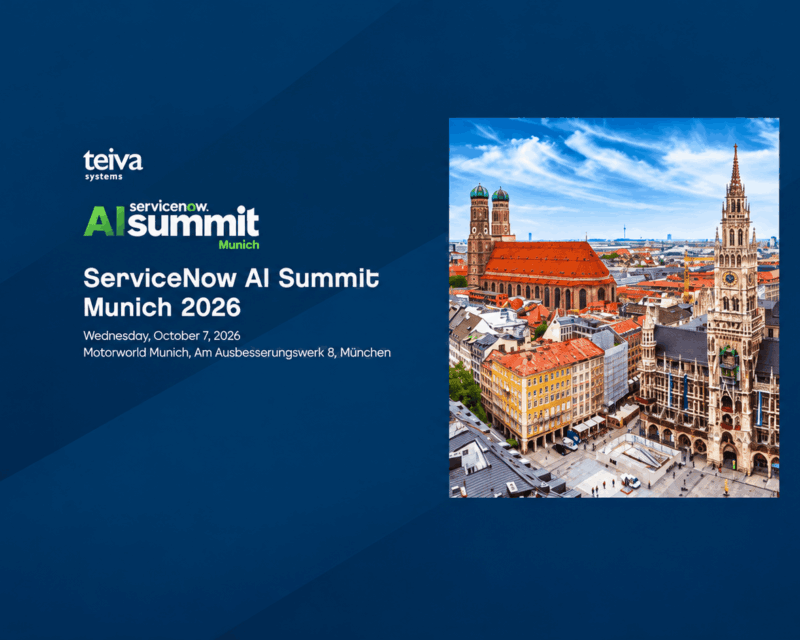
Teiva Systems at ServiceNow AI Summit 2026 — Munich
On October 7, 2026, Teiva Systems joined the ServiceNow AI Summit in Munich, where industry leaders, innovators, and the ServiceNow community came together to explore the next chapter of enterprise AI and intelligent automation.
read more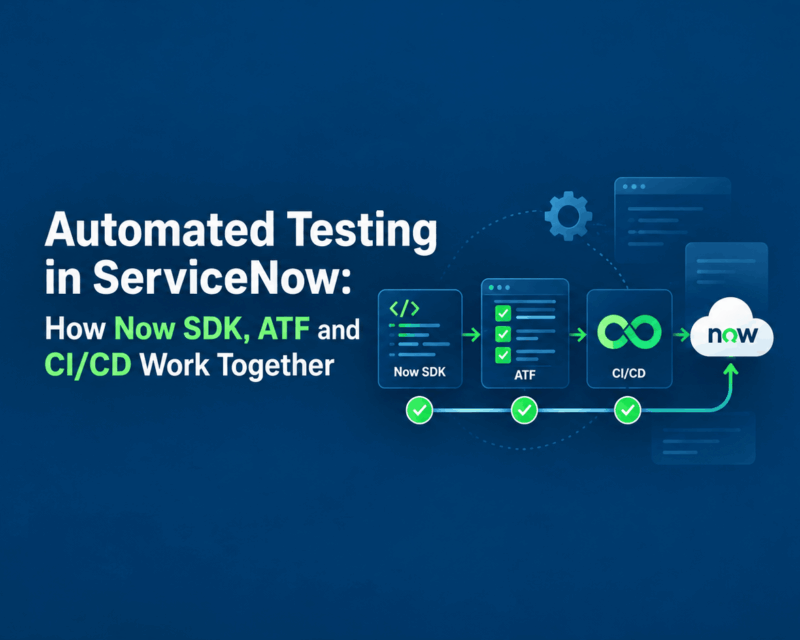
Automated Testing in ServiceNow: How Now SDK, ATF and CI/CD Work Together
Automated Testing in ServiceNow: How Now SDK, ATF and CI/CD Work Together Automated testing in ServiceNow is becoming more important, not because ATF or CI/CD are new concepts, but because the way they can work together is changing the development lifecycle itself. As ServiceNow moves toward a more source-driven engineering model, testing is becoming less […]
read more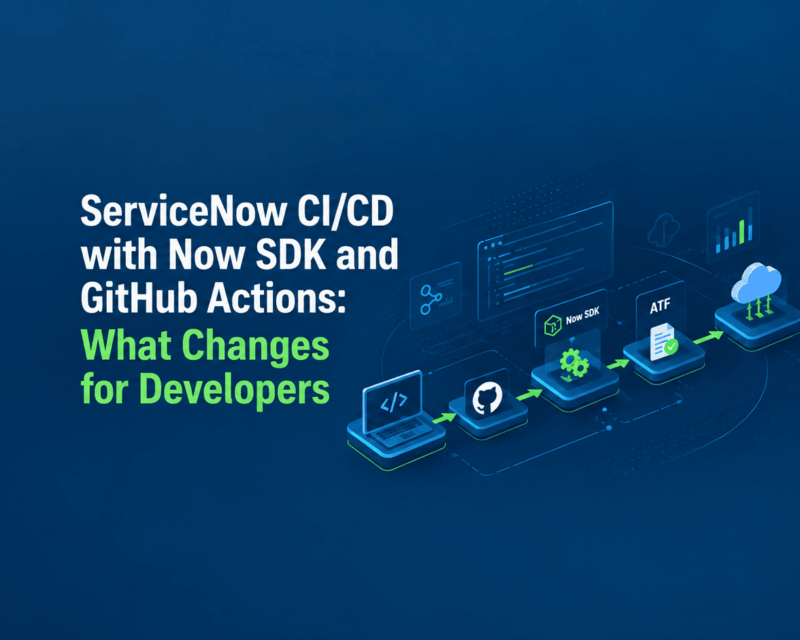
ServiceNow CI/CD with Now SDK and GitHub Actions: What Changes for Developers
The Now SDK connects ServiceNow application development to GitHub Actions CI/CD pipelines — bringing pull-request quality gates, automated ATF testing, and controlled release governance to a platform that has historically required its own isolated delivery process.
read more