
From Compliance to Confidence: Governance Topology for Financial Services in ServiceNow
In the financial sector, the concepts of compliance and governance play an important role in ensuring stability and trust. These concepts are related, but have different aspects: compliance focuses on the laws, rules, and standards, while governance focuses on the structures and decision-making processes within an organization.

ServiceNow offers a compliance management solution (Governance, Risk, and Compliance, GRC) in financial services. The platform helps organizations automate and optimize compliance governance processes, which is crucial to ensure customer and regulatory trust to ServiceNow governance financial services.
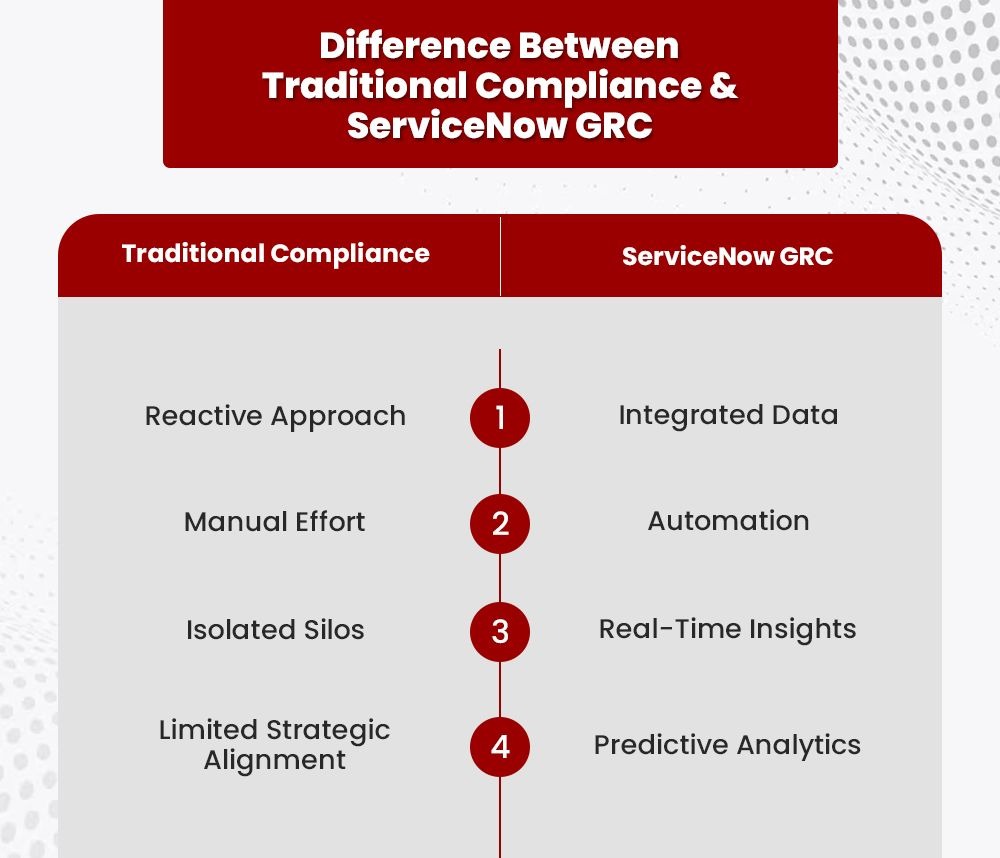
Why governance is mission-critical in finance
Risk management in banking is crucial in the financial sector, as it helps to minimize losses and ensure business sustainability. Financial risks are the likelihood that a company will incur losses or lose profits due to factors related to cash flows, the cost of resources, obligations to counterparties, or changes in the external environment and PCI-DSS compliance. These risks affect both the operational activities and the strategic sustainability of the business.
Governance Topology model: linking AI, GRC, and workflows
The governance topology model, linked to artificial intelligence, AI risk controls management, compliance (GRC), and workflows, assumes an integrated approach that combines these elements.
- Linking AI helps automate processes, analyze data, and make management decisions faster and more accurately than when working with human resources alone.
- ServiceNow GRC combines risks, management and protection measures, corporate policies, legal requirements and standards into a single structured workflow.
- Workflows are the “framework” on which cognitive technologies are layered.
The goal of this model is to optimize processes, increase business efficiency and minimize risks.
Embedding real-time controls in ServiceNow
The implementation of real-time controls in ServiceNow (a cloud-based IT service management platform (ITSM) involves automating processes, integrating with other systems, and implementing functions that allow real-time control of elements. This may include:
- Task Automation. The integration of related ServiceNow financial services to automate and centralize processes.
- Event Notifications. They automatically send the status of requests and incidents.
- Integration with third-party services, for example, with corporate messengers that provide information from the ITSM system in real time.
For the successful implementation of real-time controls in ServiceNow, it is crucial to build a long-term implementation plan that includes all stages, processes, resources, and costs.
Besides, one must consider the needs of the organization — determine which ServiceNow functions are suitable for automating tasks, and implement them first.
And, to cap it all, it is better to use a step-by-step approach. You should not switch from the old platform to ServiceNow “with one click” – this may cause side effects in another element.
IRM Functions and Features
ServiceNow’s risk management in banking dashboards include interactive indicators and thresholds. Key functionality of IRM panels:
- Continuous monitoring. Identify inappropriate controls, monitor high-risk areas, and track audit results through automated verification and evidence collection.
- Making important decisions. Using interactive visualizations to evaluate possible answers to management and compliance questions, using accurate real-time data.
- Prioritization of critical risks. Communicating the most critical risks to other departments, suppliers, and stakeholders.
These dashboards help an organization identify management and control deficiencies between official assessments.
Flow Designer Functionality
ServiceNow uses the Flow Designer tool to automate approval processes. With it you can create automatic threads that run statements based on certain conditions, without writing code.
Flow Designer specifics:
- A visual interface for designing flows and connecting actions;
- An ability to integrate with other ServiceNow modules and external systems;
- A library of reusable thread components created by the developers of ServiceNow.
The approval flow consists of a sequence of actions and subcreams that are triggered when a condition occurs. The “Ask for Approval” action allows one to specify the record for which approval is required and configure additional settings (approval field or history).
You can choose who should approve the request and what conditions should be met for approval (you can pick individuals, groups, or manual approvers).
How Teiva Systems implements “policy-as-code” for clients
Teiva systems implements a “policy-as-code” (PaC) approach for clients in managing policies in the IT infrastructure. The company uses tools that support PaC and integrates policy management into its development processes.
To implement PaC, Teiva Systems uses:
- Open Policy Agent (OPA) is an engine for expressing policies in the Rego language.
- HashiCorp Sentinel is a framework for codifying policies with DSL and workflow for code development and testing.
- AWS Config Rules is a tool for evaluating policies in AWS environments.
- Conftest is a policy tool for Kubernetes environments.
The PaC implementation by Teiva Systems helps customers improve security, optimize cloud infrastructure, and manage access control and authorization.
Oleksii Konakhovych, CTO, Dec 22, 2025
Eager to take the next step? Contact us today!
Latest Articles
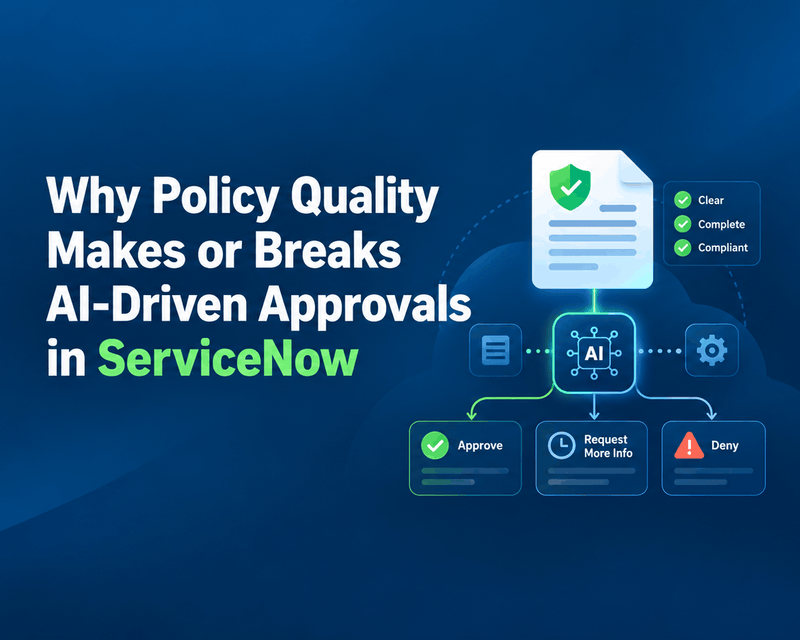
Why Policy Quality Makes or Breaks AI-Driven Approvals in ServiceNow
Why Policy Quality Makes or Breaks AI-Driven Approvals in ServiceNow AI can make approval decisions in seconds. It can also make the wrong ones, consistently, if the policy behind them is vague. As enterprises bring AI-driven approvals into ServiceNow, attention goes straight to automation: faster decisions, fewer manual tasks, shorter approval queues. One factor gets […]
read more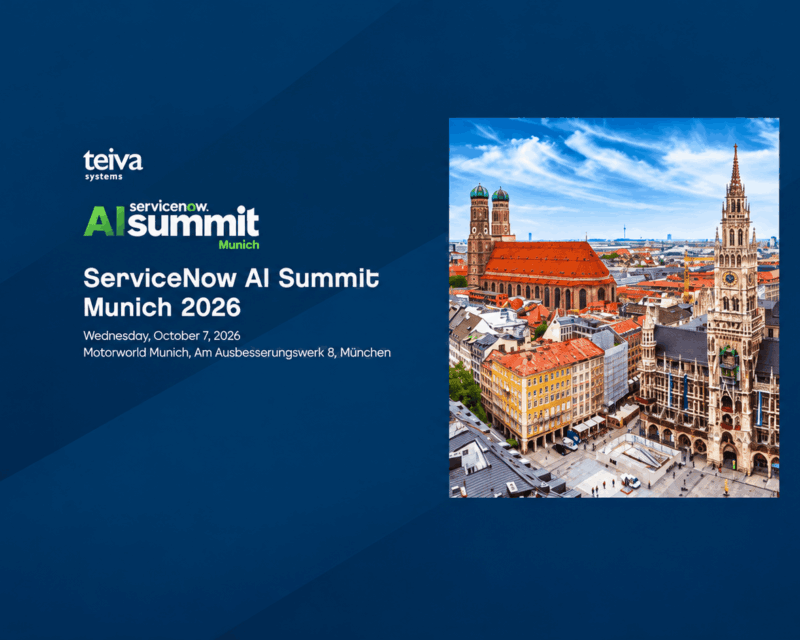
Teiva Systems at ServiceNow AI Summit 2026 — Munich
On October 7, 2026, Teiva Systems joined the ServiceNow AI Summit in Munich, where industry leaders, innovators, and the ServiceNow community came together to explore the next chapter of enterprise AI and intelligent automation.
read more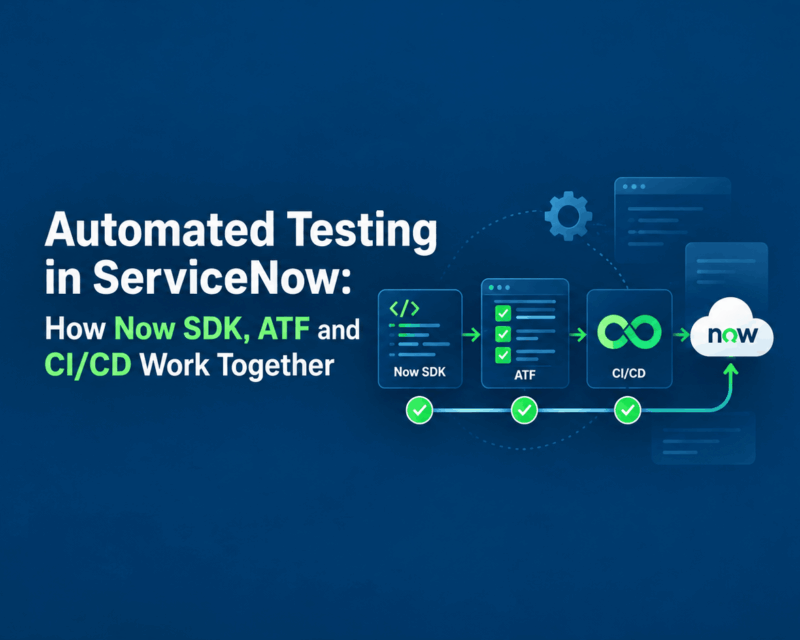
Automated Testing in ServiceNow: How Now SDK, ATF and CI/CD Work Together
Automated Testing in ServiceNow: How Now SDK, ATF and CI/CD Work Together Automated testing in ServiceNow is becoming more important, not because ATF or CI/CD are new concepts, but because the way they can work together is changing the development lifecycle itself. As ServiceNow moves toward a more source-driven engineering model, testing is becoming less […]
read more