
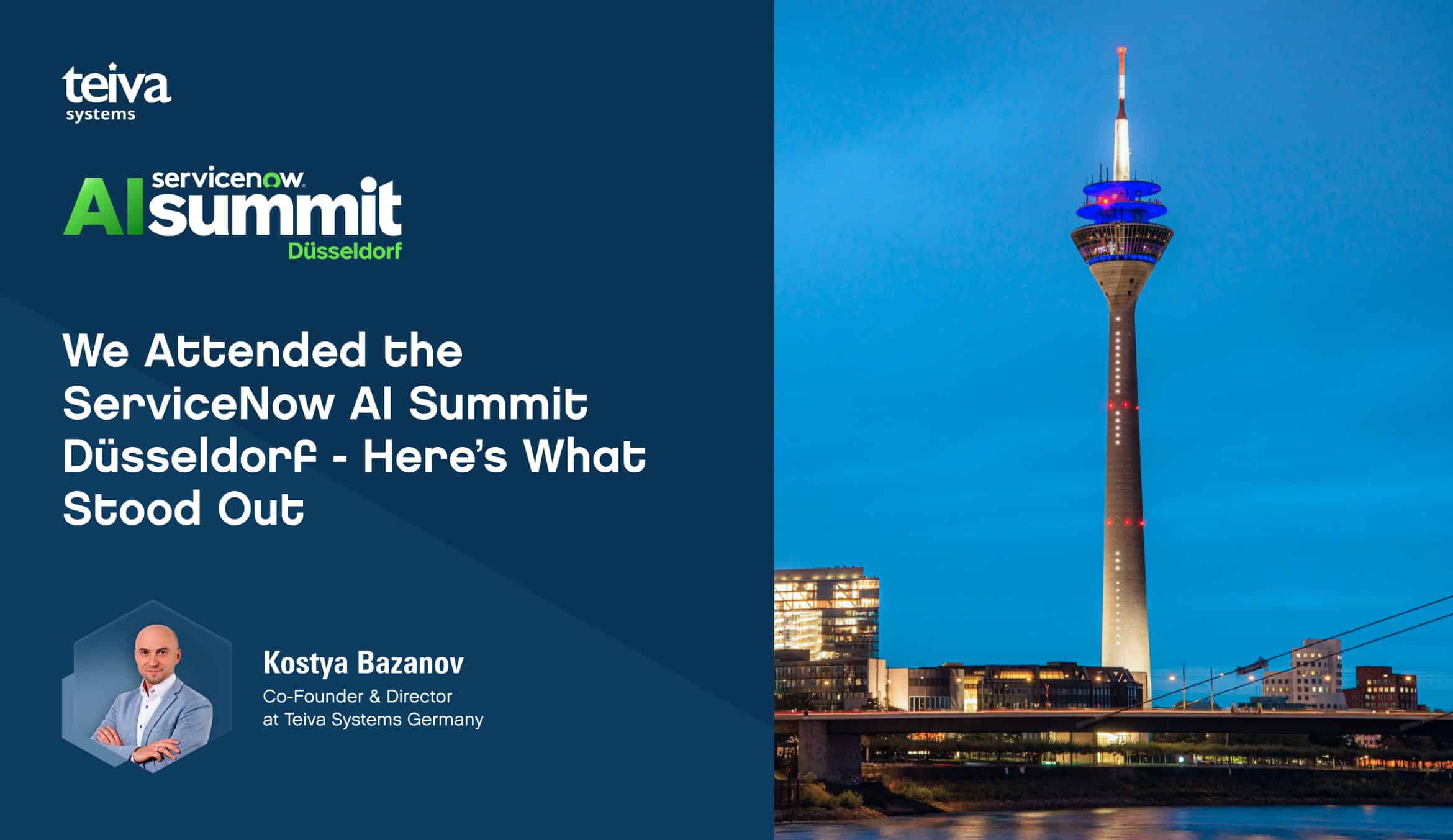
We Attended the ServiceNow AI Summit Düsseldorf – Here’s What Stood Out
Our Managing Director, Kostya Bazanov, joined this year’s ServiceNow AI Summit in Düsseldorf and on the way back, one reflection stood out: the conversation around AI has clearly changed.
This didn’t feel like another “future of AI” event. It felt more grounded than that. People were talking about what’s already working and what will happen next.
There were over 600 people at the Rheinterrasse and the place was packed. The energy was good. What really stood out was the change in how people were thinking. The conversation wasn’t about what might happen anymore, it was about what’s already happening today.

From Features to Real Decision-Making
One of the more interesting takeaways was how the AI Control Tower is being positioned.
Not as just another platform feature but as something designed for leadership. A way to connect data, processes, and teams in one place and actually help guide decisions, not just display information.
It’s a subtle but important shift: from dashboards people check, to systems that suggest what to do next.
Will this fully land across industries? That’s still to be seen. But the direction is clear.
Real Use Cases, Not Pilots
What made the biggest impression were the customer examples.
One infrastructure provider is already handling hundreds of daily transactions with external partners using CSM and AI. No pilot, no experimentation just live operations.
A large retailer showed their journey from AI-assisted processes to fully autonomous, zero-touch agents across their store network live on stage.
In both cases, the focus wasn’t on the technology itself. It was on reducing operational effort in a way that can actually be measured.
Data Sovereignty is Becoming Very Important
Another topic that came up repeatedly: data sovereignty.
It’s no longer a niche concern. With ServiceNow running on sovereign cloud infrastructure in German data centers, companies in regulated industries now have a clearer path to adopt GenAI without getting stuck in compliance discussions.
And importantly, this isn’t just for new customers. Existing environments can be migrated using standard approaches, making adoption much more practical than many expect.
A More Mature Ecosystem
The partner landscape is evolving too.
Some are focusing on large-scale, end-to-end transformation. Others are bringing very specific AI use cases into service management. And some are focusing on the human side change, adoption, and making it all work in reality.
That diversity is a good sign. It shows a market that’s maturing.
“The pilot phase is over. If you’re not investing in end-to-end AI workflows now, you’ll still be talking about potential next year, while others are already delivering results.” said Kostya Bazanov, Managing Director of Teiva Systems.
Final Thoughts
We want to thank ServiceNow for putting on an event in a great location. We also want to thank the companies that shared their experiences with us.
What stood out most is that AI isn’t something for the future anymore, it is already being used in real operations. The real difference now is between companies that are actually putting it to work, and those still just talking about it.
Kostya Bazanov, Managing Director, Apr 22, 2026
Eager to take the next step? Contact us today!
Latest Articles
ServiceNow AI ROI: What Should You Measure After the Pilot?
Your AI pilot worked. That proves the technology can work. It does not yet prove ROI. Here are the six metrics that separate “the demo impressed leadership” from “we can prove measurable business value.”
read more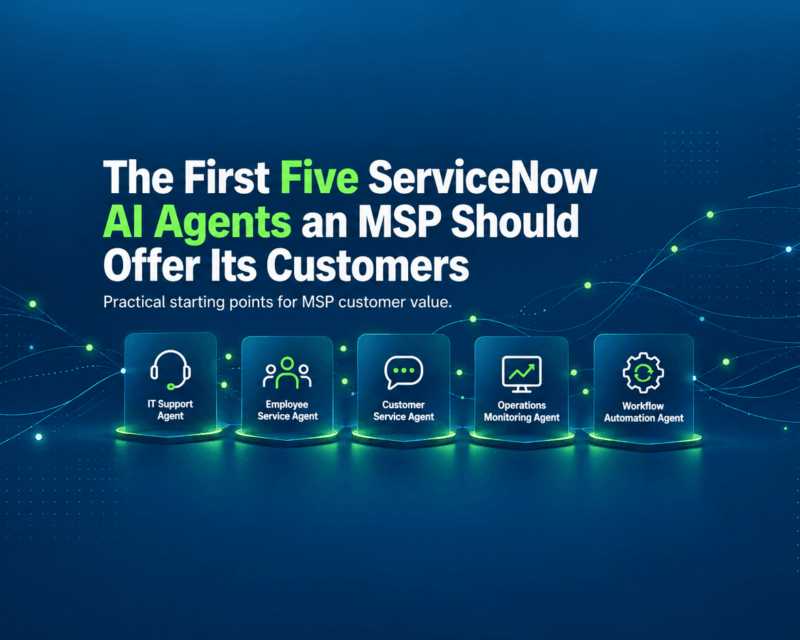
The First Five ServiceNow AI Agents an MSP Should Offer Its Customers
Managed service providers can now package ServiceNow AI agents as repeatable, recurring services — moving from ticket-response capacity to managed outcome delivery. Here is what the first five offerings look like, how each creates value, and what to get right before deploying them.
read more
How to Test a ServiceNow AI Agent Before Giving It Production Access
A successful demonstration proves that an agent can perform a task under specific conditions. It doesn’t prove the agent will behave correctly when faced with incomplete data, conflicting instructions, restricted records, broken integrations, or unexpected user requests.
read more