
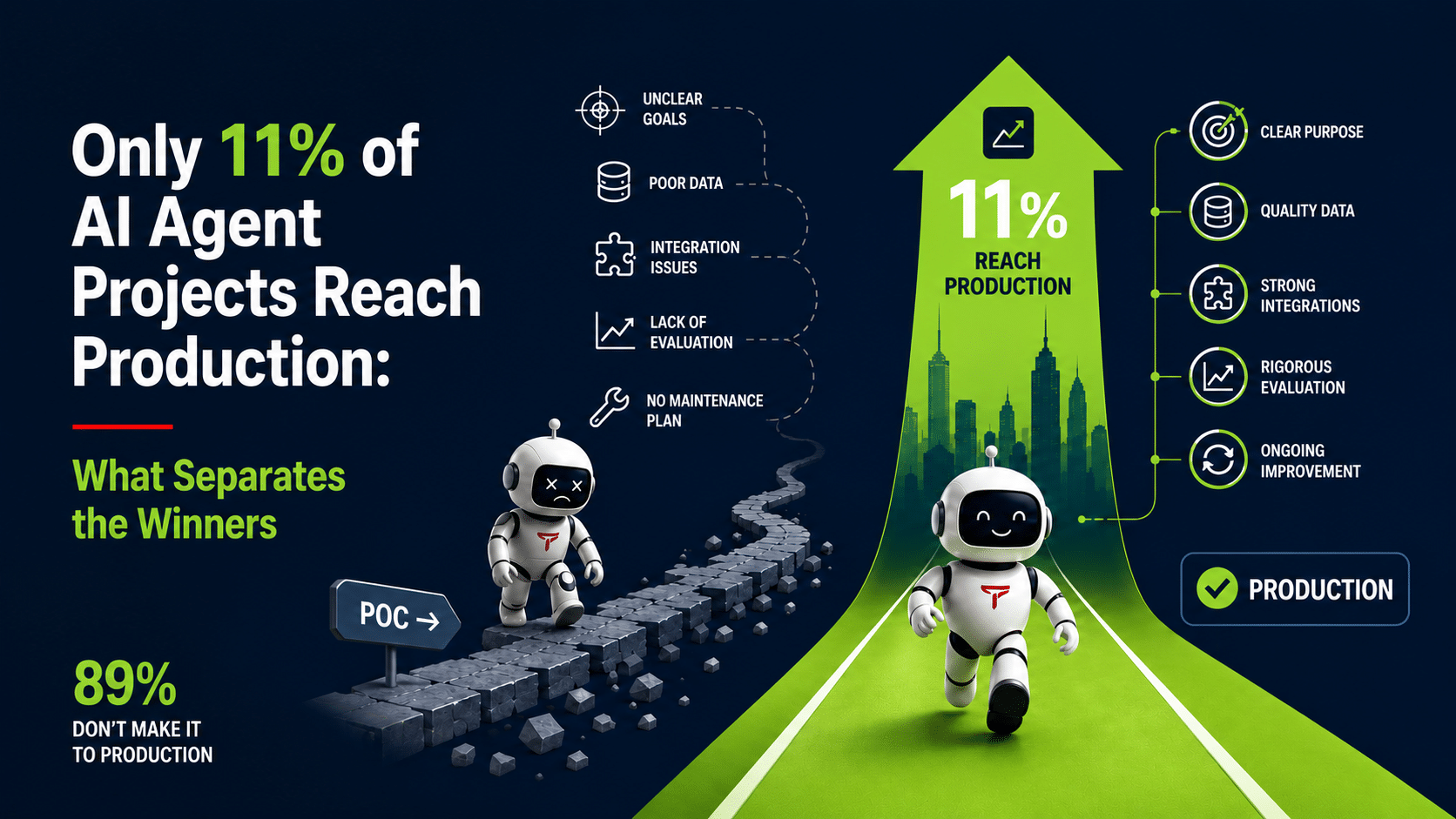
Only 11% of AI Agent Projects Reach Production — Here’s Why
Six months ago, your company likely launched an AI agent pilot.
The demo worked.
The vision was clear.
Leadership was aligned.
And yet today, it is still in testing.
This is not an exception. It is the norm.
Across industries, organizations are stuck in what is increasingly called “pilot purgatory” — where promising AI initiatives fail to translate into real business impact
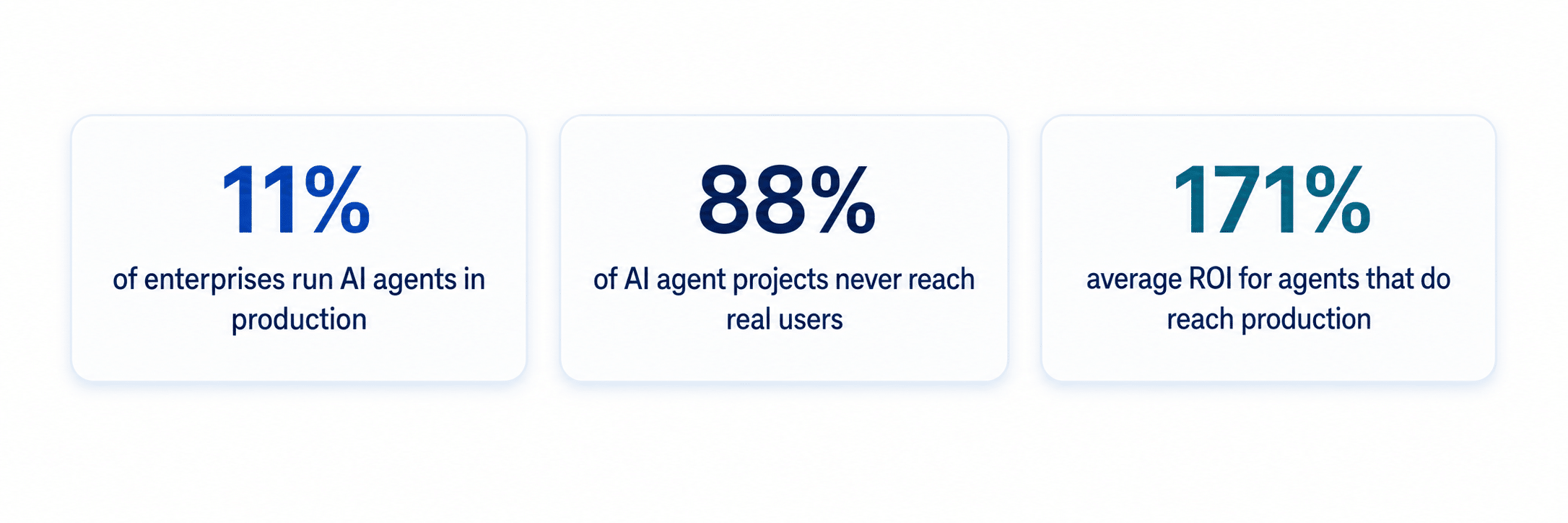
According to enterprise data, while nearly 80% of companies are experimenting with AI agents, only 11% have successfully deployed them into production .
So what separates the few that succeed from the many that stall?
The Real Problem: Execution, Not Technology
Most organizations assume success depends on:
- Larger budgets
- Better talent
- More advanced tools
In reality, failure comes down to one issue:
They do not design for production from the start.
Instead, production is treated as a future milestone. By the time teams attempt to scale, they encounter structural issues that were never addressed early on.
The Five Structural Barriers
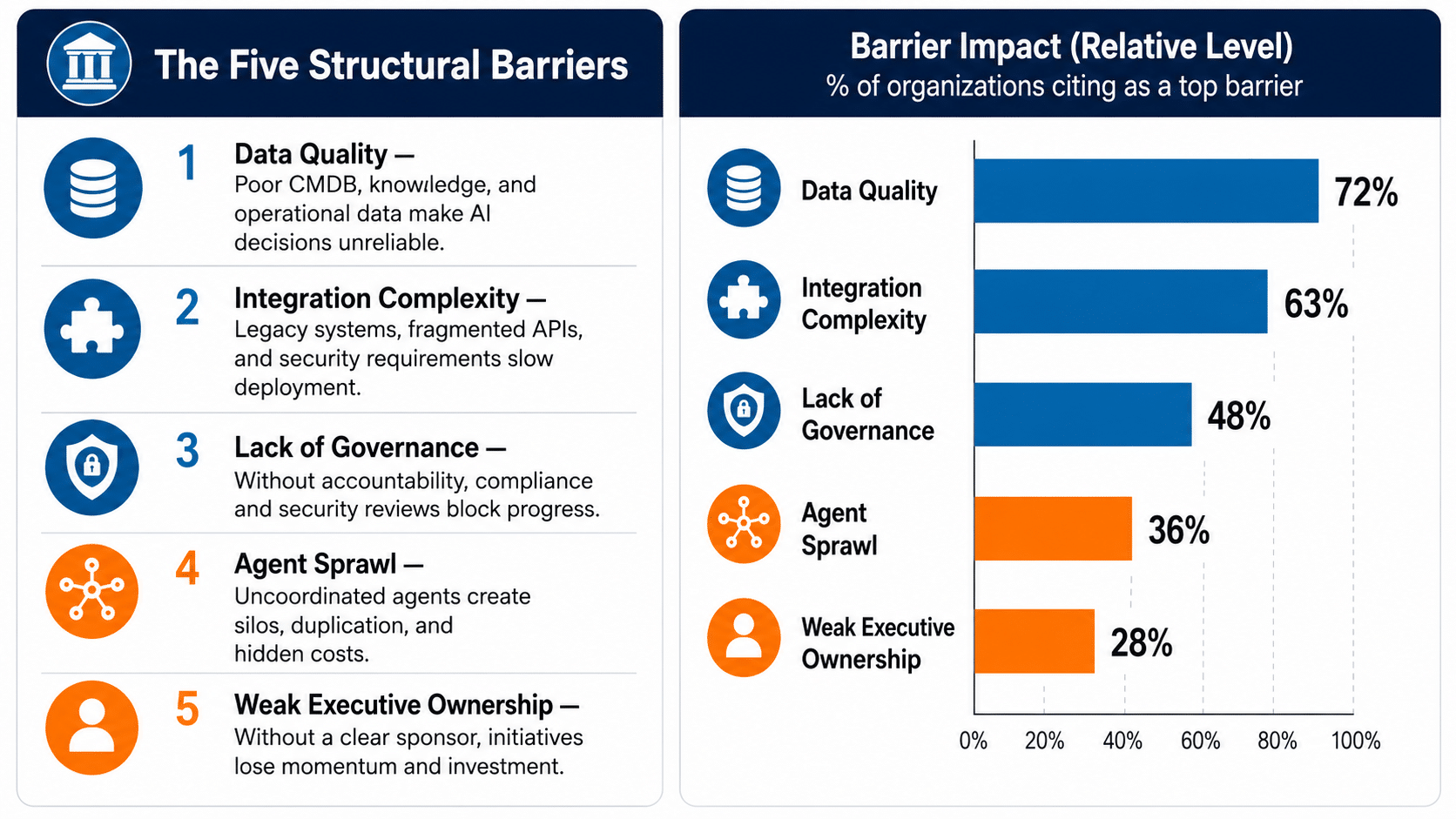
1. Data Quality
AI agents depend entirely on the quality of underlying data.
In enterprise environments, this includes CMDB records, knowledge bases, and operational datasets. When this data is incomplete or inconsistent, agents cannot make reliable decisions.
Instead of improving efficiency, they introduce risk.
Organizations that fail to prioritize data readiness early rarely move beyond controlled pilot environments.
2. Integration Complexity
Pilot environments are simplified. Production environments are not.
Legacy systems, fragmented APIs, and strict security requirements create complexity that is often underestimated. As a result, teams spend more time solving integration issues than delivering value.
This significantly delays deployment and increases costs.
3. Lack of Governance
As AI agents begin to take autonomous actions, accountability becomes critical.
Without clear governance frameworks, projects are frequently blocked during compliance and security reviews. This is not a technical failure but an operational one.
Organizations that build governance in parallel with development move faster and with greater confidence.
“AI does not fail in production because of its intelligence. It fails because organizations are not operationally ready to support it.”
4. Agent Sprawl
Many companies launch multiple AI agents across departments without coordination.
These agents operate in silos, duplicate efforts, and fail to share context. Over time, this creates inefficiency instead of value.
Without centralized oversight, organizations lose visibility into performance, cost, and impact.
5. Weak Executive Ownership
Initial enthusiasm from leadership often fades as projects become more complex.
Without a clearly defined executive sponsor responsible for outcomes, initiatives lose momentum and struggle to secure ongoing investment.
Strong ownership is not optional. It is a requirement for scaling.
What Successful Organizations Do Differently
Organizations that successfully move AI agents into production take a fundamentally different approach.
They start with data readiness, ensuring that their information is structured, clean, and reliable before development begins.
They focus on a narrow, high-impact use case rather than attempting broad transformation. This allows them to deliver measurable results quickly and build internal confidence.
They assign clear ownership early, with a dedicated role responsible for AI performance, monitoring, and continuous improvement.
They treat governance as an enabler, embedding security, compliance, and control mechanisms into the design process from the beginning.
Finally, they define clear success metrics tied directly to business outcomes, such as reducing resolution times, lowering operational costs, or improving service quality.
Why This Matters for CEOs
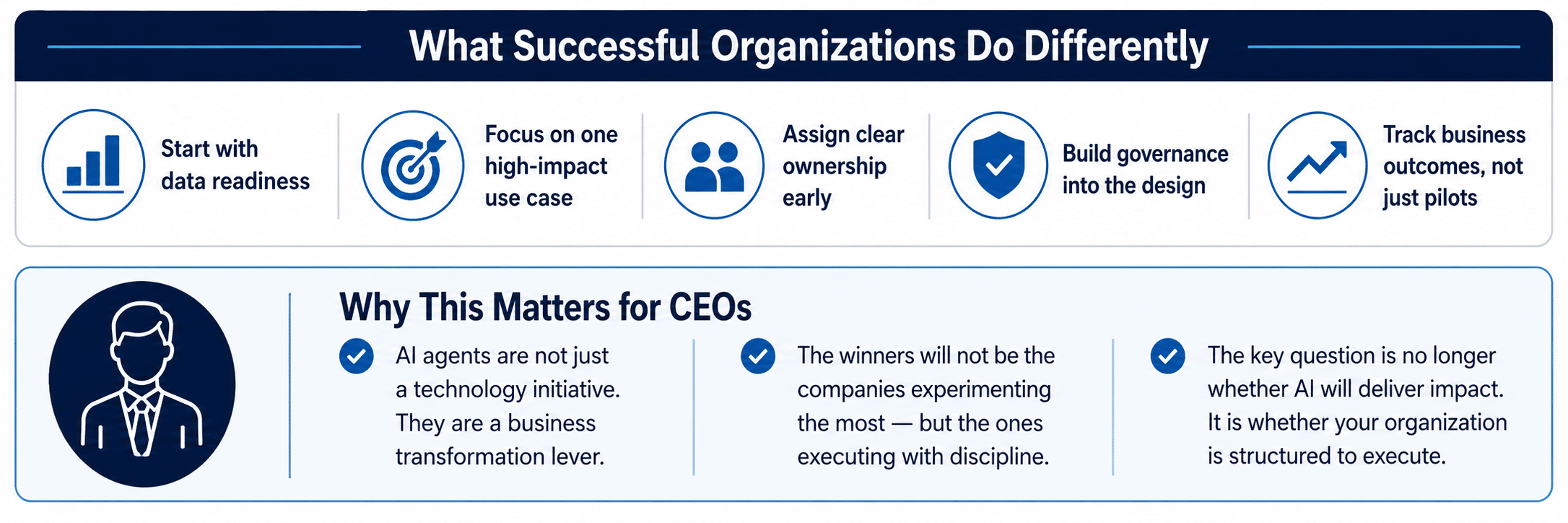
AI agents are not just another technology initiative. They are a lever for business transformation.
The organizations gaining advantage are not those experimenting the most, but those executing with discipline.
The window for competitive differentiation is narrowing. While many companies remain in pilot phases, others are already scaling AI-driven operations and capturing measurable value.
The key question is no longer whether AI will deliver impact.
It is whether your organization is structured to execute.
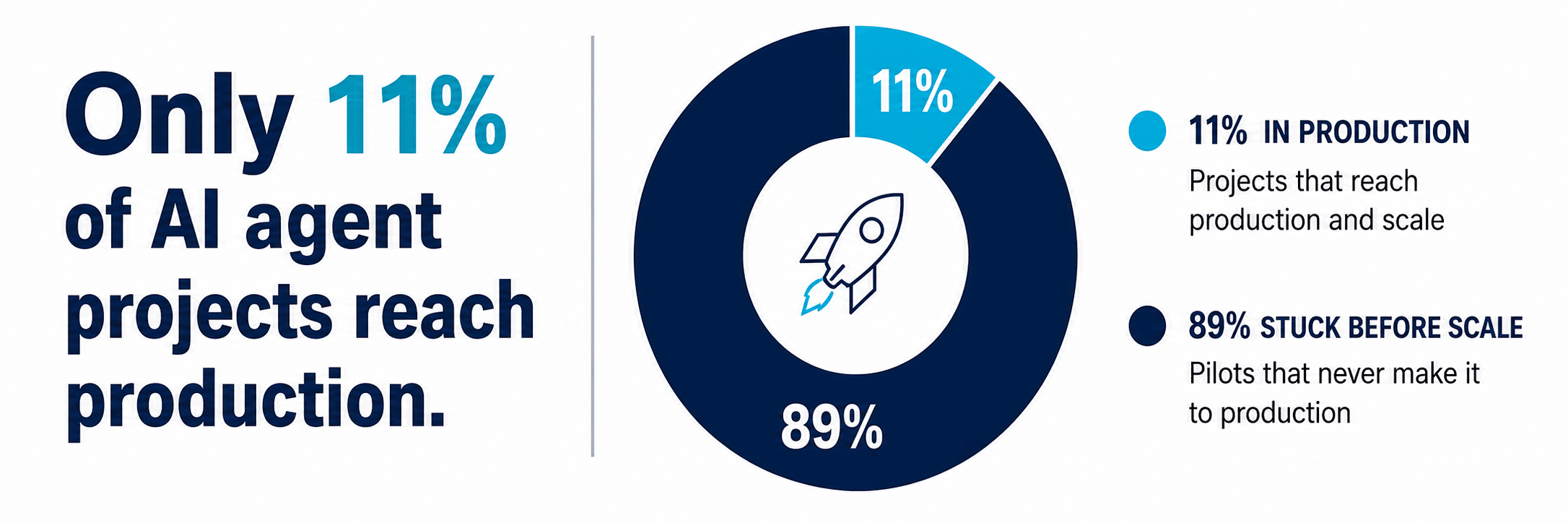
Only 11% of AI agent projects reach production, but this is not due to chance or lack of capability. It is the result of predictable structural challenges.
Organizations that address data quality, integration complexity, governance, coordination, and executive ownership early are significantly more likely to succeed.
The priority is not launching more pilots.
The priority is building for production from the beginning.
Because in today’s environment, execution is the only differentiator that matters.
Slava Trotsenko, CEO, May 13, 2026
Eager to take the next step? Contact us today!
Latest Articles
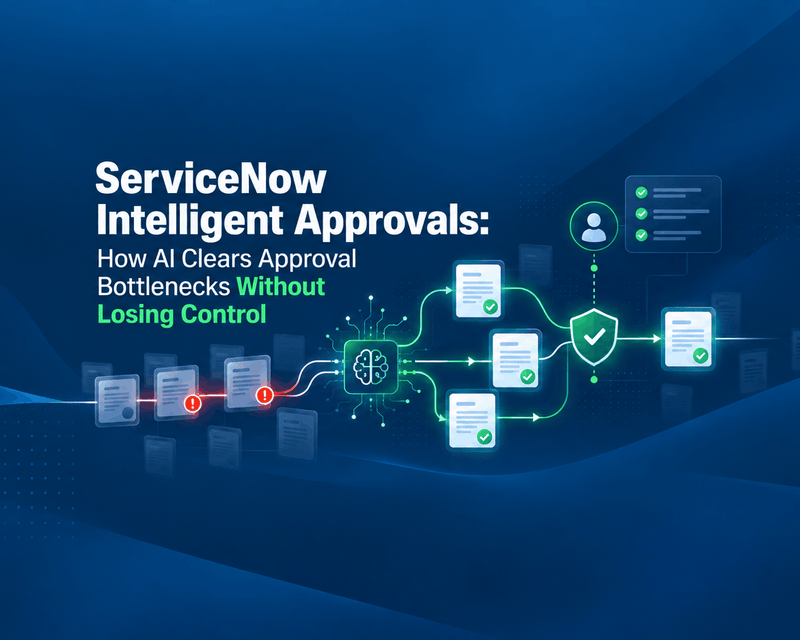
ServiceNow Intelligent Approvals: How AI Clears Approval Bottlenecks Without Losing Control
Your automation is fast. Your approvals are not. Organizations invest heavily in automation, AI and digital transformation. Yet many business processes still stall at the same point: waiting for someone to click “Approve.”
read more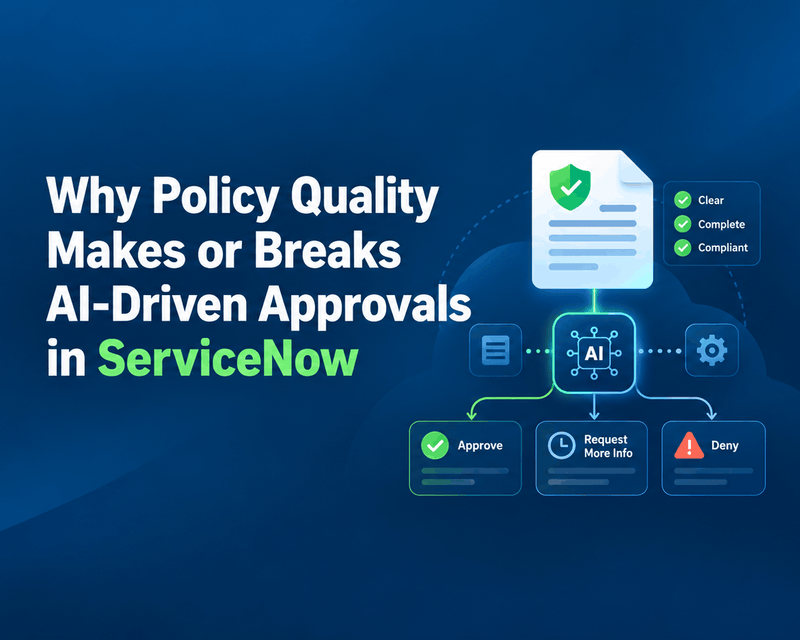
Why Policy Quality Makes or Breaks AI-Driven Approvals in ServiceNow
As enterprises bring AI-driven approvals into ServiceNow, attention goes straight to automation: faster decisions, fewer manual tasks, shorter approval queues. One factor gets far less attention: the quality of the policies behind those decisions.
read more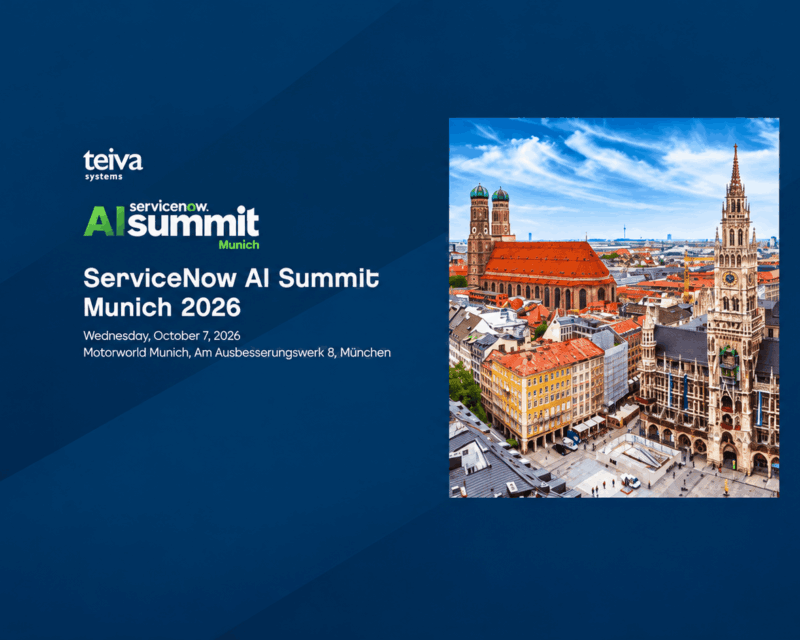
Teiva Systems at ServiceNow AI Summit 2026 — Munich
On October 7, 2026, Teiva Systems joined the ServiceNow AI Summit in Munich, where industry leaders, innovators, and the ServiceNow community came together to explore the next chapter of enterprise AI and intelligent automation.
read more