

Mastering AppEngine: Crafting Exceptional Apps with Low-Code Magic
Build top-notch Apps with AppEngine using Low-Code.
Here are some best practices to create exceptional Apps on the AppEngine platform, even if you’re not a coding expert.
Product Value: Understand the client needs and expected outcomes of the application. Include business value workshops, user interviews and UX analysis into the product design.
Design Patterns: Enhance structure and maintainability with well-defined patterns around data model, business logic, integrations.
Optimize Performance: Achieve smooth user experiences by leveraging built-in performance optimization techniques such as caching, archiving and query optimization.
Prioritize Security: Implement strong authentication incl. multi-factor authentication (MFA), security concepts (Access Control Lists, Roles and Groups), and industry best practices and compliance to ensure data privacy and protection (HIPAA, SOX, GDPR etc).
Design for Scalability: Utilize flow designer, events, distributed data model, and visibility for scalable applications that meet increasing user demands.
Emphasize Maintainability: Follow clean code principles, document comprehensively, and utilize testing and debugging features for long-term maintainability.
Build efficient, scalable, secure, and maintainable AppEngine Apps with these best practices.
Stay updated and embrace continuous learning to maximize the platform’s potential. 💡
Kostya Bazanov, Managing Director, Jan 11, 2023
Eager to take the next step? Contact us today!
Latest Articles
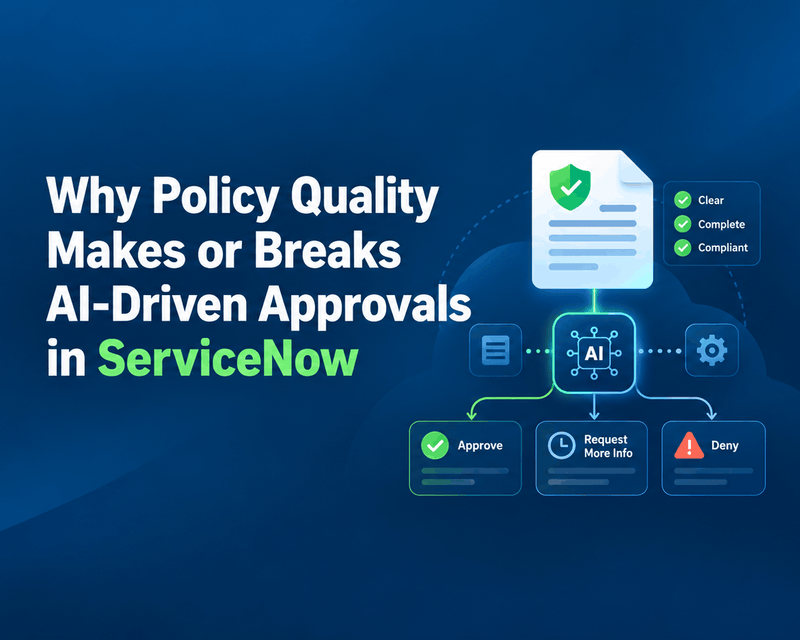
Why Policy Quality Makes or Breaks AI-Driven Approvals in ServiceNow
Why Policy Quality Makes or Breaks AI-Driven Approvals in ServiceNow AI can make approval decisions in seconds. It can also make the wrong ones, consistently, if the policy behind them is vague. As enterprises bring AI-driven approvals into ServiceNow, attention goes straight to automation: faster decisions, fewer manual tasks, shorter approval queues. One factor gets […]
read more
Teiva Systems at ServiceNow AI Summit 2026 — Munich
On October 7, 2026, Teiva Systems joined the ServiceNow AI Summit in Munich, where industry leaders, innovators, and the ServiceNow community came together to explore the next chapter of enterprise AI and intelligent automation.
read more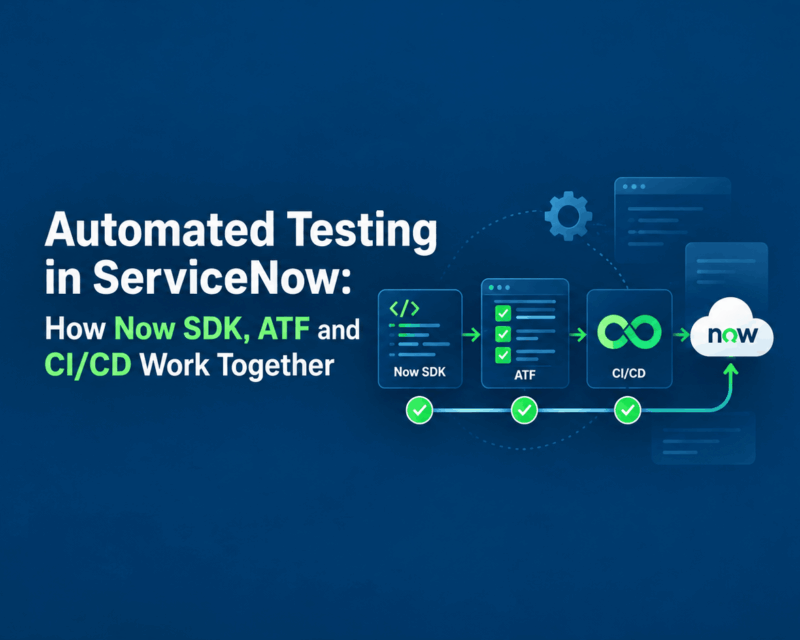
Automated Testing in ServiceNow: How Now SDK, ATF and CI/CD Work Together
Automated Testing in ServiceNow: How Now SDK, ATF and CI/CD Work Together Automated testing in ServiceNow is becoming more important, not because ATF or CI/CD are new concepts, but because the way they can work together is changing the development lifecycle itself. As ServiceNow moves toward a more source-driven engineering model, testing is becoming less […]
read more