
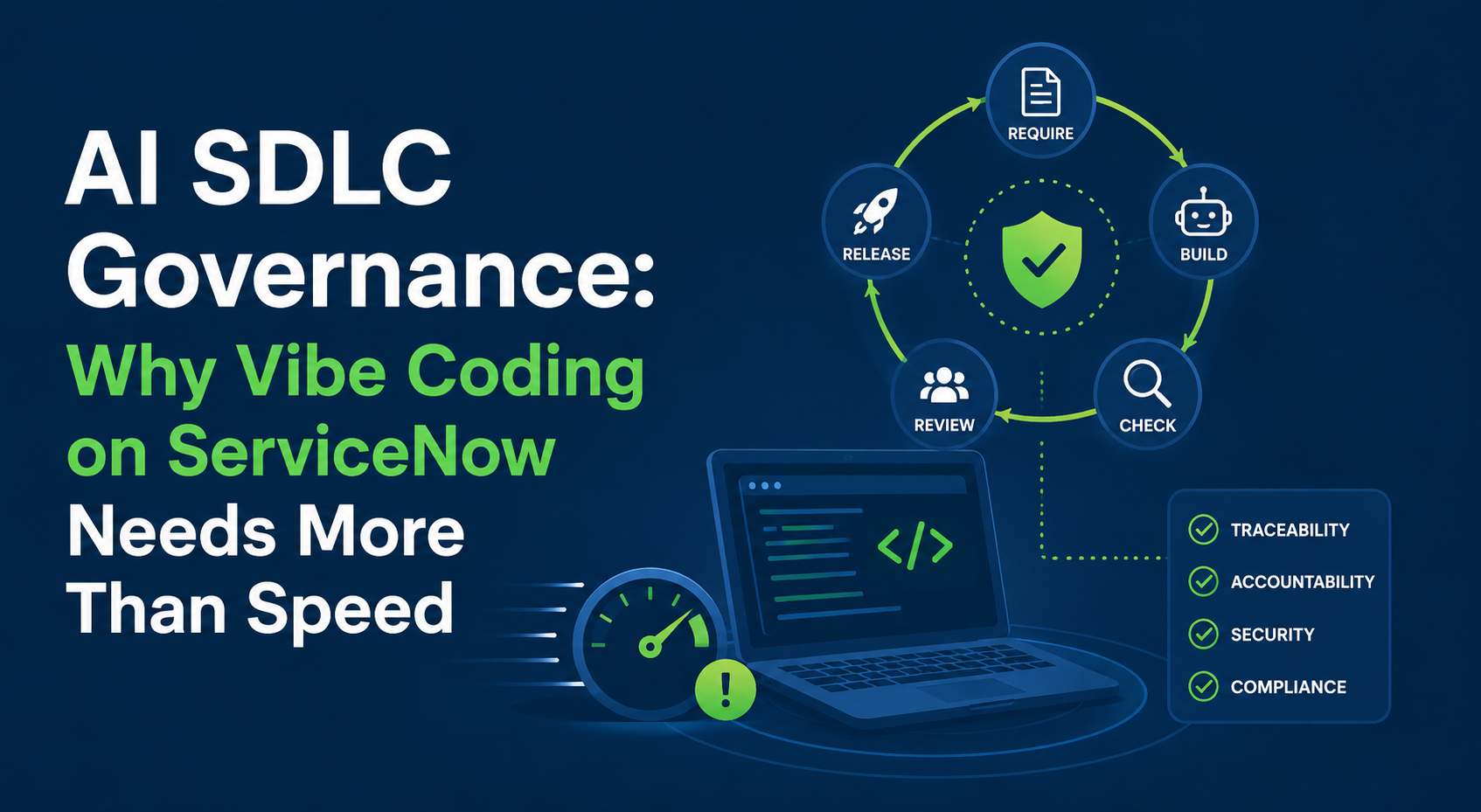
AI SDLC Governance: Why Vibe Coding on ServiceNow Needs More Than Speed
AI-assisted software delivery has entered a new phase. The question is no longer whether AI can write code. It can. The better question is whether an enterprise can govern the code AI produces – especially when that code is created for a platform like ServiceNow, where business-critical workflows, integrations, approvals, and regulated processes often live.
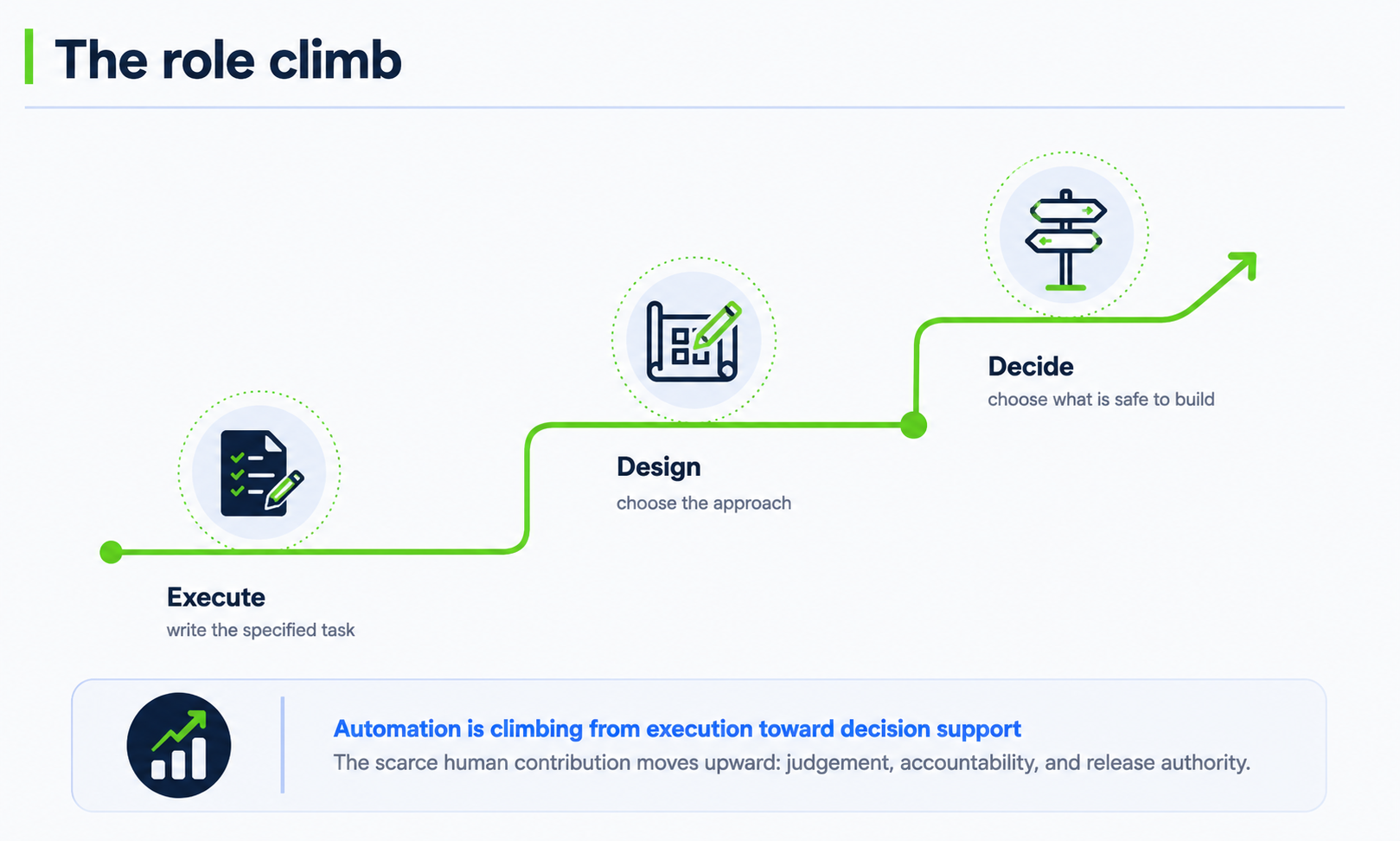
The AI SDLC, or AI software development lifecycle, is the use of AI coding agents across discovery, design, architecture, development, testing, deployment, and continuous improvement. In a traditional SDLC, developers manually translate requirements into code. In an AI SDLC, much of that work starts with natural-language prompts. The developer becomes less of a typist and more of a director: defining intent, reviewing output, correcting the model, and deciding what is safe to ship.
A slightly different category is the ADLC, Agentic Development Lifecycle, which moves towards a full automation, where AI Agents design, define, deliver and deploy the entire application. Our approach clearly puts humans into the team of AI agents for a stronger compliance and higher quality at least at the current stage of the developemnt.
This shift is often called vibe coding. On the surface, vibe coding feels simple: describe what you want, let the AI generate the solution, test it, and move fast. For prototypes and internal experiments, this can be powerful. Inside an enterprise ServiceNow environment, however, speed alone is not enough. The more AI accelerates delivery, the more governance becomes the bottleneck.
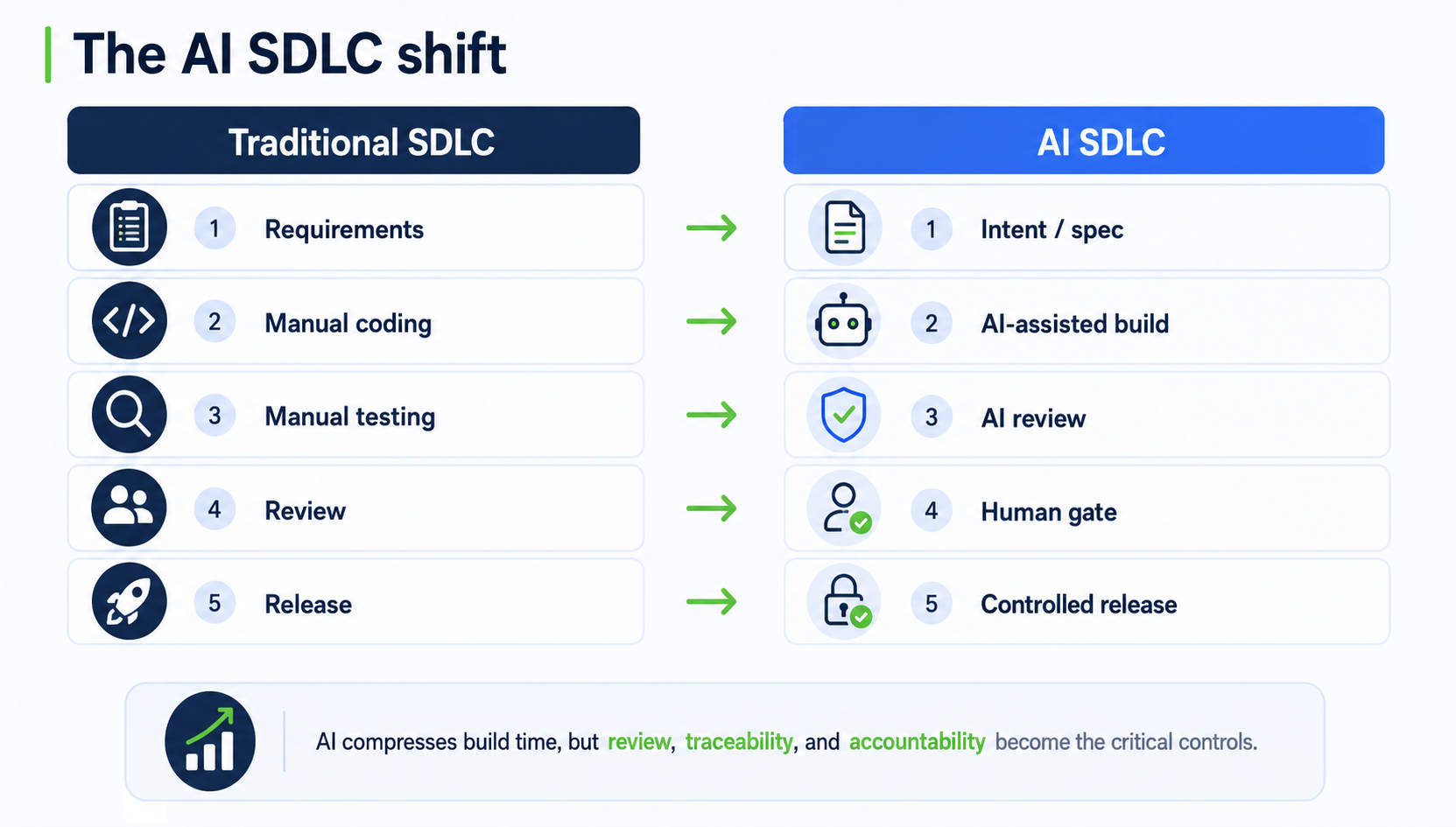
When AI writes faster than people can review
The most important lesson from advanced AI software teams is not that AI writes more code. It is that review capacity becomes the limiting factor. When AI can generate large volumes of code quickly, teams face a new problem: how do they know what is correct, secure, maintainable, and compliant? Code creation becomes cheap. Judgement becomes scarce.
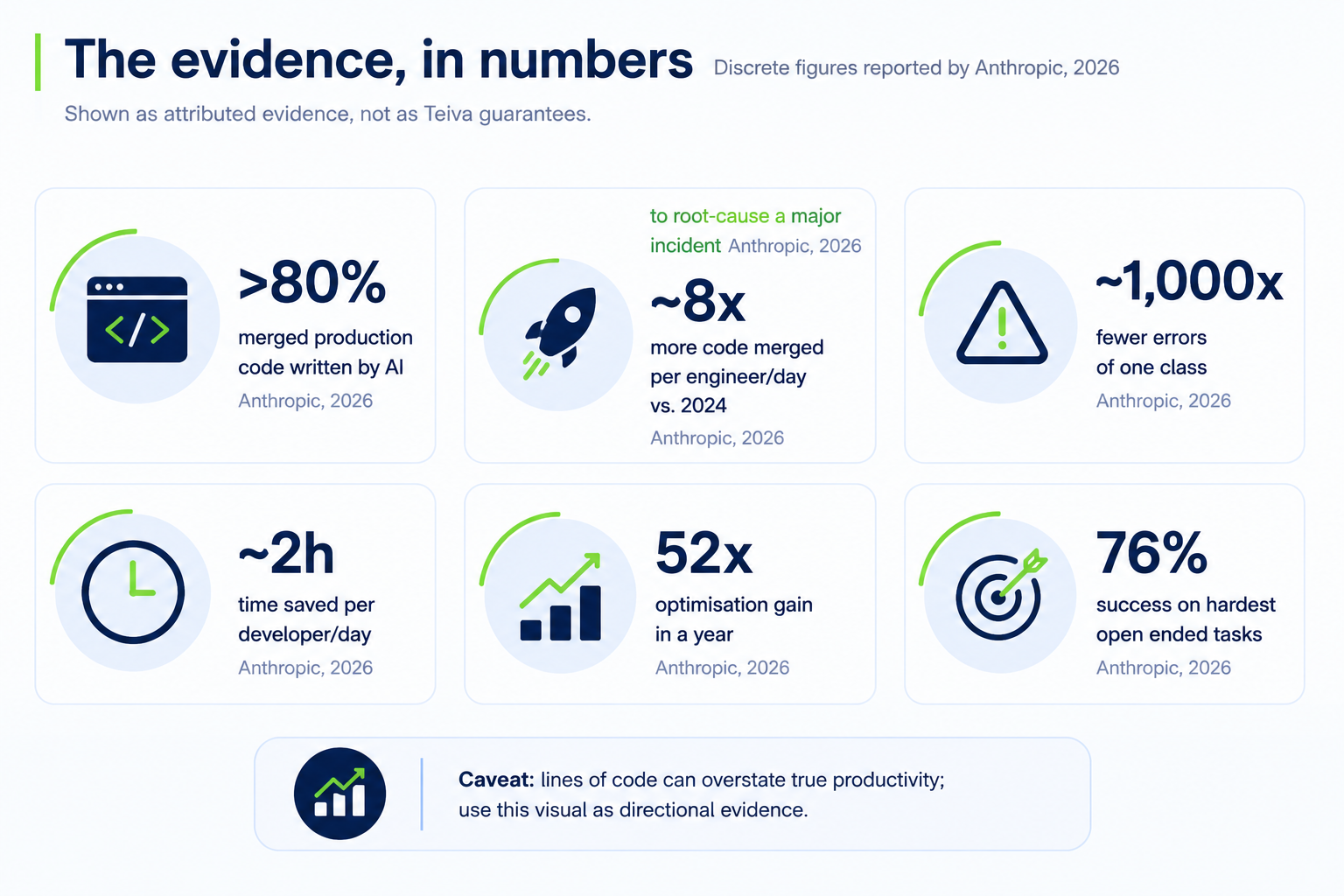
For ServiceNow customers, this matters because the platform is rarely just software. It is often the operating layer for ITSM, CSM, HRSD, procurement, asset management, compliance processes, and enterprise approvals. A small change in a workflow, script include, business rule, integration, or catalog item can affect access rights, financial approvals, service delivery, or regulated records.
If AI helps build that change, the enterprise must be able to answer basic questions: What prompt produced it? What data was used? Who reviewed it? Was it tested? Was it approved? Can we prove this later?
Why ungoverned vibe coding breaks
Enterprise vibe coding without governance creates three risks. First, it can generate technical debt at scale. AI can produce code that works in the moment but is difficult to maintain, poorly aligned with platform standards, or inconsistent with scoped application principles. Second, it can create security and access risks. A coding agent may suggest logic that overexposes data, bypasses role checks, or assumes permissions that should not exist. Third, it can create an audit problem. Even if the final code works, the organisation may not be able to reconstruct how the decision was made.
In regulated industries, that is unacceptable. Banks, insurers, healthcare providers, pharmaceutical companies, telecoms, and public-sector organisations do not only need working software. They need evidence. They need a traceable record of decisions, controls, approvals, and human oversight.
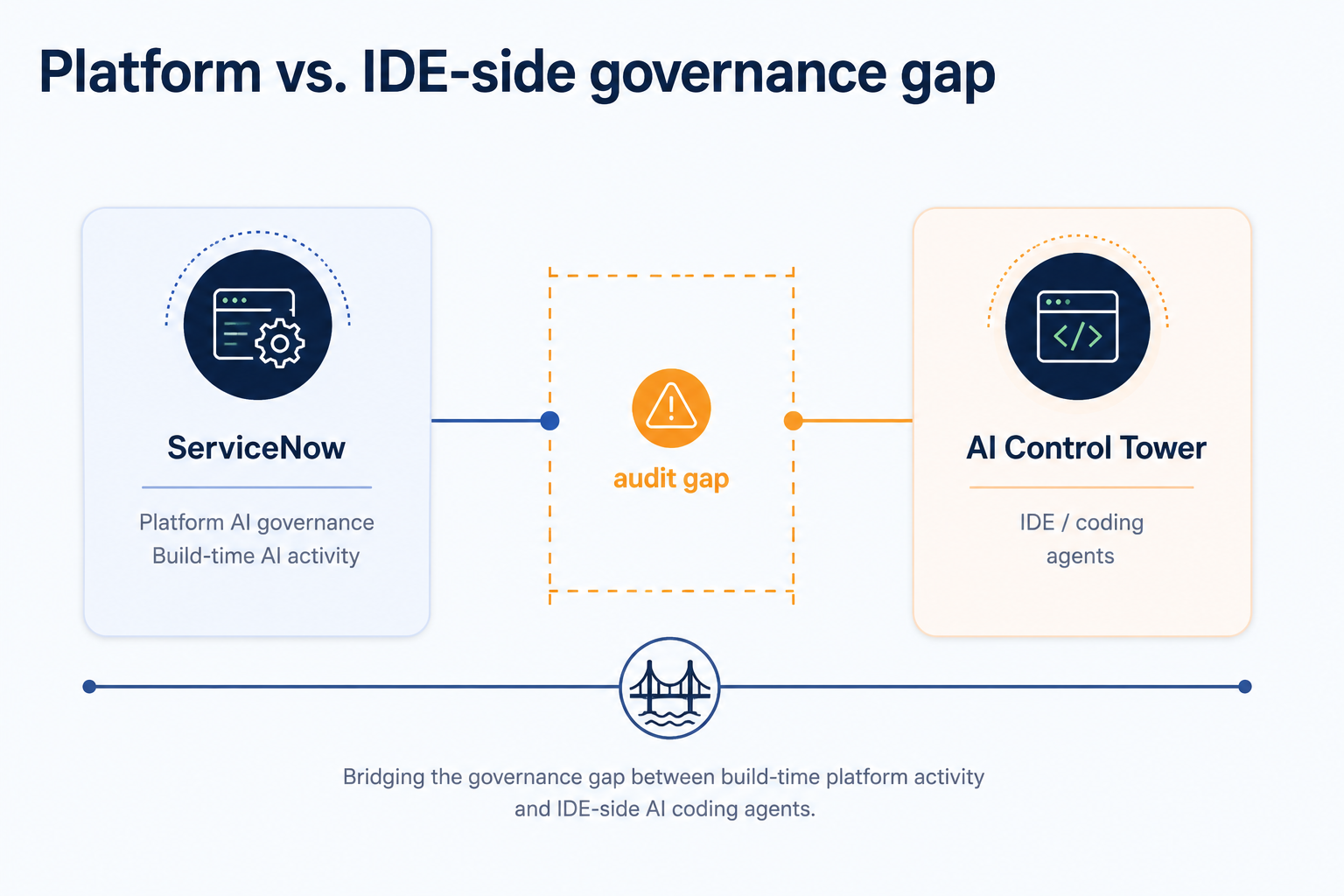
This is not an argument against ServiceNow AI Control Tower. The opposite is true. AI Control Tower is important because enterprises need visibility and governance over AI systems across the organisation. But AI Control Tower does not automatically govern every prompt, output, and decision that happens inside an IDE before code reaches the ServiceNow instance. That build-time layer needs to be governed alongside the platform layer, not instead of it.
What governed AI SDLC delivery should include
Governed AI SDLC delivery on ServiceNow should include several non-negotiable controls. Every AI interaction should be logged: the prompt, the output, the context, the developer involved, and the related backlog item or requirement. The log should be created during the work, not reconstructed after delivery.
Every AI-assisted change should pass through a mandatory human review gate. The reviewer should not be the same person who paired with the AI to create the code. This keeps accountability real and reduces the risk of rubber-stamping model output.
AI-generated work should also move through the customer’s existing ServiceNow change process. A governed AI SDLC should not create a shadow delivery pipeline. It should strengthen the controls the customer already uses.
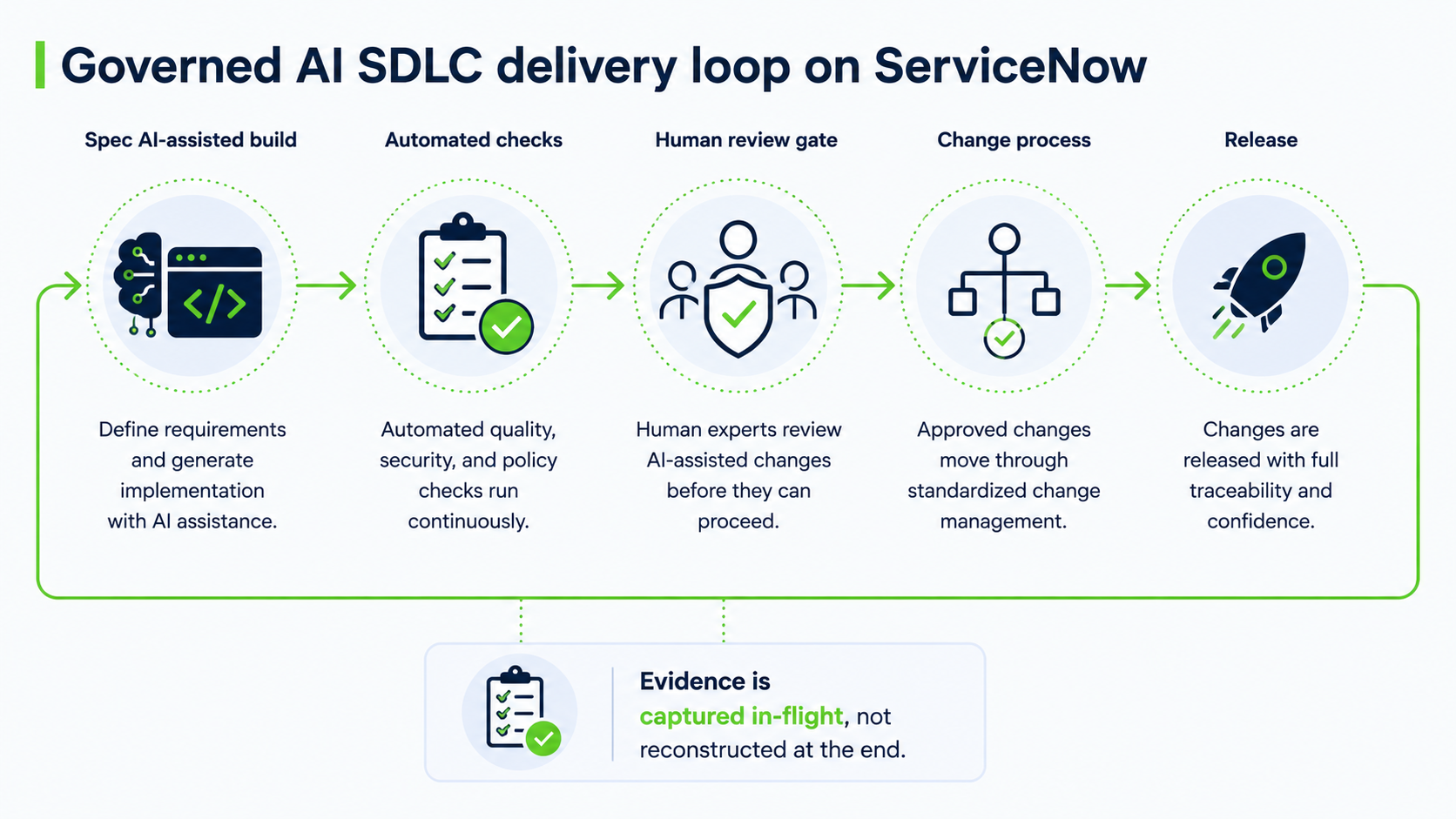
The delivery team should keep evidence aligned with compliance expectations: human oversight, traceability, access control, testing records, and release approval. For EU-facing organisations, this connects naturally to the human oversight logic of the EU AI Act.
The strong focus on governance and compliance is one of the differentiators against the Agentic Development Lifecycle (ADLC).
For life-sciences and GxP environments, it also connects to data integrity expectations: records must be attributable, legible, contemporaneous, original, accurate, complete, consistent, enduring, and available.
The real value proposition
The value is not simply “we use AI to build faster.” That will soon be common. The stronger message is: “we use AI to build faster, but with governance that produces evidence the customer can actually use.”
For the customer, the final deliverable is not only a working application, workflow, integration, or catalog item. It is also the evidence pack: what was built, why it was built, how AI was used, who reviewed it, what risks were found, what was changed, and how the final release was approved. That evidence becomes especially valuable when internal compliance, security, DPO, or audit teams ask how AI was involved in the development process.
The companies that win with AI SDLC will not be the ones that generate the most code. They will be the ones that create the safest governed throughput: more delivery, fewer blind spots, better traceability, and stronger evidence.
That is why vibe coding on ServiceNow needs a governance layer. Without it, AI-assisted development can become a fast path to hidden technical debt. With it, AI becomes a controlled delivery accelerator: fast enough for modern business, but disciplined enough for enterprise risk.
The next step should be practical, not theoretical. Choose one real ServiceNow backlog item. Run it through a governed AI SDLC engagement. Capture every prompt, output, review, test, and approval. Deliver the working solution and the evidence pack together. That is how AI SDLC moves from experiment to enterprise delivery.
Kostya Bazanov, Managing Director, Jul 10, 2026
Eager to take the next step? Contact us today!
Latest Articles
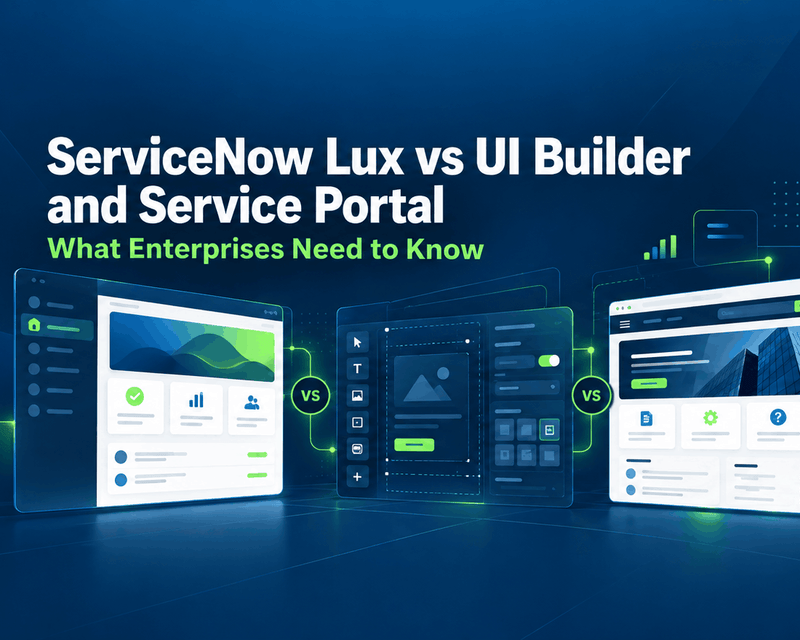
ServiceNow Lux vs UI Builder and Service Portal: What Enterprises Need to Know
Does Lux replace UI Builder or Service Portal? Short answer: no. The full answer depends on what you are building. The way enterprises build experiences on ServiceNow is changing. For years, Service Portal has handled employee and customer self-service, while UI Builder has powered modern workspaces and configurable applications.
read more
Teiva Systems at ServiceNow World Forum 2026 — London
On October 20, 2026, Teiva Systems attended ServiceNow World Forum London at ExCeL London, where industry leaders, technology experts, and the ServiceNow community came together to explore how AI, intelligent automation, and digital workflows are transforming enterprise operations.
read more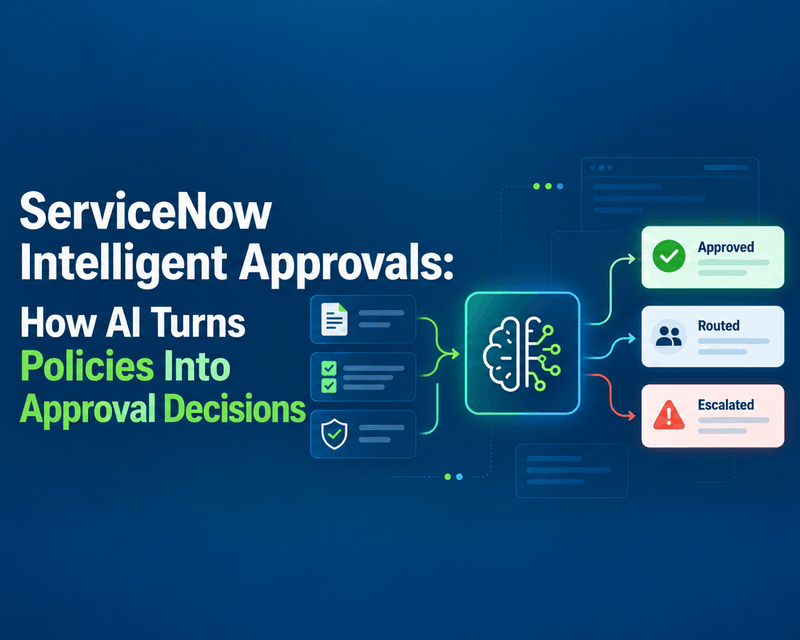
ServiceNow Intelligent Approvals: How AI Turns Policies Into Approval Decisions
What if your approval policies could make decisions, instead of sitting in documents waiting for someone to interpret them? For years, approval automation has followed the same pattern. Business teams write policies. Developers translate them into workflow conditions. Employees wait for someone to approve or reject their request, even when the outcome is obvious.
read more