
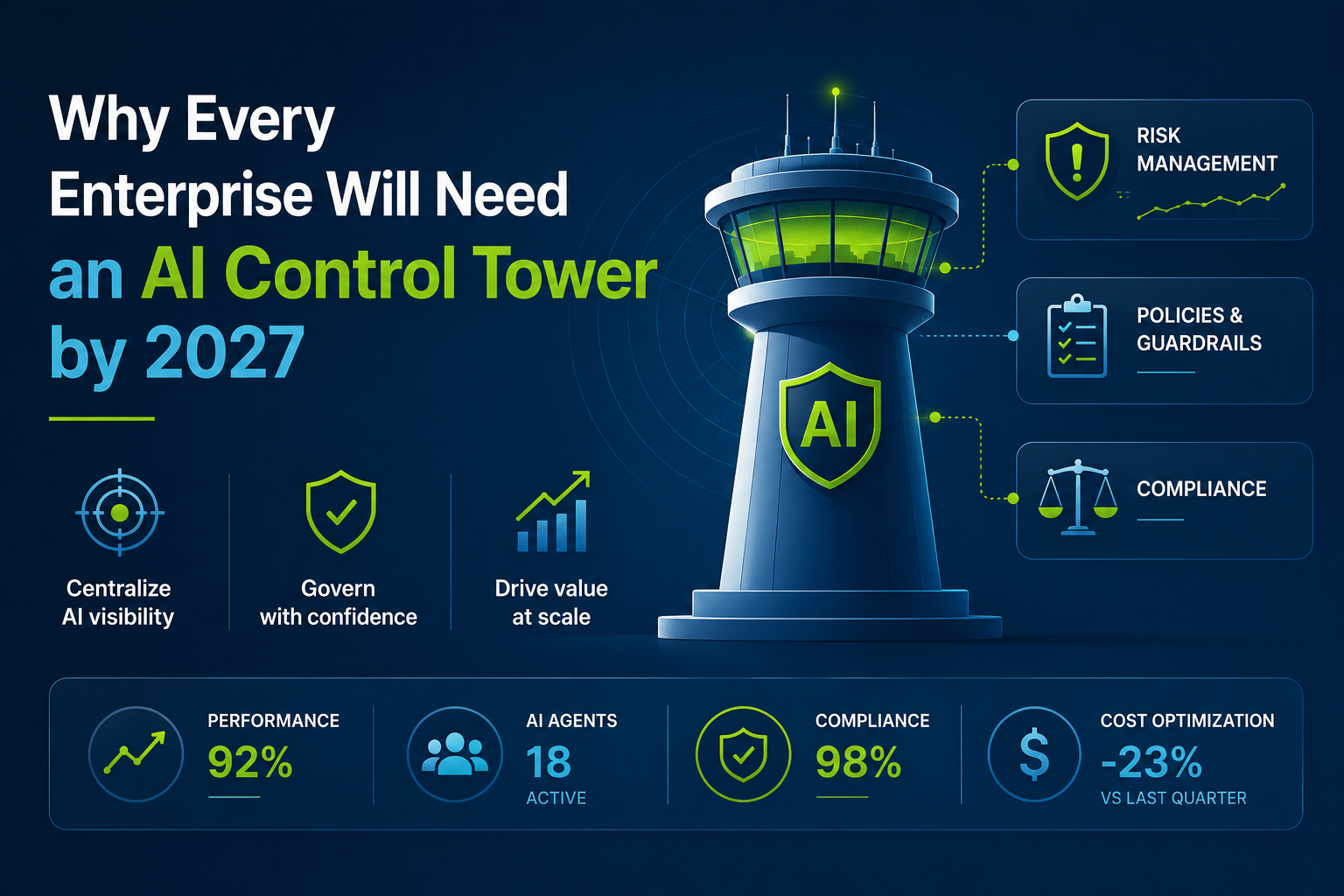
Why Every Enterprise Will Need an AI Control Tower by 2027
AI agents are moving from demos to daily operations. By 2027, the real enterprise AI question will not be how many agents you have — it will be how safely those agents can act. Here is what an AI Control Tower does, why the clock is running, and exactly how to build yours.
“By 2027, enterprise AI will not be judged by how many agents a company has, but by how safely those agents can act.”

AI agents are moving from demos into the daily operating model of the enterprise. Until recently, most organizations focused primarily on productivity: summarizing meetings, writing emails, drafting reports, searching knowledge bases, and helping employees work faster. While those use cases still matter, they are only the beginning.
Now, the next phase goes much further. AI agents will not simply suggest what to do. Instead, they will activelytrigger workflows, update systems, open requests, escalate cases, approve routine actions, and coordinate work across business functions. As a result, AI is shifting from a productivity tool to an active participant in enterprise operations.
However, that shift creates a new leadership challenge. If AI can act across IT, HR, customer service, security, finance, and procurement, who controls it? Who knows which agents exist, what they can access, which policies they follow, and whether they actually create measurable value?
This is where the AI Control Tower becomes essential. As enterprises deploy more agents across more systems, they need one central operating layer to provide visibility and maintain control. By 2027, an AI Control Tower will help enterprises govern agents, manage risk, control costs, monitor performance, and measure the business value AI delivers.
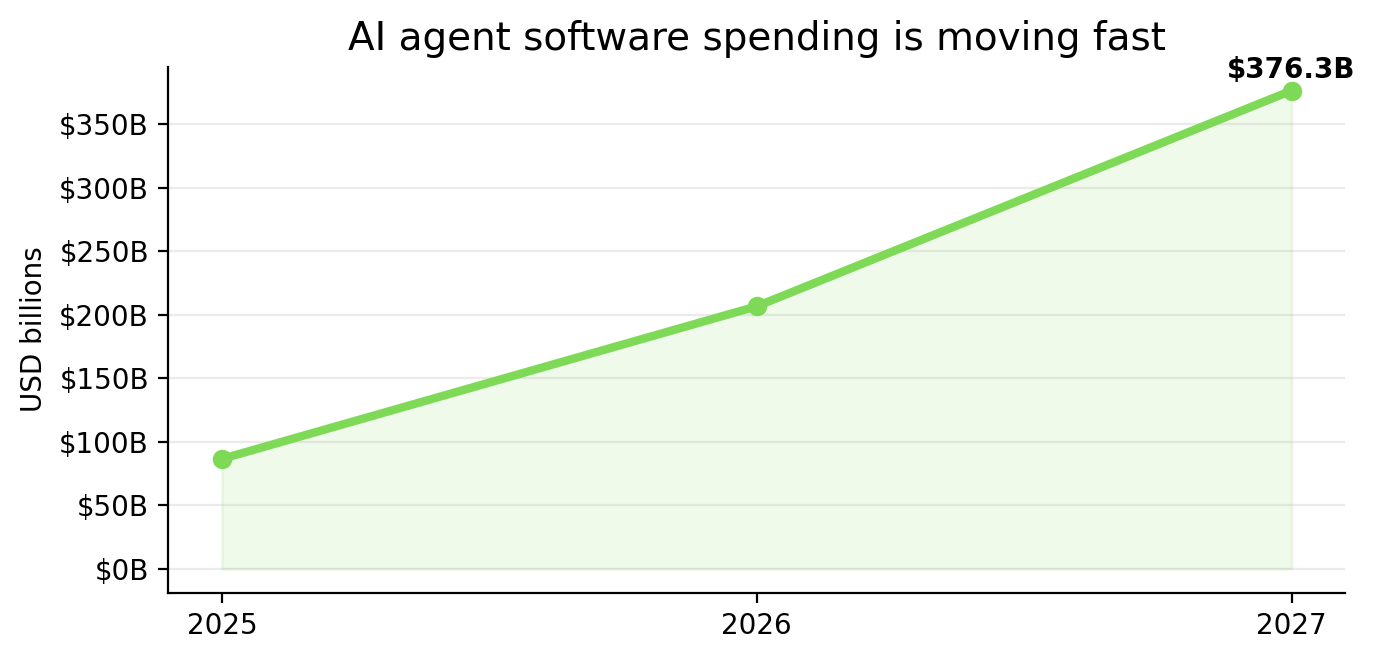
What we see in 2026 across enterprise assessments:
Most organisations have between 5 and 15 AI tools in active use. Fewer than half have a central registry of what those tools can access. Almost none have a kill switch policy. The agents are running. The governance infrastructure is not. That is the gap the 2027 deadline describes — and it is already closing in on organisations faster than most leadership teams realise.
What Is an AI Control Tower?
An AI Control Tower is more than another dashboard. Instead, it serves as the central governance and operations layer for enterprise AI. It gives leaders one place to discover AI agents, classify risk, assign ownership, approve access, monitor activity, measure outcomes, and ultimately decide whether to scale, change, pause, or retire an agent.
In practical terms, an AI Control Tower answers five questions that every CIO, CISO, COO, and CFO will soon need to ask: What AI agents do we have? What can they do? What data and systems can they access? Are they operating safely? And, most importantly, are they creating business value?
Without a central control layer, organizations struggle to answer these questions consistently. Information remains scattered across departments, platforms, vendors, and spreadsheets. With an AI Control Tower, however, enterprises gain a unified view of their AI ecosystem and can move confidently from isolated experimentation to governed, measurable AI operations.
Here is exactly what each question means — and how AI Control Tower answers it:
| # | The question every CIO will ask | Why it matters now | AI Control Tower answer |
| 1 | What AI agents do we have? | You cannot govern what you cannot see. Shadow agents are already running. | Discover — AI asset inventory, 30+ cloud & SaaS integrations |
| 2 | What are they allowed to do? | Every agent needs a permission boundary. Agents without one expand their own. | Govern — policy enforcement, role-based tool packages |
| 3 | What data and systems can they use? | Access misuse is the #1 AI compliance risk in regulated industries. | Secure — AI identity via Veza’s 30B-permission access graph |
| 4 | Are they working safely? | Agents drift. Prompt injection is real. Runtime monitoring catches both. | Observe — real-time monitoring, kill switch, anomaly detection |
| 5 | Are they producing business value? | AI budgets will not survive vague ROI. Leadership needs a dashboard. | Measure — ROI tracking tied to business outcomes, not usage |
Why 2027 Is the Turning Point
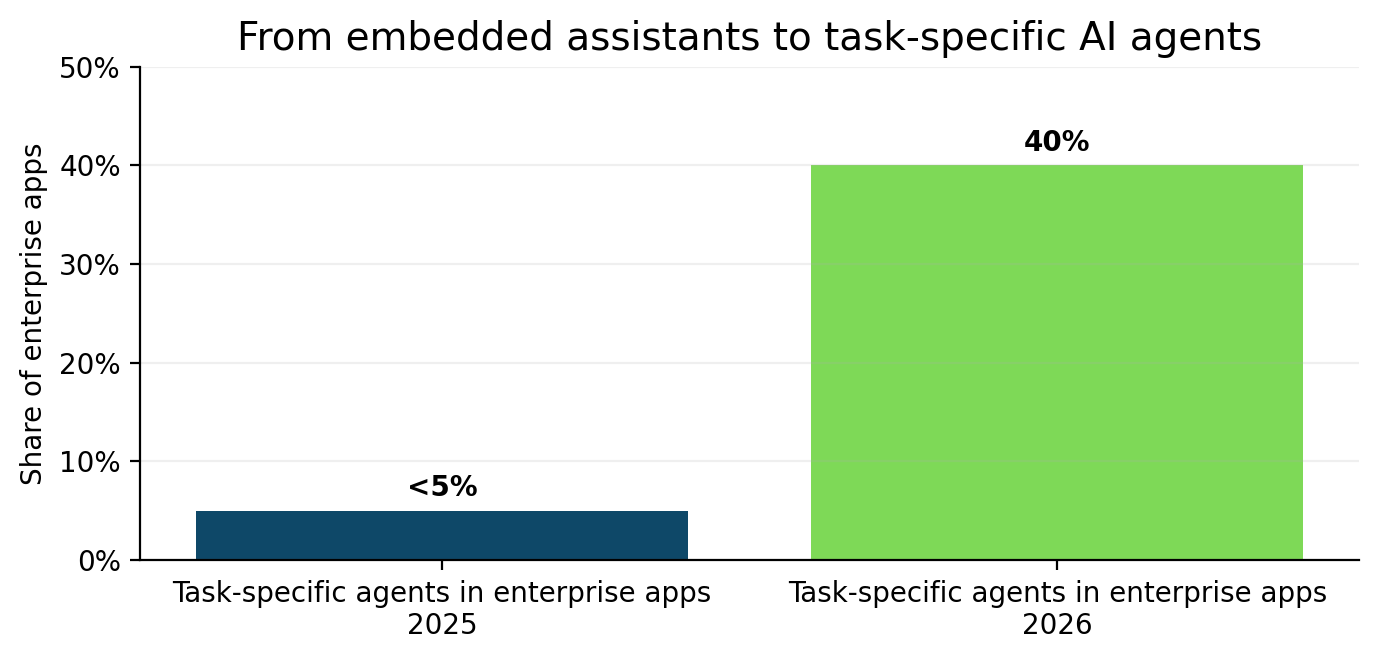
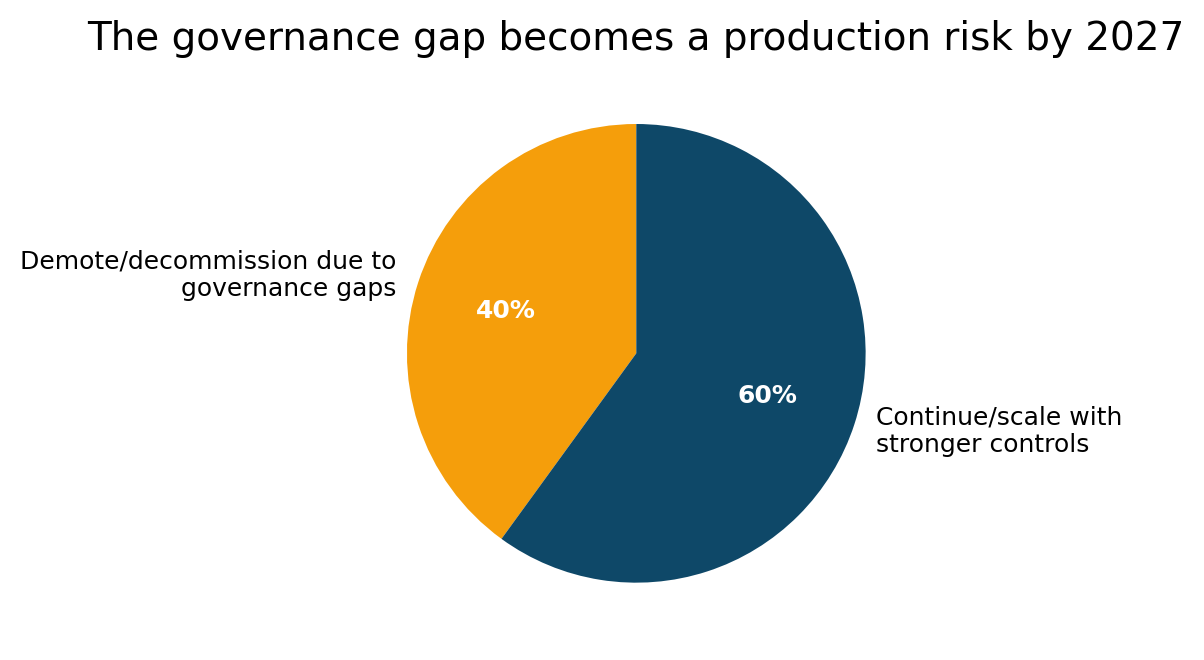
The 2027 deadline is not arbitrary. Enterprise AI adoption is accelerating rapidly, yet governance maturity is struggling to keep pace. Gartner predicts that 40% of enterprise applications will include task-specific AI agents by the end of 2026, compared with less than 5% in 2025. At the same time, Gartner expects more than 40% of agentic AI projects to be canceled by the end of 2027 due to rising costs, unclear business value, or inadequate risk controls. Together, these trends point to the same conclusion: AI agents will spread quickly, but many initiatives will fail if organizations cannot govern them effectively.
Moreover, the challenge goes beyond technology. It directly affects business operations. An AI agent with the wrong permissions can expose sensitive data, route cases incorrectly, trigger unauthorized workflows, or make recommendations that employees trust without enough scrutiny. As adoption grows, these risks multiply. A company may begin with a handful of controlled AI assistants and quickly expand to dozens of agents operating across business-critical processes.
Eventually, this creates agent sprawl — essentially the AI-era version of shadow IT. Without centralized visibility and clear governance, enterprises can lose track of which agents operate across the organization, who owns them, what they can access, and how much risk they introduce.
The Business Case: Control, Value, and Trust
Enterprises do not need an AI Control Tower because AI is dangerous. They need one because AI is becoming powerful. The more agents can do, the more important it becomes to define boundaries. A good control tower allows companies to apply proportional governance: lightweight controls for read-only assistants, stronger controls for agents that recommend actions, and strict approvals for agents that can execute work or write back to enterprise systems.
This matters for ROI as much as risk. AI budgets are rising, and leaders will not accept vague promises forever. They will want to know which agents reduce handling time, improve resolution rates, lower service costs, increase employee productivity, or improve compliance. A control tower makes AI measurable. It turns a collection of exciting tools into a portfolio that can be managed like a business capability.
The proportional governance model in practice — four tiers based on agent autonomy and business impact:
| Tier | Example agents | Controls required | Approval path | Risk level |
| Tier 1Read-only | Summarisation agent,knowledge search | Lightweight logging,basic identity check | IT self-service | Low |
| Tier 2Advisory | Recommendation agent,chatbot with routing | Policy enforcement,escalation rules | Business owner | Medium |
| Tier 3Workflow | Ticket creation,approval routing agent | Approval workflow,CMDB context required | IT + Business | High |
| Tier 4Execution | L1 AI Specialist,access provisioning | Full AI Control Tower:Governance + Observe + Secure | CISO + IT | Critical |
Where ServiceNow Fits into the Picture
ServiceNow expanded AI Control Tower at Knowledge 2026 from a governance dashboard into a full enterprise AI command centre. It now operates across five dimensions: Discover, Govern, Secure, Observe, and Measure. Thirty new integrations extend its visibility across AWS, Azure, Google Cloud, SAP, Oracle, Workday, and Microsoft Agent 365. Veza’s 30-billion-permission access graph powers the Secure dimension. A live kill switch demo at the Knowledge 2026 keynote caught a prompt injection attack in real time, attempting to override pricing rules and suppress its own audit logs.
ServiceNow also announced deeper integration with Microsoft Agent 365, extending AI Control Tower governance across the Microsoft agent ecosystem and giving teams visibility into agent activity across ServiceNow and Microsoft environments. That direction is important because most enterprises will not have one AI platform. They will have many: Microsoft Copilot, custom agents, workflow agents, service agents, developer agents, security agents, and vendor-built agents.
The value of a control tower is that it sits above this complexity. It helps leaders avoid treating every agent the same. A summarization agent, a procurement approval agent, and a security response agent do not carry the same risk. They should not have the same controls. The control tower gives enterprises a practical way to classify agents by autonomy, access, business impact, and required oversight.
What Enterprises Should Prepare Now
Companies should not wait until agent sprawl becomes a board-level issue. The first step is to create an AI agent inventory. Every agent should have a name, owner, business purpose, data access profile, connected systems, autonomy level, approval path, and success metrics. The second step is to define governance tiers. Read-only agents, advisory agents, workflow-triggering agents, and autonomous execution agents should each have different controls.
The third step is to prepare enterprise data. AI agents need context: users, roles, services, assets, applications, policies, knowledge articles, and workflow history. In ServiceNow environments, the CMDB, service catalog, knowledge base, and workflow design become part of AI readiness. If the data is weak, the agent will be weak. If the data is governed, the agent has a safer foundation to act.
Finally, companies should measure value continuously. Not every AI agent deserves to survive. Some should be improved. The point of an AI Control Tower is not to slow innovation; it is to make innovation scalable, visible, and trusted.
The 9 fields every AI agent registry entry needs — before any agent goes live:
| Inventory field | What it captures | Status |
| Agent name & ID | Unique identifier in AI Control Tower registry | Required before deploy |
| Business owner | Named individual accountable for behaviour and outcomes | Required before deploy |
| Business purpose | What problem it solves, which team it serves | Required before deploy |
| Data access profile | Which tables, systems, and APIs it can read or write | Required before deploy |
| Autonomy level | Tier 1–4 classification (read-only to execution) | Required before deploy |
| Approval path | Who approves the agent, its actions, and any scope changes | Required before deploy |
| Success metrics | Deflection rate, MTTR reduction, cost per transaction | Define at launch |
| Kill switch policy | Who can pause it, how fast, under what conditions | Test before go-live |
| Retirement criteria | Conditions under which the agent is decommissioned | Document at launch |
By 2027, the enterprise AI conversation will move beyond adoption. The real question will be control. Companies will not win by deploying the most agents. They will win by building the safest, clearest, and most measurable operating model for AI-powered work. An AI Control Tower will become the foundation for that model: the place where governance meets execution, and where AI becomes trusted enough to run real enterprise operations.
“An AI Control Tower turns agent sprawl into an accountable operating model.”
Slava Trotsenko, CEO, Jul 24, 2026
Eager to take the next step? Contact us today!
Latest Articles
How to Test a ServiceNow AI Agent Before Giving It Production Access
A successful demonstration proves that an agent can perform a task under specific conditions. It doesn’t prove the agent will behave correctly when faced with incomplete data, conflicting instructions, restricted records, broken integrations, or unexpected user requests.
read more
ServiceNow AI Readiness Assessment: 25 Questions to Answer Before Deploying AI Agents
Your AI agent is only as reliable as the environment it operates in. This assessment covers 25 essential questions across five areas to help IT leaders, architects, and platform owners prepare for production.
read more
ServiceNow AI ROI: What Should You Measure After the Pilot?
ServiceNow AI ROI: What Should You Measure After the Pilot? Your AI pilot worked. That proves the technology can work. It does not yet prove ROI. Here are the six metrics that separate “the demo impressed leadership” from “we can prove measurable business value.” Your ServiceNow AI pilot worked. Now what? The chatbot responded correctly. […]
read more