

AI Agents in ServiceNow: What Actually Works
Every platform promises transformation. But between the demo and the dashboard lies a gap most organizations quietly struggle with. Here’s the unfiltered truth.
AI agents, copilots, auto-resolution, predictive everything – the ServiceNow ecosystem is buzzing. And if you’ve sat through a vendor demo recently, you’d be forgiven for thinking the future is already here.
It isn’t. Not quite. But that doesn’t mean AI isn’t delivering real value – it very much is. The difference between organizations seeing results and those stuck in perpetual pilot mode? It’s rarely the technology.
The Promise vs. The Reality
The dominant narrative goes something like this: enable AI, watch tickets disappear, redeploy your team to strategic work. Sounds clean. Rarely lands that way.
Most organizations that struggle share a common pattern – they adopted AI as a solution before they had clarity on the problem. The result: features enabled, outcomes elusive.
Here’s what typically goes wrong:

The Foundation Nobody Talks About
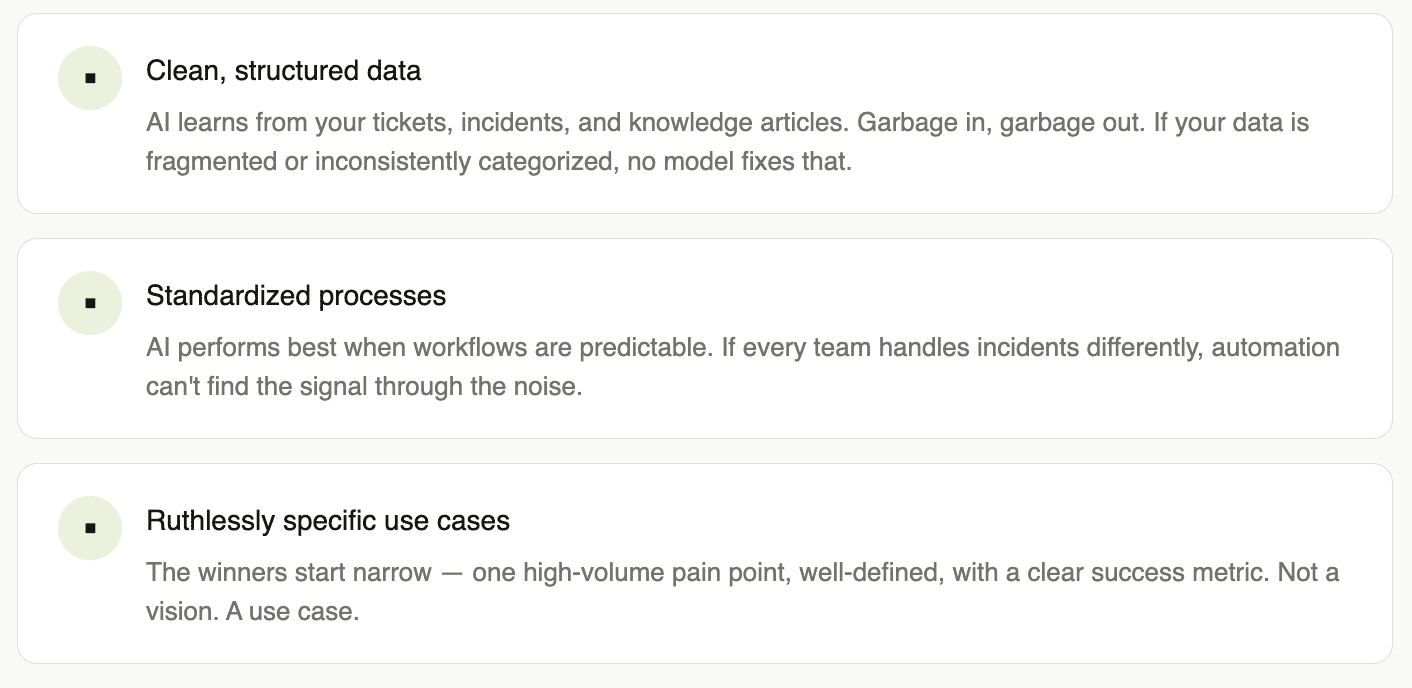
Organizations that actually get ROI from ServiceNow AI focus less on features and more on fundamentals. Three things, consistently:
Where AI Is Actually Winning
Intelligent ticket routing
This is the lowest-hanging fruit – and the most consistently successful. AI categorizes and routes faster than any manual triage process. Less back-and-forth. Higher first-contact resolution. Easy to measure, hard to argue with.
Virtual agents for tier 1
Password resets. Access requests. Status checks. These aren’t glamorous, but they’re high-volume. AI-powered virtual agents handle them without human intervention – freeing your team for work that actually needs judgment.

Real-time knowledge recommendations
AI surfacing the right article at the right moment – to the agent mid-resolution, or to the user before they even submit a ticket. Works especially well in organizations with strong knowledge culture. Faster resolution, more consistent answers.
Predictive incident analytics
Pattern recognition across incidents to flag risks before they escalate. High ceiling, high requirement. This one needs mature data and monitoring practices to pay off – but when it does, the shift from reactive to proactive is genuinely transformative.
What Still Falls Short
Intellectual honesty matters here. Three areas where AI consistently underdelivers:

Out-of-the-box AI without customization rarely moves the needle. Every organization’s data and workflows are different. Generic deployments produce generic results. And perhaps most importantly: even excellent AI fails if teams don’t trust or use it. Change management isn’t optional.
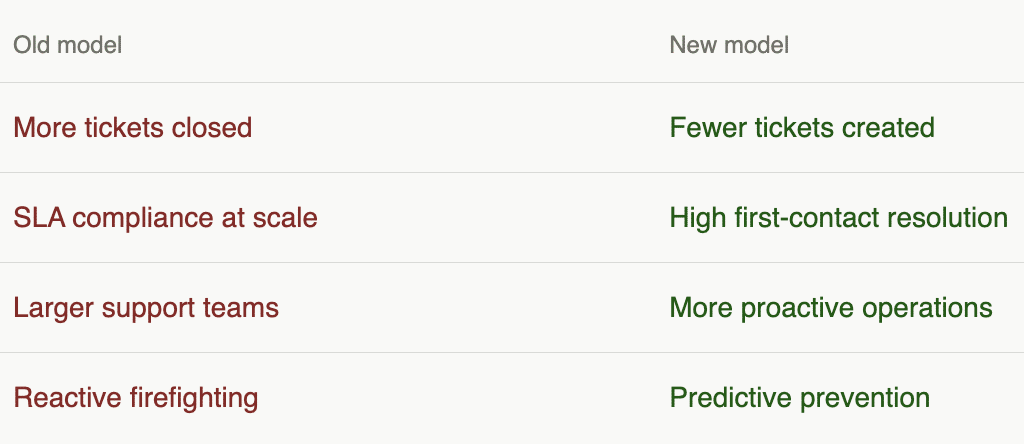
The Metric Shift That Matters Most
Old IT success looked like closing more tickets, faster. The AI-era version looks different — and better.
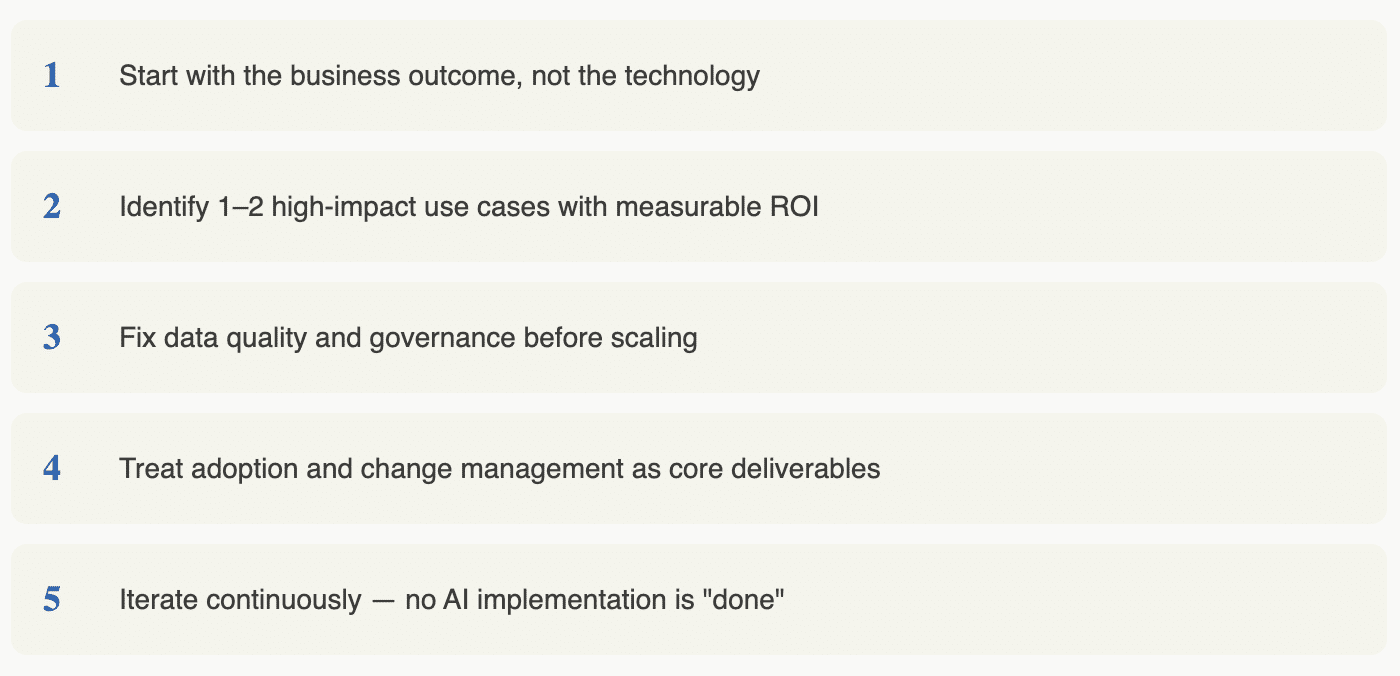
The Playbook for Organizations That Get It Right
Oleksii Konakhovych, CTO, Apr 03, 2026
Eager to take the next step? Contact us today!
Latest Articles
Teiva Systems at ServiceNow World Forum 2026 — New York
Teiva Systems was excited to join the ServiceNow World Forum 2026 in New York, where AI, Agentic AI, and the future of enterprise technology took center stage.
read more
7 Signs Your ServiceNow Instance Needs a Health Check
Your ServiceNow instance rarely becomes unhealthy overnight. The warning signs usually appear gradually: pages take longer to load, integrations fail more often, upgrades become increasingly painful, and every new requirement seems to need another customization.
read more
What Should a ServiceNow Partner Actually Deliver in the First 90 Days?
Signing a ServiceNow implementation partner is easy. Knowing whether that partner is actually delivering value is harder. “The first 90 days should reduce uncertainty. You should understand what you have, what you are building, why it matters, and how success will be measured.”
read more