
Internal vs. External Support Models: What Works Best?
Choosing a ServiceNow support model isn’t about who pushes the buttons. It’s about stability, responsiveness, and confidence in the result. At the moment of failure, the user does not think about who is responsible. What matters to them is that the problem disappears as soon as possible. That’s why the decision between internal and external support should be made with a long-term strategy in mind, not just the convenience of the here and now.

When an internal team makes a difference
Those who have worked with a strong in-house support team know how effective it is. You don’t need to explain anything, because most of them already understand not only the technical part, but also business processes, company specifics, and things that no one usually documents. What does this bring to the business?
- quick response to problems without unnecessary approvals;
- understanding of the context, not only technical but also operational;
- flexibility in solving problems without dependence on contracts;
- control over quality, priorities, and resources.
But it’s worth keeping in mind that such a team doesn’t work on autopilot. It needs to be supported, and opportunities for development, training, and career growth need to be created. Otherwise, you will have to spend time constantly looking for replacements, which is always more expensive.
Where external support is needed
Even the strongest internal team will not cover all the needs. If you need to scale up, you should hire external specialists. New modules, complex integrations, short deadlines, upgrades, that’s when ServiceNow support services come to the rescue.
By working with an experienced ServiceNow implementation partner, you save time and reduce risks. They have seen similar tasks before and know what works and what doesn’t. With ServiceNow managed services, a company receives:
- 24/7 support without weekend breaks;
- predictable costs;
- access to specialists with in-depth knowledge of scripts, integrations, and migrations.
Important: an external team is not a substitute for an internal one. You still need to have someone who knows what is “normal” and can check the quality of work, coordinate tasks, and keep control of the process.
What do you need right now?
This is not a solution for life. What worked with 50 users may not be able to withstand the load of 500. So before choosing a model, you should answer a few questions honestly:
- How does your ServiceNow onboarding go: is it clear or confusing?
- Who is responsible for ServiceNow go-live support: is there a resource, or is everyone overloaded?
- Do you deal more with ongoing incidents or big changes?
- Do you have enough skills within the team, or are the strongest ones already exhausted?
- What happens if the volume of tasks doubles?
In most cases, a mixed model works best. The internal team controls the strategy, while the external team covers tasks where there is a lack of time or expertise. This works if the roles are clear and communication is established.
And someone must coordinate the whole picture. Without a clear person in charge of ServiceNow project management, everything falls apart, and you no longer manage the support model, but simply respond to problems. So, everything falls apart, and you no longer manage the support model, but simply respond to problems. If you’re ready to build a sustainable support strategy that combines internal strengths with expert external help, explore our Application Management Services. We help you scale ServiceNow operations smartly.
Oleksii Konakhovych, CTO, Jul 04, 2025
Eager to take the next step? Contact us today!
Latest Articles

Teiva Systems at ServiceNow World Forum 2026 — London
On October 20, 2026, Teiva Systems attended ServiceNow World Forum London at ExCeL London, where industry leaders, technology experts, and the ServiceNow community came together to explore how AI, intelligent automation, and digital workflows are transforming enterprise operations.
read more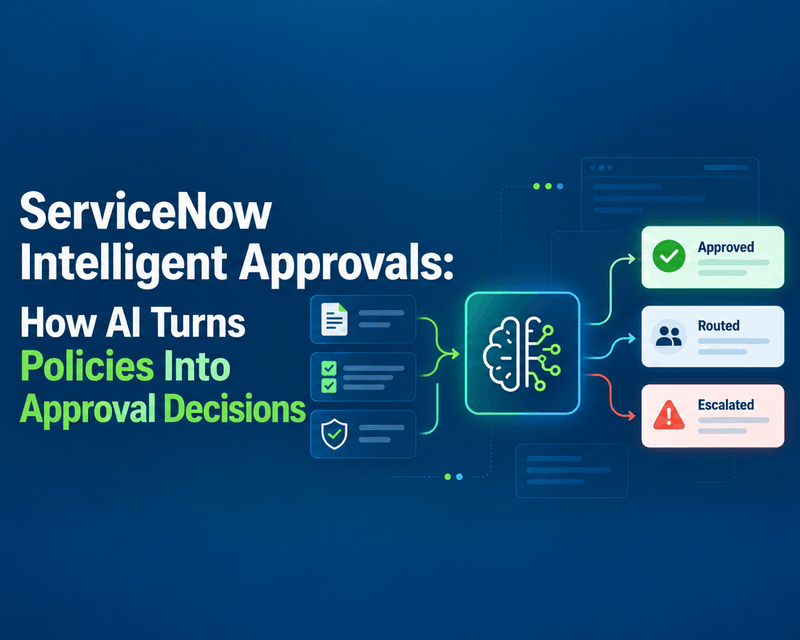
ServiceNow Intelligent Approvals: How AI Turns Policies Into Approval Decisions
What if your approval policies could make decisions, instead of sitting in documents waiting for someone to interpret them? For years, approval automation has followed the same pattern. Business teams write policies. Developers translate them into workflow conditions. Employees wait for someone to approve or reject their request, even when the outcome is obvious.
read more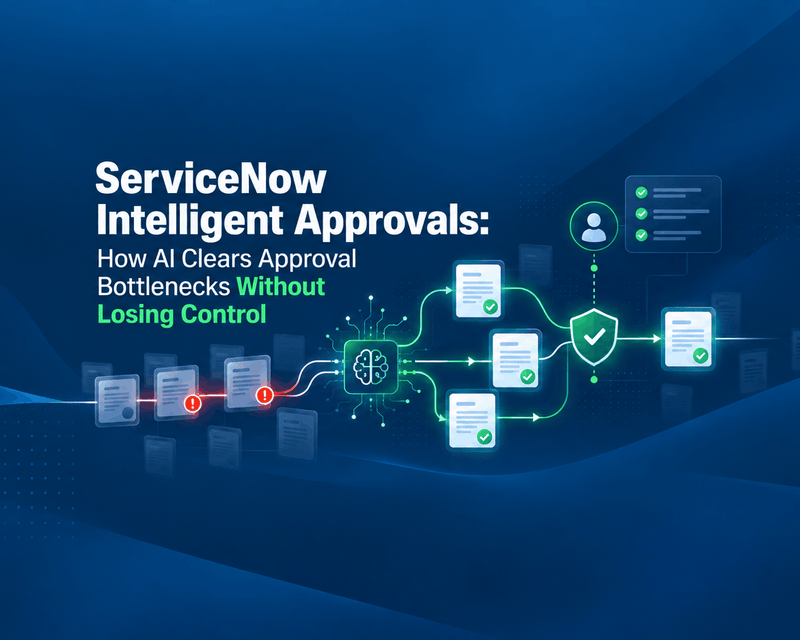
ServiceNow Intelligent Approvals: How AI Clears Approval Bottlenecks Without Losing Control
Your automation is fast. Your approvals are not. Organizations invest heavily in automation, AI and digital transformation. Yet many business processes still stall at the same point: waiting for someone to click “Approve.”
read more