
Automating Fintech Workflows: A Deep Dive into ServiceNow Implementation
Introduction: The Automation Imperative in Fintech
The fintech industry thrives on automation, efficiency, and scalability. Customers expect instant transactions, real-time account updates, and seamless digital experiences—and any delay can cost a company both money and trust. To stay competitive, fintech firms are turning to ServiceNow automation to streamline IT operations, reduce costs, and enhance service delivery.
That’s where ServiceNow’s IT Service Management (ITSM) and IT Operations Management (ITOM) come in. By automating workflows, optimizing IT operations, and integrating with core fintech systems, ServiceNow helps financial technology companies reduce costs, scale effortlessly, and deliver superior service.

In this article, we’ll break down:
- How ServiceNow ITSM & ITOM improve fintech operations
- The cost-saving benefits of workflow automation
- A real-world example: How Teiva Systems transformed its fintech services with ServiceNow
For a broader look at ServiceNow’s impact on fintech, check out our main article here.
1. The Hidden Costs of Manual Workflows in Fintech
Many fintech companies still rely on email chains, spreadsheets, and disconnected systems to manage IT requests, security incidents, compliance processes, and customer interactions. This creates:
- Slow Response Times: Critical IT issues take too long to resolve, leading to downtime and customer frustration.
- Higher Operational Costs: Manual processes require more staff hours, driving up costs unnecessarily.
- Compliance Risks: Lack of automation makes it harder to track and document compliance actions.
- Siloed Teams & Systems: IT, security, compliance, and customer support teams operate in isolation, leading to inefficiencies.
In a fast-moving industry like fintech, manual workflows aren’t just inefficient—they’re a liability. Automating these processes with ServiceNow unlocks speed, cost savings, and seamless service delivery.
2. How ServiceNow ITSM & ITOM Improve Fintech Operations
ServiceNow’s ITSM and ITOM modules work together to streamline service delivery, reduce downtime, and create an interconnected fintech ecosystem.
ServiceNow ITSM: Enhancing Service Delivery & Efficiency
IT Service Management (ITSM) ensures fintech companies can:
- Resolve IT issues faster with automated ticketing and AI-driven categorization.
- Enable self-service portals so customers and employees can solve common problems instantly.
- Use predictive analytics to spot recurring IT issues before they escalate.
Example: Instead of manually sorting through IT tickets, ServiceNow’s Virtual Agent can automatically respond to common requests (e.g., password resets, system access requests) and escalate urgent cases to the right teams.
ServiceNow ITOM: Reducing Downtime & Optimizing IT Operations
IT Operations Management (ITOM) helps fintech firms:
- Monitor IT infrastructure in real-time to prevent outages before they occur.
- Automate service mapping to understand how different systems interact and impact performance.
- Ensure financial applications run smoothly by proactively identifying bottlenecks.
Example: If a core banking application is experiencing performance issues, ServiceNow ITOM automatically detects anomalies, alerts IT teams, and suggests remediation steps—reducing downtime and preventing customer disruptions.
Automating Cross-Departmental Workflows
One of the biggest advantages of ServiceNow is its ability to connect IT, security, compliance, and customer service teams under a single platform.
- ITSM + SecOps: When a security threat is detected, IT teams can automatically launch investigations and patch vulnerabilities without manual coordination.
- ITSM + Compliance: Service requests involving sensitive data are automatically logged and audited for compliance tracking.
- ITSM + HR: Onboarding workflows are automated, ensuring new fintech employees get the necessary system access and compliance training from day one.
The result? A fully automated fintech ecosystem where teams collaborate seamlessly, reducing delays and human error.
3. The Cost-Saving Power of Workflow Automation in Fintech
By automating IT and operational workflows, fintech firms can achieve:
Reduced IT Operational Costs
- Automated ticket handling means fewer IT support agents are needed.
- Faster issue resolution minimizes expensive service disruptions.
- AI-driven automation reduces reliance on manual interventions.
Higher Efficiency & Productivity
- Employees spend less time on routine tasks and more time on innovation.
- Automated compliance reporting eliminates manual documentation efforts.
- Streamlined workflows reduce delays in service requests and approvals.
Better Customer Experience & Retention
- Faster service responses mean happier customers.
- Minimized downtime ensures smooth transactions 24/7.
- Proactive IT management prevents issues before they impact users.
The Bottom Line: Automating workflows isn’t just about making things faster—it’s about making fintech companies more profitable, scalable, and resilient.
4. Case Study: How Teiva Systems Enhanced Fintech Operations with ServiceNow
The Challenge: A Fintech Firm Struggling with Operational Bottlenecks
Teiva Systems, a technology provider for financial services, faced three critical problems:
- IT incident resolution was slow, causing service disruptions.
- Operational workflows were heavily manual, leading to inefficiencies.
- Compliance tracking was fragmented, increasing regulatory risks.
The Solution: Implementing ServiceNow ITSM & ITOM
By deploying ServiceNow ITSM & ITOM, Teiva Systems:
- Automated IT service requests with AI-powered categorization.
- Implemented real-time infrastructure monitoring to prevent downtime.
- Streamlined compliance tracking by integrating GRC workflows.
The Results: A Fully Optimized Fintech Workflow
- 📉 50% reduction in IT operational costs
- ⚡ 40% faster service request resolution
- ✅ 100% compliance readiness with automated tracking
- 🛡 Stronger system reliability and security
Want more details? Read the full Teiva Systems case study.
5. The Future of Fintech: Automating for Growth
As fintech companies scale, manual processes simply won’t cut it. Looking ahead, automation will be driven by:
- AI-powered ITSM that predicts and prevents outages
- Self-healing IT infrastructure that fixes itself before users notice issues
- Advanced compliance automation that eliminates regulatory complexities
Fintech firms that embrace ServiceNow’s intelligent automation will stay ahead of the curve—while those that don’t will struggle to keep up.
Up next: Want to learn how fintech companies can stay compliant while automating operations? Check out our next article: ServiceNow for Fintech Compliance: Simplifying Regulatory Challenges.
For more insights, check out our ServiceNow for Fintech Series:
- Why Fintech Companies Need ServiceNow
- ServiceNow for Fintech Compliance
- ITSM in Fintech: Best Practices
- Enhancing Fintech Security with ServiceNow
Oleksii Konakhovych, CTO, Mar 04, 2025
Eager to take the next step? Contact us today!
Latest Articles
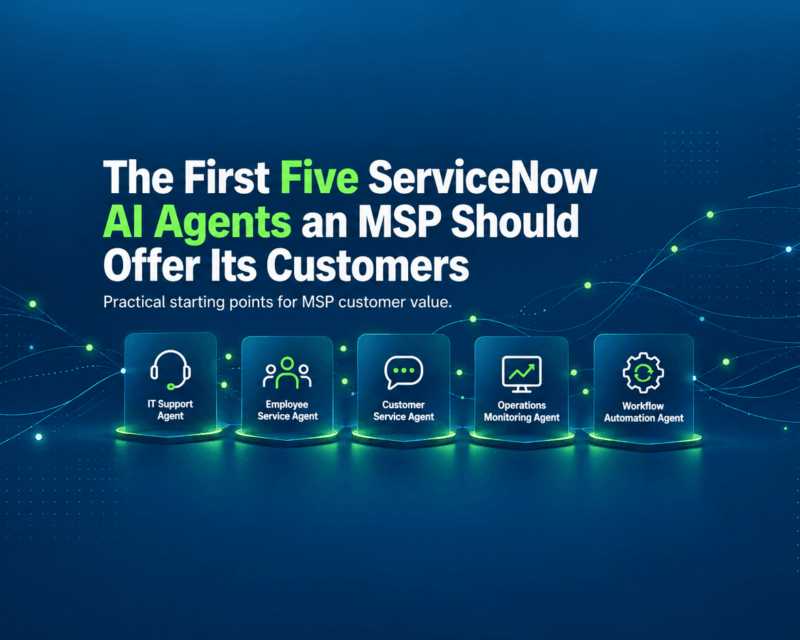
The First Five ServiceNow AI Agents an MSP Should Offer Its Customers
Managed service providers can now package ServiceNow AI agents as repeatable, recurring services — moving from ticket-response capacity to managed outcome delivery. Here is what the first five offerings look like, how each creates value, and what to get right before deploying them.
read more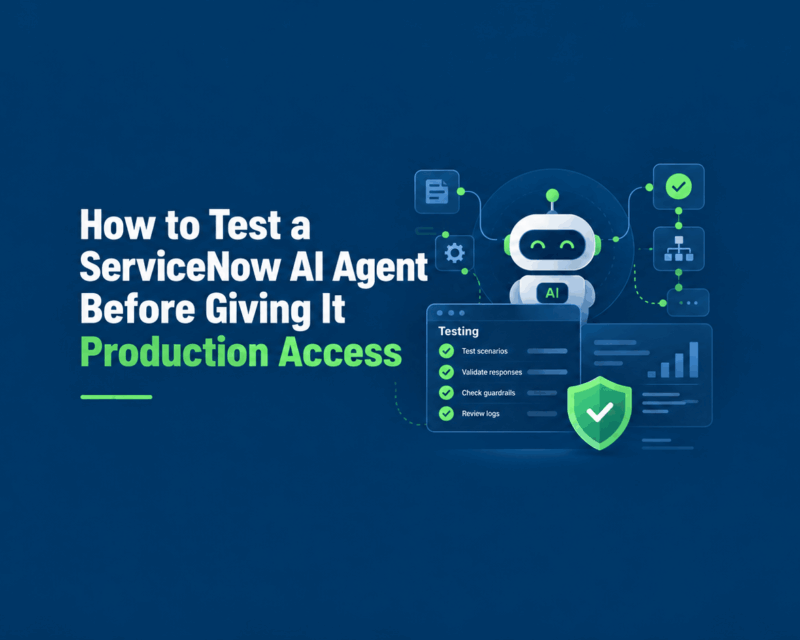
How to Test a ServiceNow AI Agent Before Giving It Production Access
A successful demonstration proves that an agent can perform a task under specific conditions. It doesn’t prove the agent will behave correctly when faced with incomplete data, conflicting instructions, restricted records, broken integrations, or unexpected user requests.
read more
ServiceNow AI Readiness Assessment: 25 Questions to Answer Before Deploying AI Agents
Your AI agent is only as reliable as the environment it operates in. This assessment covers 25 essential questions across five areas to help IT leaders, architects, and platform owners prepare for production.
read more