
Why Fintech Companies Need ServiceNow Implementation for Digital Transformation
Introduction: The Digital Revolution in Fintech
Fintech companies face massive operational challenges, ranging from compliance and cybersecurity to IT scalability. Moreover, they must navigate ever-changing regulations like GDPR and PCI-DSS while maintaining security. In addition, the risk of cyberattacks is increasing, making automated security solutions essential. As a result, fintech firms require a reliable platform like ServiceNow to streamline operations.The biggest challenges include:
- Keeping up with ever-changing regulations – Compliance requirements like GDPR, PCI-DSS, and SOX demand constant monitoring. ServiceNow governance, risk, and compliance (GRC) automates regulatory tracking, reducing errors and ensuring fintech firms stay audit-ready.
- Managing security risks in an industry constantly under cyber threats – Fintech is a prime target for hackers. ServiceNow security operations (SecOps) automates threat detection and incident response, stopping breaches before they escalate.
- Scaling IT operations to meet growing customer demands – Legacy IT service management systems create bottlenecks. With ServiceNow ITSM implementation, fintech firms automate IT support, resolve issues faster, and maintain 99.99% uptime.
- Eliminating workflow inefficiencies that slow down service delivery – Many fintech companies use disconnected tools, leading to slow, manual workflows. ServiceNow integration connects systems, ensuring seamless data flow across departments.
If fintech is all about speed and innovation, why are so many companies still stuck with outdated processes?
This is where ServiceNow implementation makes a difference. By automating workflows, streamlining IT services, strengthening security, and ensuring compliance, ServiceNow enables fintech companies to scale effortlessly.

What You’ll Learn in This Article:
Explore the biggest challenges fintech companies encounter and how they impact efficiency, security, and compliance.
Discover how ServiceNow implementation provides solutions, from automating workflows to enhancing cybersecurity.
Learn from Teiva Systems’ success story and see how they transformed their operations with ServiceNow.
For a broader look at ServiceNow platform solutions for fintech, check out our main article here.
1. The Biggest Challenges in Fintech Operations
Compliance: Keeping Up with Ever-Changing Regulations
Fintech is one of the most heavily regulated industries. Companies must comply with laws like:
- GDPR (data protection in Europe)
- PCI-DSS (credit card transaction security)
- SOX (financial reporting requirements)
- Country-specific regulations (like the U.S. SEC rules for trading platforms)
Manually tracking these compliance requirements? That’s a nightmare. ServiceNow governance, risk, and compliance (GRC) automates regulatory tracking, reducing the risk of fines and errors.
Cybersecurity: Constantly Fighting Off Attacks
Fintech is a prime target for hackers. Cybercriminals look for ways to:
- Steal customer financial data
- Exploit vulnerabilities in outdated systems
- Disrupt services through ransomware attacks
Without ServiceNow security operations (SecOps), fintech firms risk huge financial and reputational damage. Automated threat monitoring is no longer optional—it’s essential.
IT Service Management (ITSM): Scaling Fast Without Breaking Down
In fintech, downtime is not an option. Customers expect instant transactions, real-time access to accounts, and 99.99% uptime. But many fintech firms still use legacy ITSM systems that:
- Slow down ticket resolution
- Require too much manual intervention
- Aren’t built for modern, cloud-based fintech platforms
With ServiceNow ITSM implementation, companies automate IT service management and ensure seamless support.
Workflow Inefficiencies: Too Many Tools, Not Enough Integration
Many fintech companies rely on disconnected tools to manage IT, security, compliance, and customer service.
- Siloed teams struggling to get a full view of operations
- Manual workflows slowing everything down
- Higher operational costs due to inefficiencies
That’s why fintech companies need ServiceNow integration—a single platform to unify IT, compliance, security, and workflows.
That’s why fintech companies need a solution like ServiceNow—a single platform that unifies IT, compliance, security, and workflows.
2. How ServiceNow Implementation Solves Fintech’s Biggest Challenges
IT Service Management (ITSM): Faster Issue Resolution
- Automatically categorize and resolve IT issues
- Give customers & employees self-service portals to solve problems instantly
- Use predictive analytics to stop issues before they cause downtime
The Impact? Faster IT support, fewer disruptions, happier customers.
Compliance & Risk Management: Stay Audit-Ready 24/7
With ServiceNow GRC (Governance, Risk, and Compliance) fintech firms can:
- Automate compliance tracking instead of relying on spreadsheets
- Get real-time dashboards showing risk levels
- Ensure policies are enforced automatically across all operations
The Impact? Zero panic before audits, no costly compliance mistakes.
Cybersecurity: Detect & Stop Threats in Real Time
With ServiceNow Security Operations (SecOps), fintech companies can:
- Detect threats instantly with automated alerts
- Use AI to prioritize risks and act on the most dangerous threats first
- Orchestrate security responses across teams and tools automatically
The Impact? Fewer breaches, faster threat response, no firefighting.
Integration Hub: Connecting Everything in One Place
Fintech firms use multiple apps and tools (banking platforms, payment processors, customer portals, etc.). ServiceNow’s Integration Hub ensures that:
- All systems talk to each other
- Data flows seamlessly across platforms
- Processes are automated across departments
The Impact? Faster transactions, better decision-making, lower operational costs.
3. Fintech Success Story: How Teiva Systems Leveraged ServiceNow Implementation
Teiva Systems, a fintech technology provider, faced major inefficiencies:
- IT incidents took too long to resolve
- Regulatory compliance tracking was manual and slow
- Security threats were managed reactively
So, they implemented ServiceNow ITSM, GRC, and SecOps, and the results were game-changing:
- 50% reduction in IT operational costs
- 40% faster service request resolution
- 100% compliance readiness with automated tracking
- Stronger cybersecurity with AI-driven risk mitigation
💡 Want more details? Check out Teiva Systems full story here.
4. The Future of Fintech: Why ServiceNow Digital Transformation is Essential
Looking ahead, fintech companies need to:
- Adopt AI-powered automation for IT operations
- Ensure seamless regulatory compliance with real-time tracking
- Invest in hyperautomation to eliminate manual inefficiencies
With ServiceNow, fintech firms can stay ahead of the curve—instead of constantly playing catch-up.
Next up: How to implement ServiceNow in fintech and see immediate benefits. Read our next article: Automating Fintech Workflows: A Deep Dive.
For more insights, check out our ServiceNow for Fintech Series:
- Automating Fintech Workflows
- ServiceNow for Fintech Compliance
- ITSM in Fintech: Best Practices
- Enhancing Fintech Security with ServiceNow
- The Future of Fintech & ServiceNow
Oleksii Konakhovych, CTO, Mar 05, 2025
Eager to take the next step? Contact us today!
Latest Articles
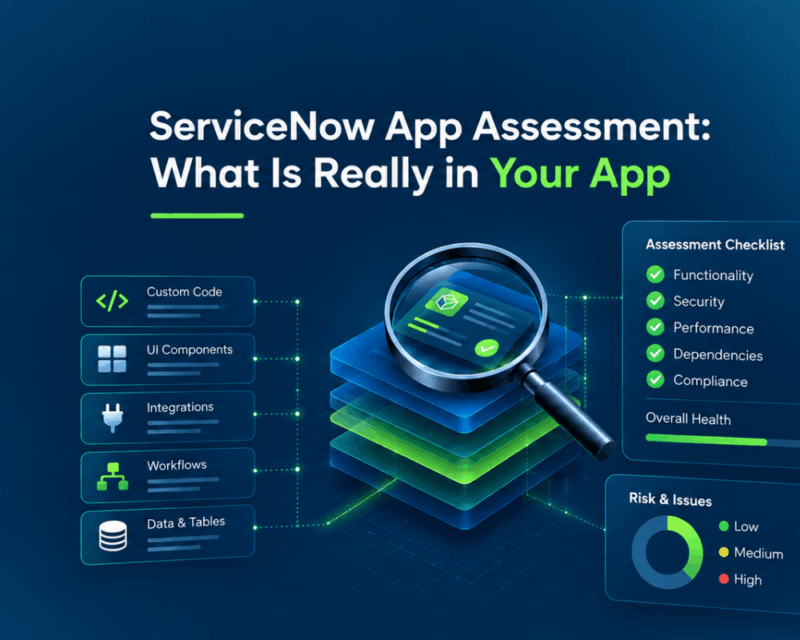
ServiceNow App Assessment: What Is Really in Your App
Every ServiceNow application that has been in production for more than a year shares one property: it works. Someone logs in, clicks through, and watches it do the thing it was built to do. That single fact usually ends the internal conversation about whether the app is healthy.
read more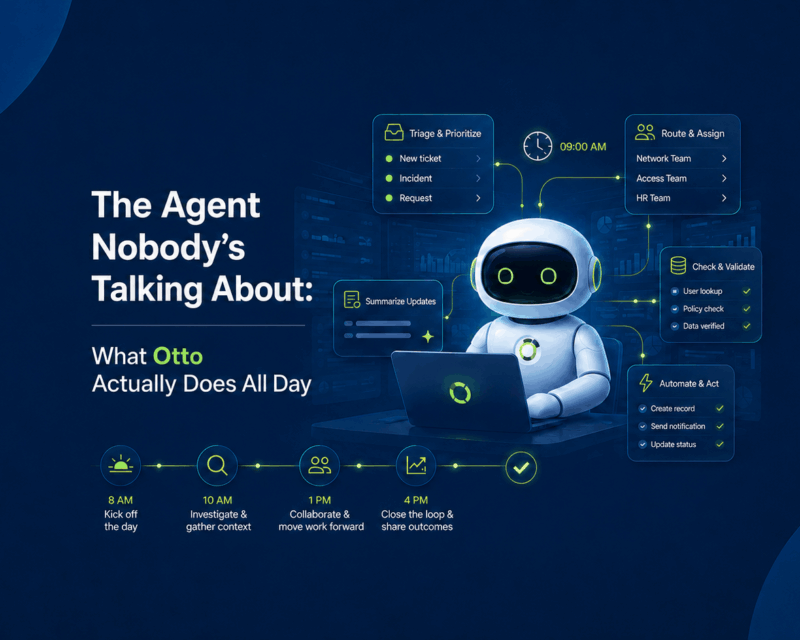
The Agent Nobody’s Talking About: What Otto Actually Does All Day
Every ServiceNow release introduces features that quickly take over conference keynotes and LinkedIn discussions. The Australia release is no exception. AI Control Tower, Action Fabric, L1 AI Specialist, and new governance capabilities have received much of the attention — and for good reason.
read more
ServiceNow Autonomous Security:What Should You Actually Automate?
ServiceNow Autonomous Security can now move security operations from detection to investigation, decision, and action. But how much authority should AI actually have? Here is a practical framework for deciding what to automate — and where human approval should remain.
read more