

From Ticket Chaos to Autonomous IT: How Enterprises Are Turning ServiceNow Into a Self-Driving Platform
Why scaling tickets is not the same as scaling IT- and what leading organizations are doing instead
There was a time when IT success seemed simple: close more tickets.
Dashboards were green.
Queues were cleared.
SLAs were met.
On paper, everything worked.
In reality – not quite.
Because handling more tickets doesn’t mean better IT.
In most cases, it signals the opposite: more friction, more confusion, and inefficiencies hiding in plain sight.
The more tickets you process, the clearer the truth becomes:
demand is growing because something upstream isn’t working.
And leading organizations are now asking a different question:
What if the ticket never had to exist?
The Ticket Illusion
Tickets feel productive.
They’re trackable, measurable, and easy to report on.
But they’re not solutions – they’re signals.
- A password reset isn’t a task – it’s a design flaw
- Recurring incidents aren’t bad luck – they’re unresolved problems
- Endless “how do I…” requests – that’s broken UX and missing knowledge
Yet many teams optimize in the wrong direction:
Faster routing.
Smarter categorization.
More automation.
All focused on processing the same demand.
The result? A highly efficient system that scales inefficiency.
From Ticketing to Autonomous IT
A new model is emerging – one where platforms like ServiceNow stop acting as ticket factories and start behaving like intelligent systems.
Call it Autonomous IT.
Instead of reacting to issues, systems anticipate them.
Instead of waiting for input, they guide users.
Instead of escalating problems, they resolve them and quietly, in the background.
This isn’t incremental improvement.
It’s a fundamental shift:
- From reactive → to predictive
- From manual → to automated
- From fragmented → to connected
What This Looks Like in Practice
1. Eliminating Demand Instead of Managing It
The most advanced teams don’t optimize intake channels and they reduce the need for them.
They analyze patterns behind tickets:
- Why does this request exist?
- Where does the user journey break?
- What can be fixed before the issue appears?
The goal isn’t to process demand faster.
It’s to remove it entirely.
2. AI That Actually Works
There’s a lot of noise around AI.
But real value doesn’t come from chatbots – it comes from invisible intelligence:
- Predicting incidents before they happen
- Resolving issues automatically
- Recommending actions based on real context
The best AI doesn’t talk more.
It makes problems disappear.
3. Systems That Heal Themselves
Imagine this:
An issue is detected.
The root cause is identified.
A fix is applied.
Everything is logged.
No ticket.
No escalation.
No interruption.
This is already happening in organizations that connect monitoring, automation, and workflows into closed-loop systems.
IT doesn’t just respond anymore.
It learns.
4. Designing for Experience, Not Process
Users don’t care about workflows.
They care about outcomes.
Modern IT is shifting toward experience-first design:
- Fewer steps
- Clearer interactions
- Faster or invisible – resolution
ServiceNow becomes the engine behind the experience,
not the place where problems wait.
Why This Matters to the Business
This isn’t just an IT improvement and it’s a business advantage.
Organizations making this shift are seeing:
- Dramatically lower ticket volumes
- Higher employee satisfaction
- Faster onboarding and productivity
- Reduced operational costs
But the biggest change?
IT stops being a support function and becomes a growth driver.
Where to Start
You don’t need a massive transformation.
Start small. Start smart:
- Identify your top ticket drivers
- Map the real user journey behind them
- Fix root causes – not symptoms
Then scale what works.
Because this isn’t a project.
It’s a new way of thinking.
The Bottom Line
For years, the focus was:
How do we handle more tickets?
The better question is:
Why do those tickets exist at all?
The organizations that move ahead won’t be the ones closing tickets faster.
They’ll be the ones that don’t need them anymore.
And that’s where ServiceNow becomes more than a system.
It becomes a self-driving platform.
Slava Trotsenko, CEO, Mar 31, 2026
Eager to take the next step? Contact us today!
Latest Articles
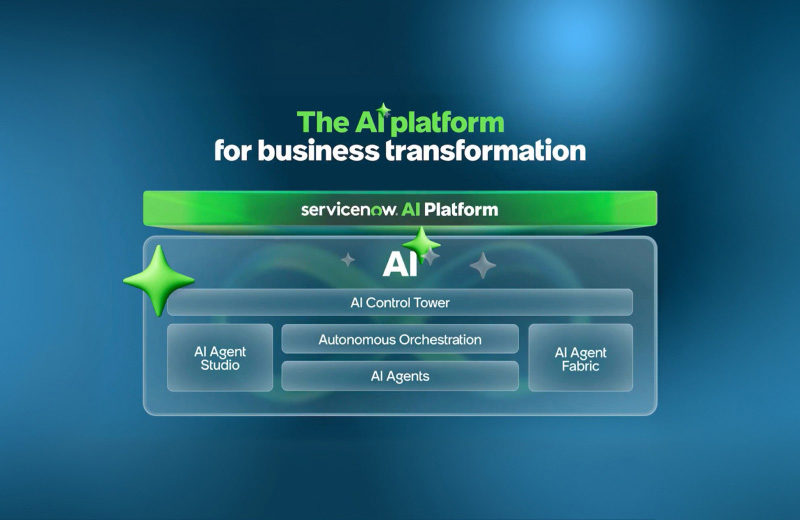
ServiceNow AI Skills, AI Agents & AI Workflows: The Complete Guide (2025–2026)
ServiceNow offers over 300 AI Skills across 30+ product modules, organized under the Now Assist ecosystem. AI Skills are discrete, reusable GenAI capabilities (e.g., incident summarization, resolution notes generation).
read more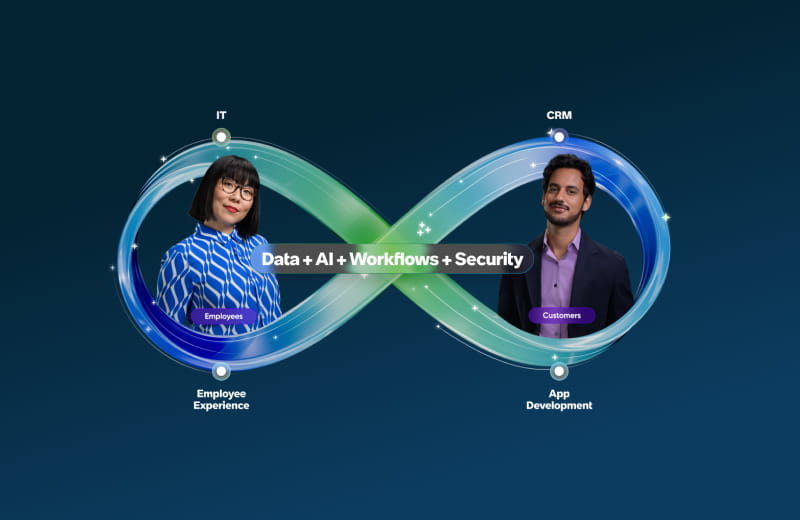
Teiva Systems at ServiceNow Partners Day Munich: In the Age of AI, Execution Wins
Teiva Systems recently joined ServiceNow Partners Day in Munich, where more than 70 partner organizations and 120+ attendees came together to discuss the future of the ServiceNow ecosystem.
read more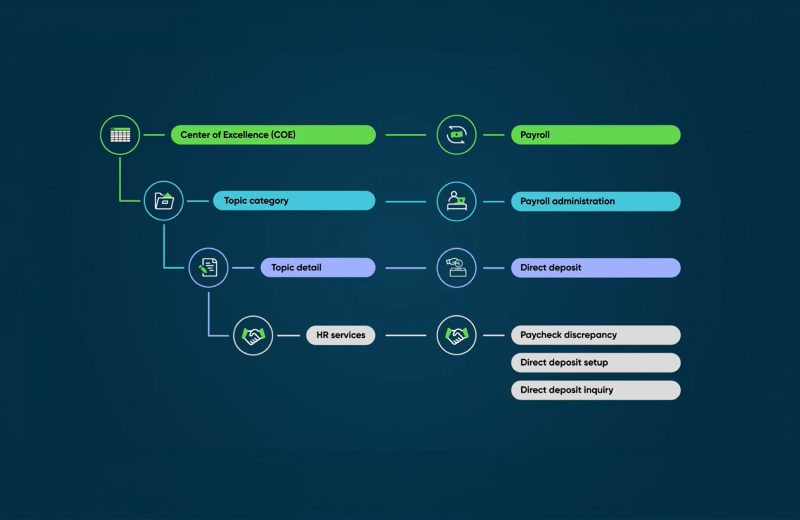
Operating a ServiceNow Center of Excellence (CoE): Governance in Practice
ServiceNow Center of Excellence is a perfect framework for businesses that want to turn their governance tactics from theory to reality. It can serve as an optimizable operational backbone that aligns your strategy and delivery.
read more