
From Zero to App Hero: Building Custom Applications in ServiceNow Studio
Customization of mobile apps is one of the most efficient ways to achieve the desired goals in any industry. Many might think that custom app development is a very challenging task. If you belong to that cohort, you should learn more about ServiceNow Build on Now app development.

Today we are going to discuss the following:
- The importance of prototyping for custom app development;
- The demand for customization of apps for businesses;
- The ways to make ServiceNow workflow automation less challenging;
- How to use ServiceNow agile development.
Custom App Prototyping with ServiceNow App Engine Development
Prototyping or creating a minimum viable product is a very important stage when it comes to app customization. This is how you test the functional performance of your solution, spot its most complicated weaknesses, and get the initial feedback from your target audience.
Avoiding the prototyping stage leads to potential performance issues after the custom app deployment. That’s why we suggest that you should know more about this stage of the ServiceNow application development lifecycle. It goes through the following stages:
- The choice of a pre-built workflow template;
- Mapping out the process steps;
- Configuring logic and rules;
- Adding forms and fields;
- Setting user roles and permissions;
- Connecting to internal databases;
- Testing the prototype;
- Adjusting layout;
- Deployment.
How ServiceNow Low-Code/No-Code Development Consulting Boosts
Research by Gartner says that the supposed rate of new enterprise applications built on low-code or now-code is around 70%. The ServiceNow Studio development experience proves that there’s nothing to be wondering about since this development method is lower in cost compared to traditional coding.
One more advantage of low-code or no-code development is that you don’t even need to take ServiceNow developer training. Coding knowledge is not necessary to build a basic app using pre-built code and simple templates.
This is exactly what your business gets when working with ServiceNow scripting on the Now platform. By incorporating this approach with the ServiceNow app design best practices, you will be able to achieve the best results in workflow management and automation.
Oleksii Konakhovych, CTO, Apr 17, 2025
Eager to take the next step? Contact us today!
Latest Articles
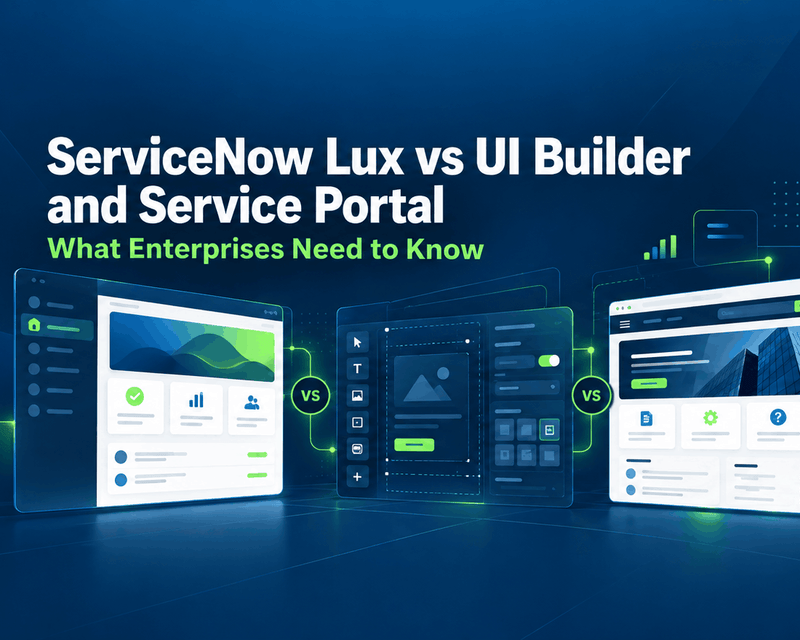
ServiceNow Lux vs UI Builder and Service Portal: What Enterprises Need to Know
Does Lux replace UI Builder or Service Portal? Short answer: no. The full answer depends on what you are building. The way enterprises build experiences on ServiceNow is changing. For years, Service Portal has handled employee and customer self-service, while UI Builder has powered modern workspaces and configurable applications.
read more
Teiva Systems at ServiceNow World Forum 2026 — London
On October 20, 2026, Teiva Systems attended ServiceNow World Forum London at ExCeL London, where industry leaders, technology experts, and the ServiceNow community came together to explore how AI, intelligent automation, and digital workflows are transforming enterprise operations.
read more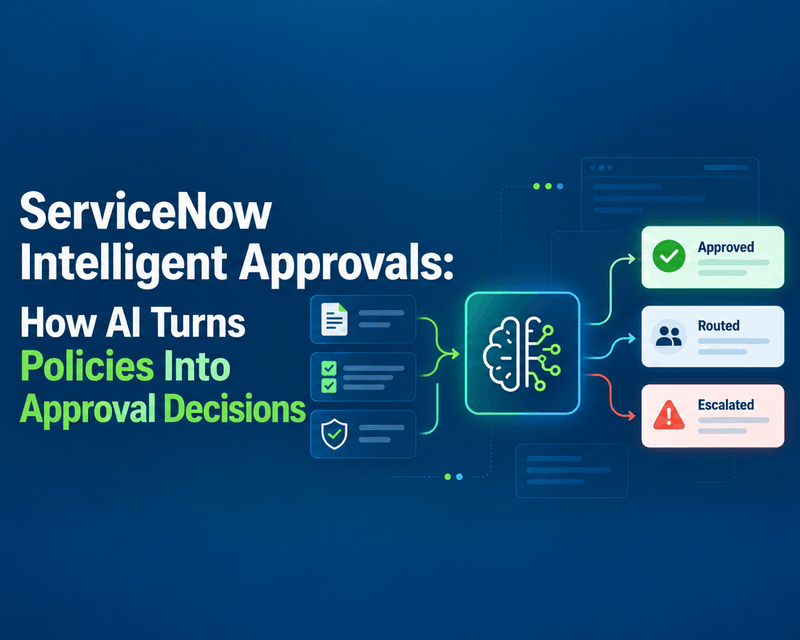
ServiceNow Intelligent Approvals: How AI Turns Policies Into Approval Decisions
What if your approval policies could make decisions, instead of sitting in documents waiting for someone to interpret them? For years, approval automation has followed the same pattern. Business teams write policies. Developers translate them into workflow conditions. Employees wait for someone to approve or reject their request, even when the outcome is obvious.
read more