
From Now Assist Skill to AI Agent: Building the Foundation of Agentic AI
Agentic AI is changing our understanding of efficient workflows and automation. However, you won’t be able to unlock its full potential without leveraging certain skills provided by the ServiceNow AI architecture.
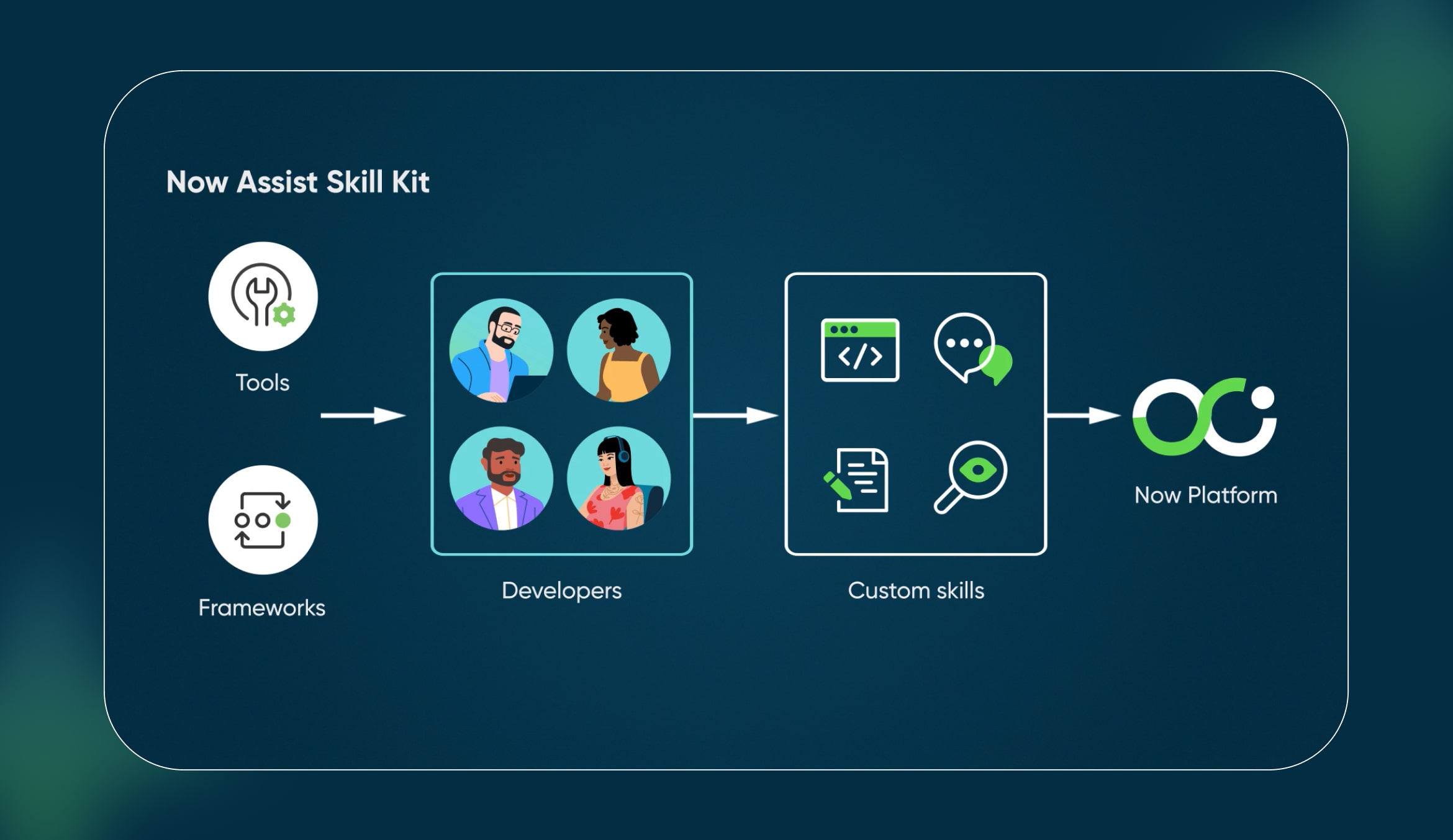
In this brief overview of our recent webinar, we are going to explore and explain some key takeaways on the ServiceNow Now Assist Skill that will serve as your ServiceNow AI Agent foundation.
What is a Now Assist Skill?
First, we need to make a quick introduction to the ServiceNow Now Assist Skill. In general, this is a GenAI-based platform intended to perform specific tasks within a workflow. The focus of NowAssist is on such operations as summarizing incidents, drafting responses, generating knowledge articles, or assisting with code creation.
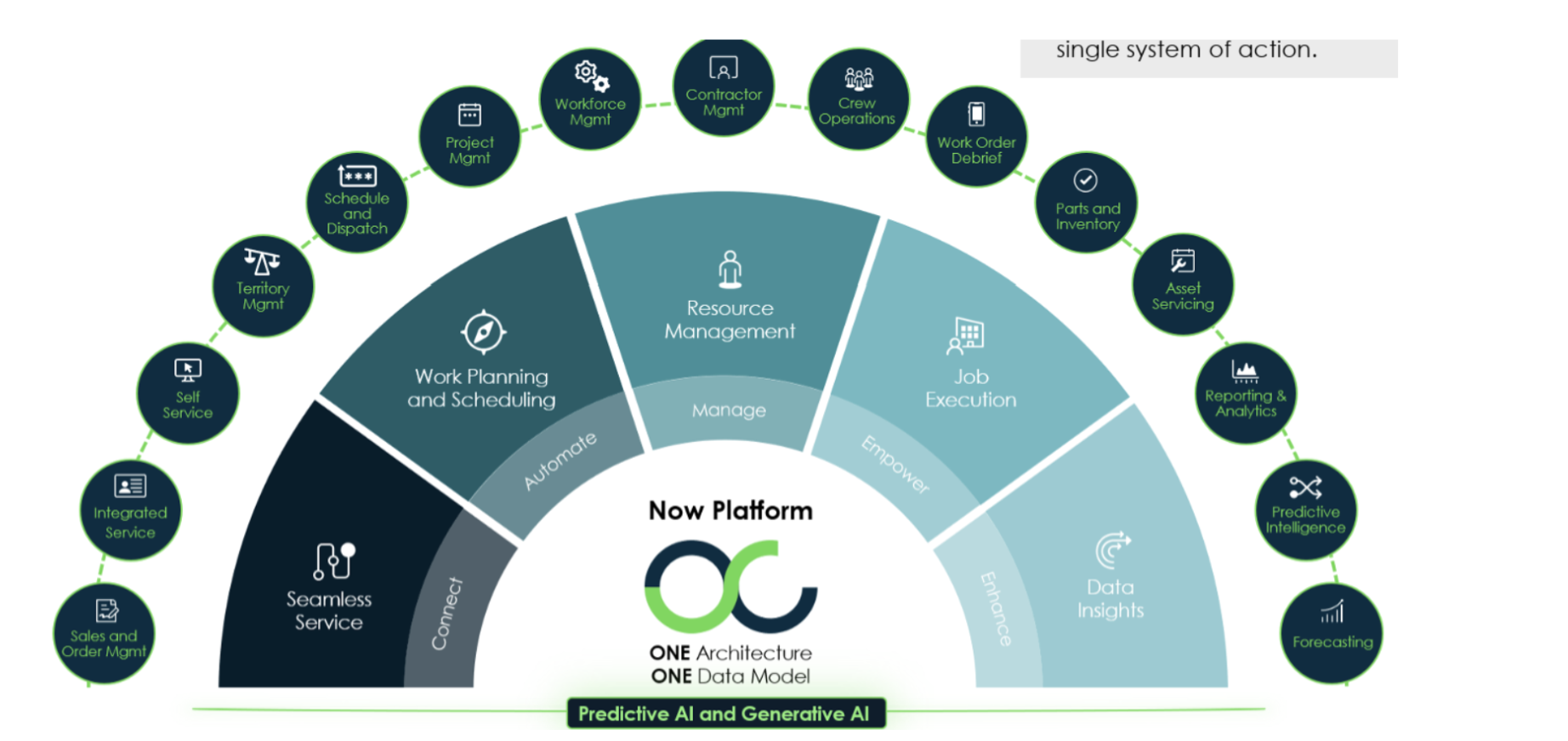
ServiceNow embeds these skills directly into its apps (ITSM, CSM, HRSD, Creator, etc.), and teams can customize them with the Now Assist Skill Kit (NASK) to address unique business needs. In essence, a Now Assist Skill is a modular AI building block that helps users work faster and smarter by injecting the capabilities of AI solutions into everyday tasks.
How Skills Evolve into AI Agents and Build Their Architecture
From the very beginning, Now Assist Skills deliver focused AI capabilities that handle narrow, specific tasks. GenAI powers these tasks, such as summarizing a ticket, generating a response, or searching knowledge bases. However, a Skill represents only one component of a larger AI Agent, which can work autonomously.So, let’s call AI Agent another step in the evolution of Skills.
An AI Agent is composed of various skills, and it acts like a complex of multiple skills combined in contextual grounding (data + workflows), and under the orchestration logic. Simply speaking, ServiceNow AI architecture for an AI agent is more complex, which enables it to understand intent, choose the right skills, and execute end-to-end workflows across systems with guardrails and governance in place. That’s why we can call skills building blocks for the foundation of AI Agents.
Once AI Agents are built, they can execute tasks independently or be aligned with other agents, composed of multiple skills, under the governance of the Control Tower for autonomous operating within your enterprise ecosystem.
Building blocks:
To build blocks for the foundation of your future AI Agent, you need to access the Now Assist platform and identify the challenges you are going to face. The scope is relevant to HR teams, Customer Support Services, IT Teams, and developers. Once the challenge for an AI Agent is clear, you can get down to the process.
Knowledge base integration
The first thing you do when creating a component of a Now Assist Skill kit is name and describe the skill, and choose the Large Language Model. After that, you need to integrate a certain knowledge base. In simple words, you add skill inputs — the information that will be used by the Skill as a prompt.
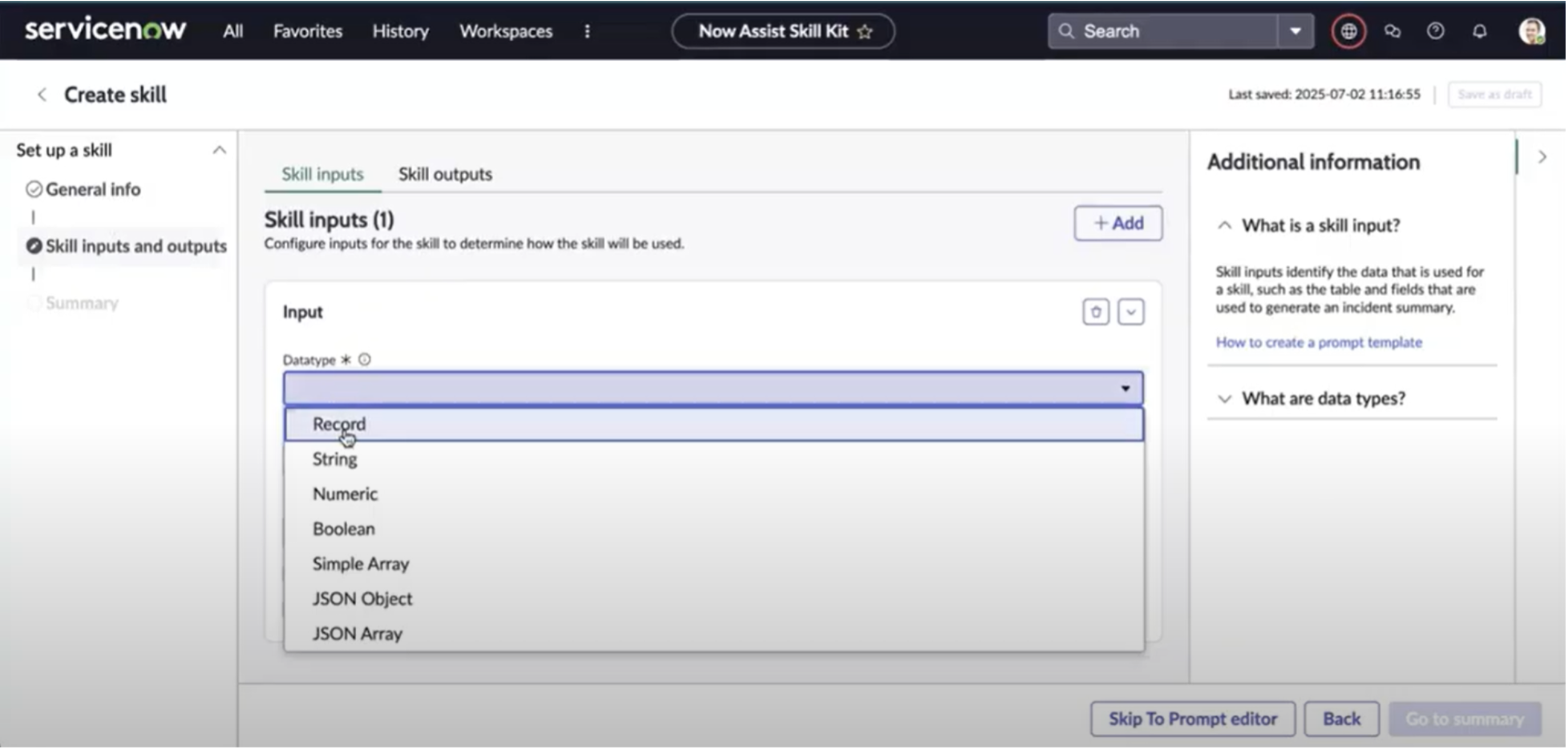
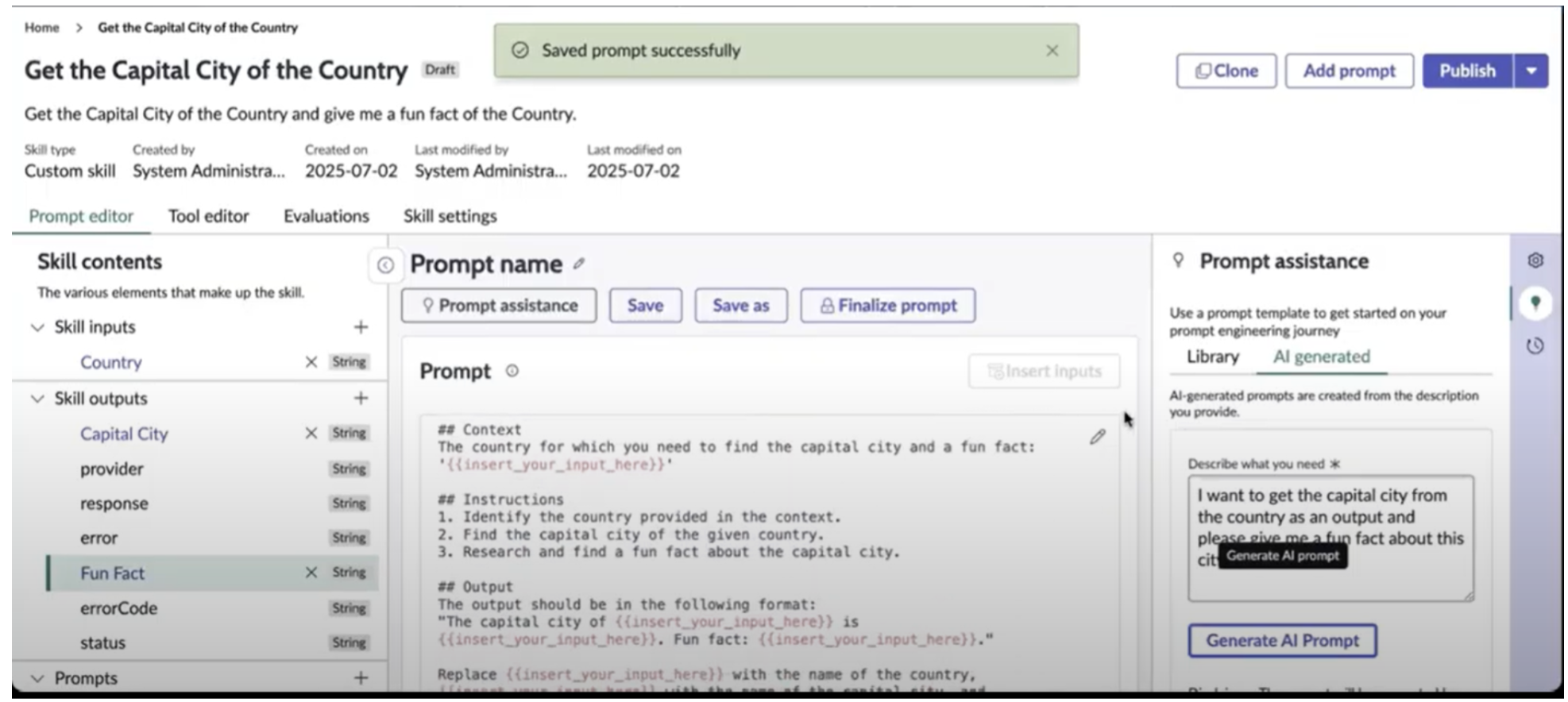
The platform will suggest skill outputs and create the sample prompt. You can also add more skill outputs and then describe what you expect to get. After generating the prompt, you insert your inputs, run the test, and then finalize it.
Task automation
Integration of the knowledge base to answer questions is the first stage in the Now Assist Skill, and the platform goes far beyond that. It allows AI to actually take action inside workflows. With Now Assist Skills tied to workflows, the AI can perform tasks like creating incidents, updating HR cases, submitting catalog requests, or escalating tickets without manual intervention. By connecting to ServiceNow’s Flow Designer, IntegrationHub, and connectors, these automations can also span external systems (e.g., resetting a password in Active Directory or creating a Jira ticket).
Connectors & integrations
Last but not least, to ensure connectivity of Now Assist Skills for the operations of AI Agents, ServiceNow provides connectors that link the AI to external systems and data sources. Thanks to these integrations, the agent can pull information from multiple places and drive workflows seamlessly across the enterprise.
Best practices for setting up AI foundations in ServiceNow
- Start small with well-defined use cases before scaling.
- Use role-based access and guardrails to maintain compliance and security.
- Continuously test and refine skills with real-world data.
- Monitor AI performance with built-in analytics and adjust prompts or outputs as needed.
- Involve business and IT stakeholders early to align solutions with measurable outcomes.
Summary
- On the whole, the way you build your AI Agent using Now Assist Skills depends on the specific challenges and use cases relevant to your enterprise. We suggest that you explore the capabilities of the ServiceNow Now Assist Skill through hands-on use. This way, you will gain valuable experience and make a step towards transforming your enterprise’s ecosystem into an independent platform.
Kostya Bazanov, Managing Director, Sep 29, 2025
Eager to take the next step? Contact us today!
Latest Articles
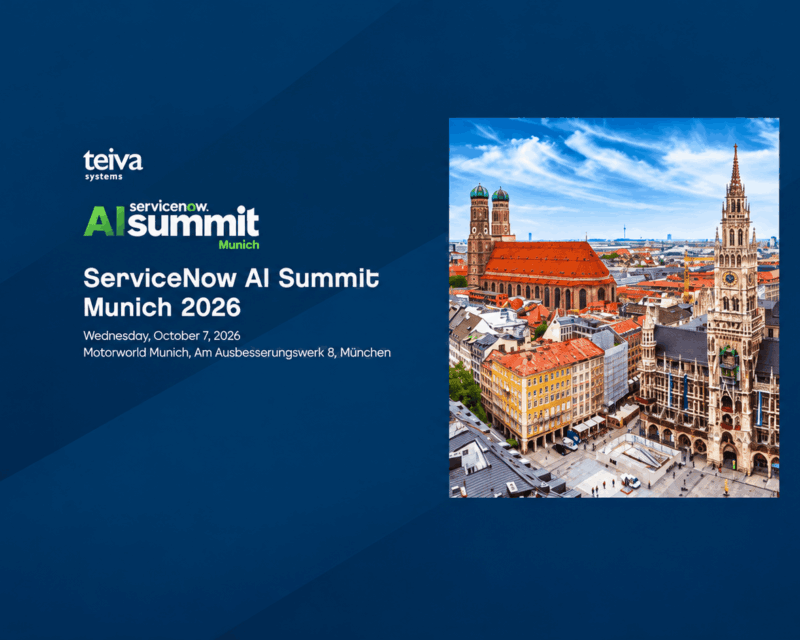
Teiva Systems at ServiceNow AI Summit 2026 — Munich
On October 7, 2026, Teiva Systems joined the ServiceNow AI Summit in Munich, where industry leaders, innovators, and the ServiceNow community came together to explore the next chapter of enterprise AI and intelligent automation.
read more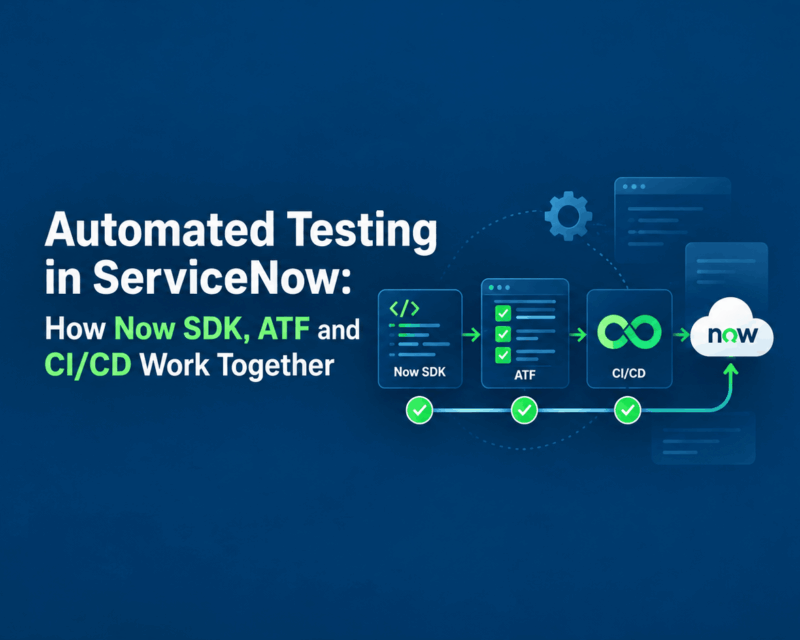
Automated Testing in ServiceNow: How Now SDK, ATF and CI/CD Work Together
Automated Testing in ServiceNow: How Now SDK, ATF and CI/CD Work Together Automated testing in ServiceNow is becoming more important, not because ATF or CI/CD are new concepts, but because the way they can work together is changing the development lifecycle itself. As ServiceNow moves toward a more source-driven engineering model, testing is becoming less […]
read more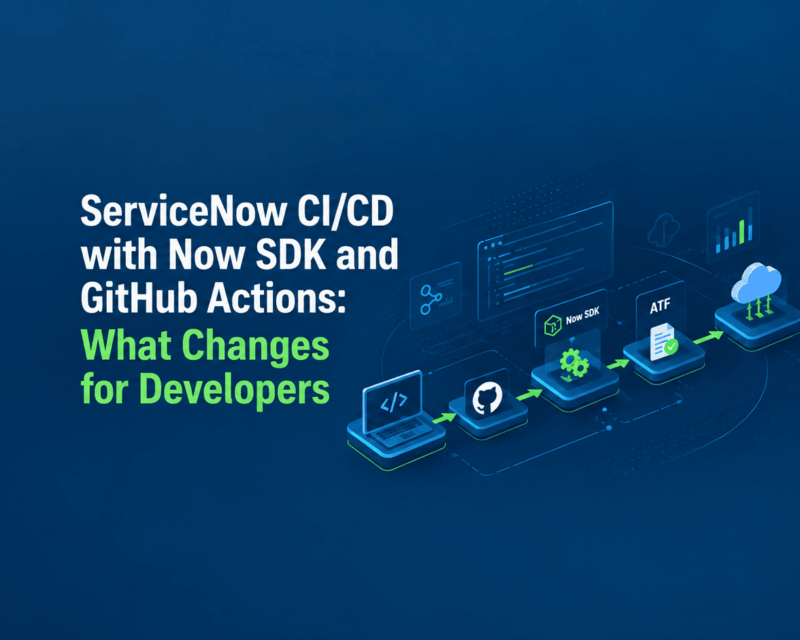
ServiceNow CI/CD with Now SDK and GitHub Actions: What Changes for Developers
The Now SDK connects ServiceNow application development to GitHub Actions CI/CD pipelines — bringing pull-request quality gates, automated ATF testing, and controlled release governance to a platform that has historically required its own isolated delivery process.
read more