
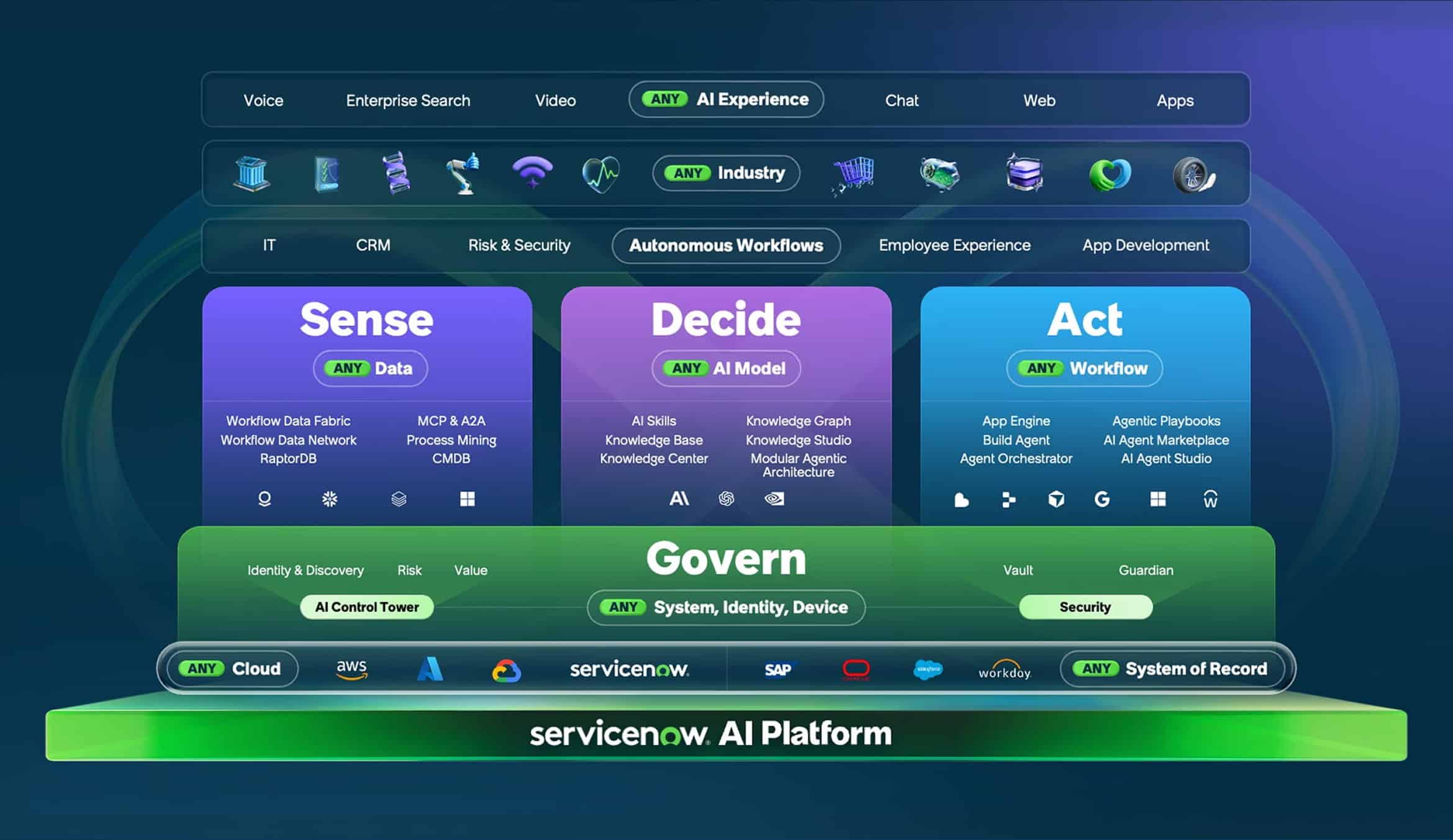
How to Build AI Applications on ServiceNow
Artificial Intelligence is no longer something we talk about “someday.” It’s already reshaping how organizations operate, automating routine work, accelerating decisions, and creating better experiences for both employees and customers.
When combined with the power of ServiceNow, AI becomes even more impactful. Instead of existing as a separate layer, it integrates directly into workflows turning everyday processes into intelligent, adaptive systems.
So how do you actually build AI applications on ServiceNow? Let’s break it down.
Why ServiceNow Is the Perfect Foundation for AI
ServiceNow isn’t just a workflow platform, it’s a connected ecosystem of people, processes, and data. That’s exactly what AI needs to deliver real value.
With built-in capabilities like Predictive Intelligence, Virtual Agent, and Now Assist, organizations can:
- Automate repetitive, manual tasks
- Improve service speed and quality
- Enhance user and customer experiences
- Turn data into actionable insights
The real advantage? You’re not building AI in isolation. You’re enhancing the processes that already drive your business.
Step 1: Start with the Right Use Case
The biggest mistake companies make is trying to apply AI everywhere. The smartest approach is the opposite: start small and focused.
Look for areas where AI can deliver immediate value:
- Intelligent ticket routing
- Chatbots for support
- Predictive incident management
- Automated document handling
Ask yourself:
- Where are the bottlenecks?
- What tasks are repetitive and time-consuming?
- Where would faster decisions make a difference?
A clear, high-impact use case means faster ROI and smoother adoption
Step 2: Get Your Data Ready
AI is only as good as the data behind it. On ServiceNow, that data comes from systems like ITSM, HR, and Customer Service workflows.
Before building anything, make sure your data is:
- Clean and consistent
- Properly categorized
- Free of duplicates
- Rich enough to train models
ServiceNow helps centralize this data but quality still requires effort. Think of this step as building the foundation for everything that follows.
Step 3: Use What’s Already Built
One of ServiceNow’s biggest strengths is that you don’t need to build AI from scratch.
You can leverage:
- Predictive Intelligence to categorize and assign records automatically
- Virtual Agent to create conversational self-service experiences
- Now Assist (GenAI) to generate responses and summarize information
- AI Search to improve how users find information
This allows you to move quickly from idea to working solution without needing a full data science team.
Step 4: Embed AI into Workflows
AI on its own doesn’t create value how it fits into workflows.
For example:
- Automatically route incidents and trigger resolution workflows
- Use chatbots to solve common issues instantly
- Assist agents with AI-generated responses directly inside tickets
The goal is simple: reduce manual effort, increase speed, and make processes feel seamless.
Step 5: Train, Test, Improve
AI isn’t “set and forget.” It improves over time.
After deployment:
- Monitor performance and accuracy
- Gather feedback from users
- Retrain models with new data
- Adjust workflows based on results
ServiceNow provides tools to track and refine performance using them. Continuous improvement is where real value compounds.
Step 6: Don’t Skip Governance
As AI becomes more embedded in operations, trust becomes critical.
Make sure you address:
- Data privacy and security
- Transparency and explainability
- Bias detection
- Regulatory compliance
Strong governance isn’t optional, it’s what makes AI sustainable at scale.
What It Looks Like in Practice
Imagine a service desk handling thousands of tickets daily.
With AI on ServiceNow:
- Tickets are categorized and assigned automatically
- A Virtual Agent resolves common requests instantly
- Agents get real-time AI suggestions
- Managers see trends and bottlenecks clearly
The result? Faster resolutions, lower costs, and happier users.
Building AI applications on ServiceNow isn’t about complexity, it’s about smart integration.
Start with a focused use case. Use the tools already available. Embed AI into workflows. Then continuously improve.
The future of enterprise operations is intelligent, automated, and data-driven and with ServiceNow, you already have the platform to build it.
Start small. Think big. Scale with confidence.
Kostya Bazanov, Managing Director, Mar 24, 2026
Eager to take the next step? Contact us today!
Latest Articles
ServiceNow for the Public Sector: Five Requirements to Address Before Implementation
Public-sector organizations do not implement ServiceNow under the same conditions as a commercial enterprise. Getting the foundation right before development begins can determine whether the platform supports secure, measurable, and scalable public services for years to come.
read more
ServiceNow AI ROI: What Should You Measure After the Pilot?
Your AI pilot worked. That proves the technology can work. It does not yet prove ROI. Here are the six metrics that separate “the demo impressed leadership” from “we can prove measurable business value.”
read more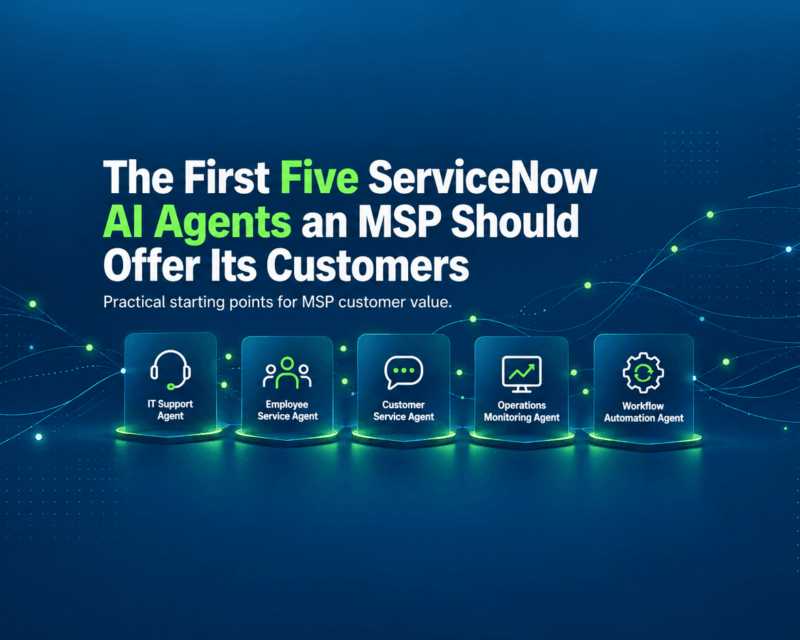
The First Five ServiceNow AI Agents an MSP Should Offer Its Customers
Managed service providers can now package ServiceNow AI agents as repeatable, recurring services — moving from ticket-response capacity to managed outcome delivery. Here is what the first five offerings look like, how each creates value, and what to get right before deploying them.
read more