
Microsoft + ServiceNow: What Their Deepened Partnership Actually Means for Enterprise AI in 2026
Microsoft and ServiceNow are deepening their partnership at exactly the moment enterprise AI is changing shape. The first wave of AI helped employees write faster, summarize meetings, search documents, and prepare work. The next wave will be more operational: AI agents will create requests, update records, trigger workflows, escalate issues, and coordinate across systems.
That shift is exciting, but it also changes the risk profile. A weak AI summary may only need editing. A weak AI agent can send a request to the wrong team, access sensitive data, approve the wrong action, or trigger a workflow that should never have started. This is why the Microsoft and ServiceNow partnership is bigger than another integration announcement. It points to a new enterprise operating model for governed AI work.
“The real breakthrough is not AI that talks. It is AI that acts – inside trusted enterprise workflows.”
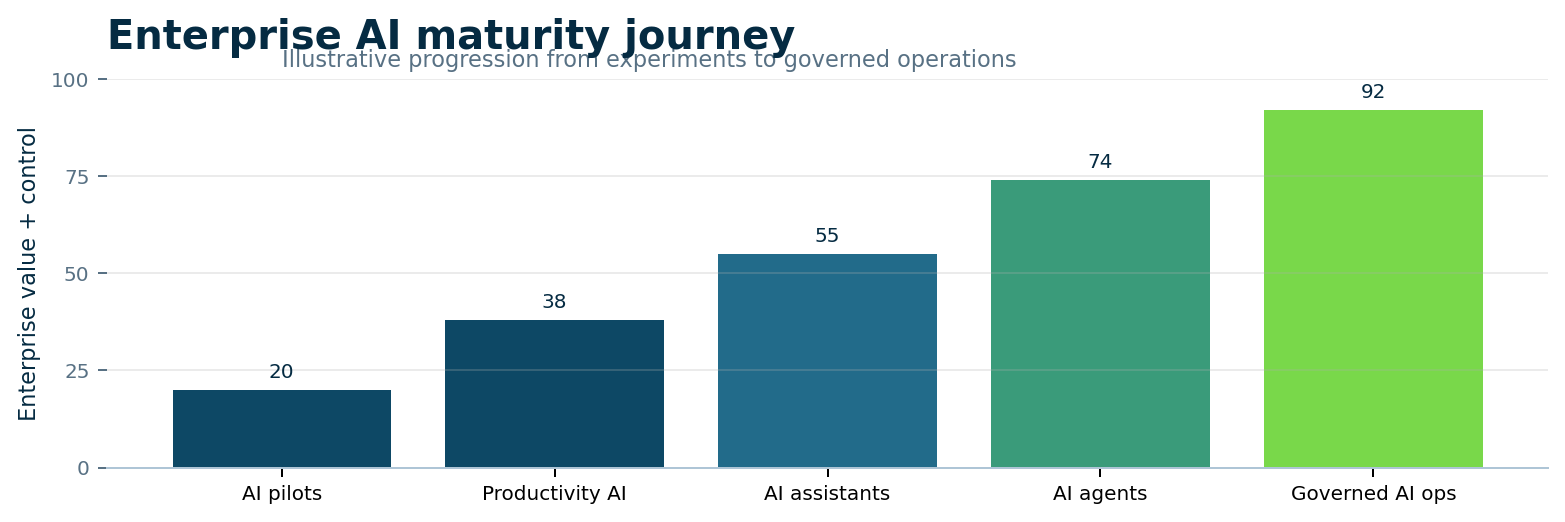
Figure 1. Enterprise AI maturity journey: from pilots and assistants to governed operational execution.
From AI Assistants to Governed AI Operations
AI assistants mostly help people prepare work. AI agents can perform work. That difference matters. Once AI can take action, enterprises need more than productivity features. They need ownership, policy, access control, monitoring, and auditability.
Microsoft brings the employee work layer: Microsoft 365, Teams, Outlook, Copilot, Copilot Studio, Azure, GitHub, and Agent 365. ServiceNow brings the enterprise workflow layer: ITSM, CSM, HR, Security Operations, CMDB, App Engine, approvals, service catalogs, and automation. Together, these layers can connect the place where employees ask for help with the platform where business work is actually executed.
“AI agents do not remove governance. They make governance more important.”
Why the Partnership Matters
In a practical scenario, an employee starts in Teams or Outlook. Copilot helps interpret the request. ServiceNow checks the catalog item, permissions, policy rules, CMDB context, approvals, and routing logic. The employee stays in a familiar interface, while ServiceNow keeps the work structured, traceable, and compliant.
This reduces context switching and makes enterprise services easier to access. More importantly, it helps prevent AI from becoming a set of disconnected tools. Instead, AI can operate inside business workflows that already have roles, rules, data models, approvals, SLAs, and reporting.
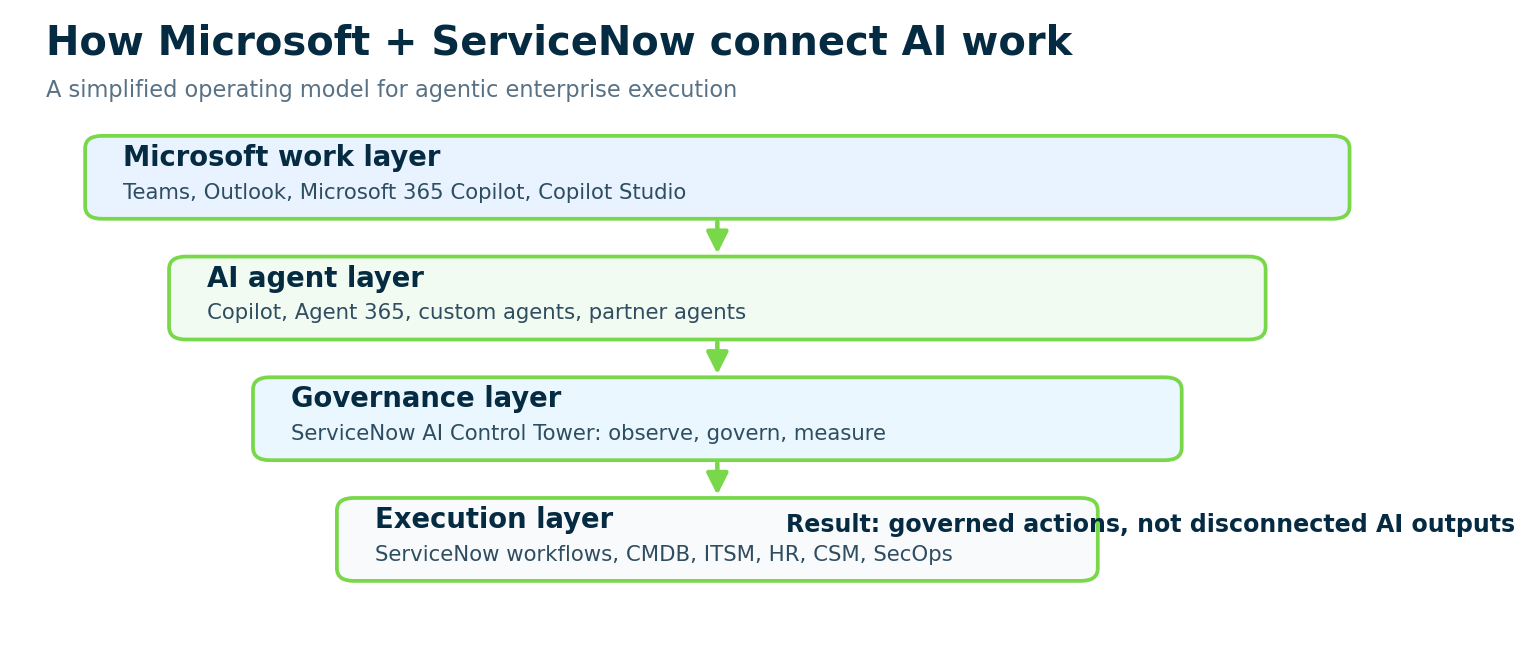
Figure 2. Simplified operating model: Microsoft as the work entry point, ServiceNow as the governed execution layer.
“Clean data is the fuel. ServiceNow workflows are the rails. Microsoft Copilot is the front door.”
The CMDB Becomes Even More Important
AI agents need context to make good decisions. In a ServiceNow environment, much of that context comes from the CMDB, service catalog, knowledge base, asset data, user identity, and workflow history. If this foundation is strong, agents can understand what service is affected, who owns an application, what changed recently, and which process should run next.
If the CMDB is incomplete or outdated, the agent may recommend the wrong action or trigger the wrong workflow. This means AI readiness is also data readiness. Enterprises should treat CMDB quality, knowledge management, catalog design, and process simplification as part of their AI strategy — not as back-office cleanup.
AI Governance Becomes a Business Priority
As AI agents become more capable, enterprises will need to manage them like digital workers. Each agent should have a business owner, approved permissions, defined data access, monitoring, audit trails, performance metrics, risk classification, and a process for improvement or retirement.
Without this structure, companies can quickly face AI sprawl: overlapping agents, duplicate automations, inconsistent data sources, and unclear accountability. In many ways, this is shadow IT with the ability to take action. ServiceNow AI Control Tower and Microsoft Agent 365 are important because they support visibility, governance, and security across the expanding agent ecosystem.
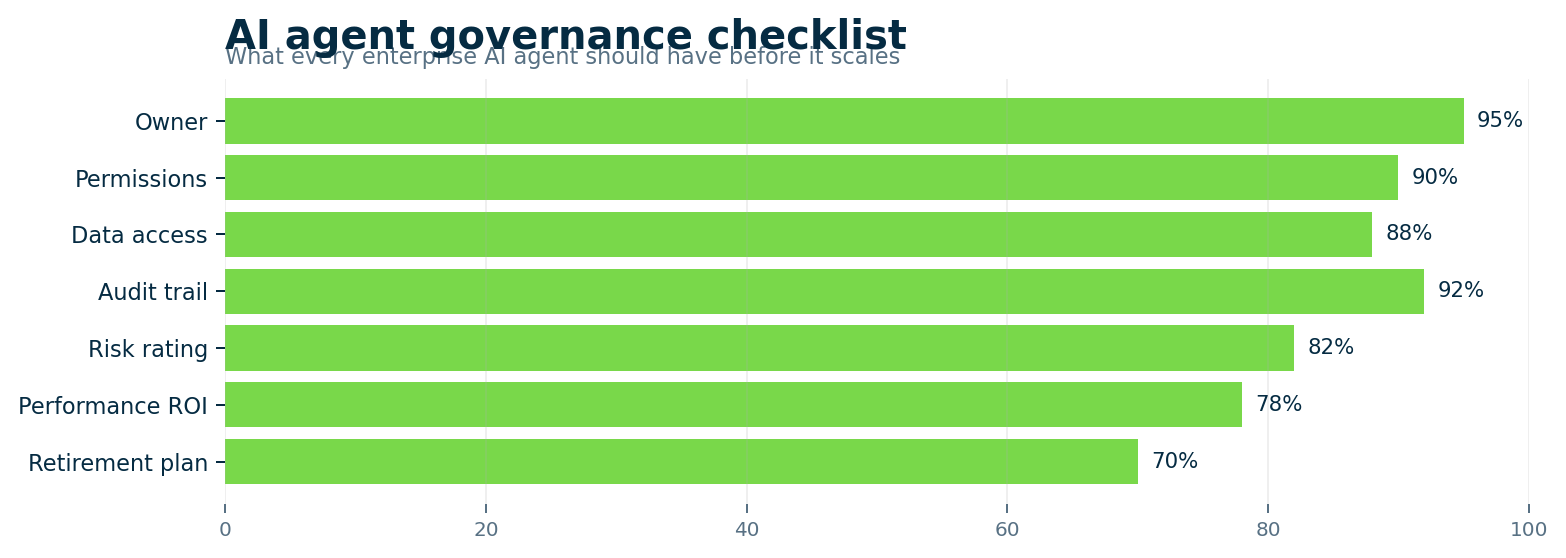
Figure 3. Agent governance checklist: the control points that turn AI agents into enterprise-ready digital workers.
What Enterprises Should Do Next
CIOs and business leaders should begin with use cases where AI agents can create measurable value. The best starting points are usually high-volume, repeatable, process-heavy areas such as IT support, employee services, customer service, security operations, procurement, and software development.
Next, define the rules before agents scale. Who can create agents? Who approves them? Which systems can they access? How is performance measured? Who is accountable when something goes wrong? These questions should be answered before agent adoption spreads across departments.
Finally, prepare the ServiceNow environment. Clean the CMDB, simplify workflows, remove outdated catalog items, improve knowledge articles, and connect Microsoft 365 collaboration with ServiceNow execution. The companies that benefit most will not be the ones with the largest number of AI tools. They will be the ones that create a controlled environment where AI can safely support real enterprise operations.
“Enterprise AI advantage will come from governed execution, not from more disconnected AI experiments.”
The Microsoft + ServiceNow partnership is the most important enterprise AI architecture announcement of 2026.
Not because of the technology — the technical integration was already possible. Because it signals that the two platforms enterprises rely on most have aligned on where governed AI execution should live: at the workflow layer, with audit trails, with identity verification, and with a kill switch when needed.
The organisations that will benefit most are not the ones deploying the most agents. They are the ones building the governance model first, activating agents on clean foundations, and proving value before they scale. That sequence is not a conservative approach. It is the fastest route to durable results.
Slava Trotsenko, CEO, Jun 22, 2026
Eager to take the next step? Contact us today!
Latest Articles
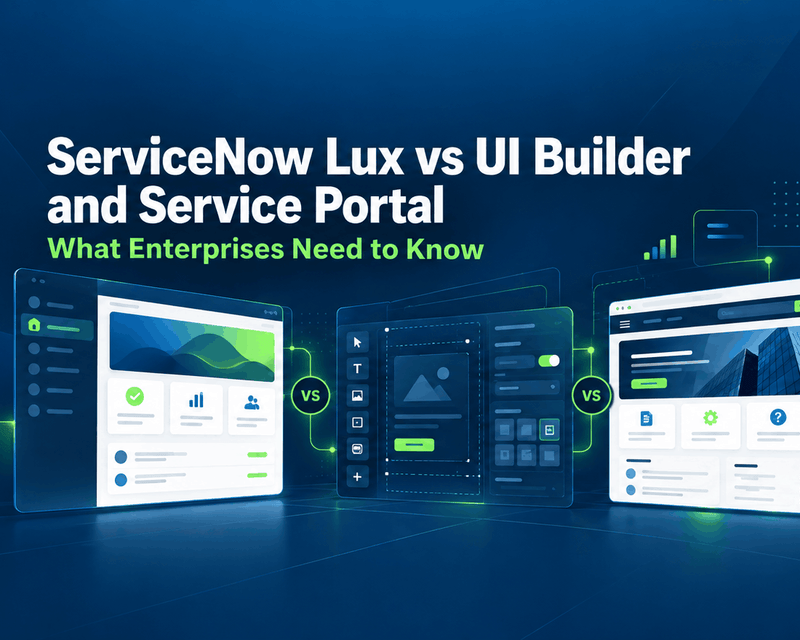
ServiceNow Lux vs UI Builder and Service Portal: What Enterprises Need to Know
Does Lux replace UI Builder or Service Portal? Short answer: no. The full answer depends on what you are building. The way enterprises build experiences on ServiceNow is changing. For years, Service Portal has handled employee and customer self-service, while UI Builder has powered modern workspaces and configurable applications.
read more
Teiva Systems at ServiceNow World Forum 2026 — London
On October 20, 2026, Teiva Systems attended ServiceNow World Forum London at ExCeL London, where industry leaders, technology experts, and the ServiceNow community came together to explore how AI, intelligent automation, and digital workflows are transforming enterprise operations.
read more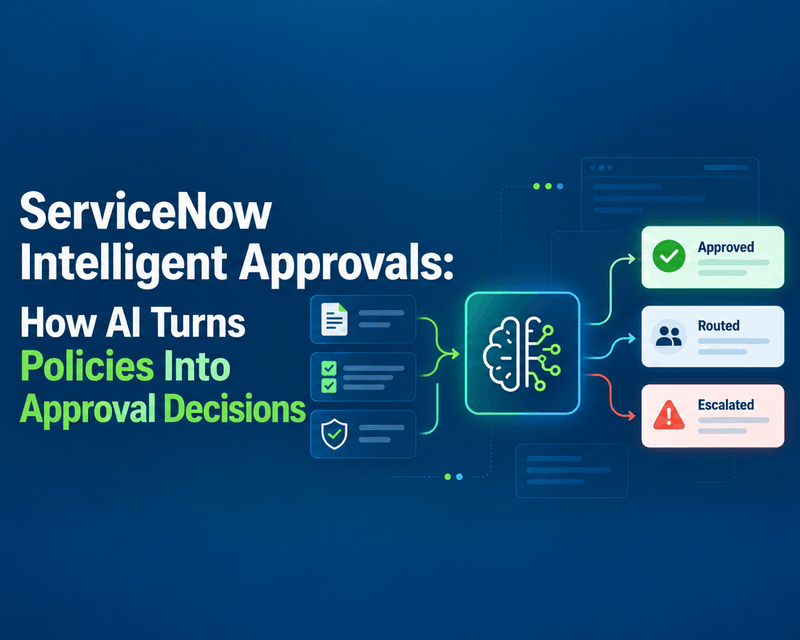
ServiceNow Intelligent Approvals: How AI Turns Policies Into Approval Decisions
What if your approval policies could make decisions, instead of sitting in documents waiting for someone to interpret them? For years, approval automation has followed the same pattern. Business teams write policies. Developers translate them into workflow conditions. Employees wait for someone to approve or reject their request, even when the outcome is obvious.
read more