
Low-Code, Big Impact: Building Scalable Apps Without Writing a Line of Code
The ability to program less and use more ready-made functions and elements allows you to create software modules faster and with less effort from developers.
As experts state, the market for platforms on which applications can be created practically without writing software code will reach $187 billion in 5 years. Thus, ServiceNow low‑code app development has bright perspectives.

Why ServiceNow Low-Code Platforms Matter
It’s not so fashionable to write code these days. Modern developers are using low-code platforms more often. You can create software and applications much faster, and most importantly, without reading documentation and other programming stuff. Not surprisingly, ServiceNow enterprise automation is gaining popularity every year.
The low-code solutions are:
Website Builders
Application designers focused on mobile devices and ServiceNow app modernization
Web-based application designers
Workflow automation tools
Data and developer productivity
Tables
Numbers, Finance, and Modeling
Payments and transactions
Form Designers
Difference between No-code and Low-code
The main difference comes from the names:
No-code is a method of developing software without code using visual ServiceNow low‑code development tools. Such platforms operate like constructors: you access a library of ready-made templates and blocks and combine them however you choose.
Low-code is the same way of visual programming, only with the ability to add the code manually. Mainly, extra specs that are not available on no-code platforms, such as third-party CRM, are integrated into the site using the code.
Otherwise, these approaches to ServiceNow agile development are similar.
Creating Scalable Applications Without Writing a Line of Code with ServiceNow
The more features the platform itself provides, the more tasks can be implemented using low-code. ServiceNow is a platform for automating business processes for managing corporate services at the organization-wide level. It does not limit its clients to basic IT services, HR, and AHO management capabilities and allows them to create their own solutions using low-code and no-code tools.
By using ServiceNow app customization, companies can significantly reduce the time required to create applications. With built-in tools and ready-made modules, developers can focus on key aspects of the application, minimizing lines of code. The low-code feature minimizes the risk of errors because developers already pre-developed standard functions and code blocks. This helps to increase the reliability and stability of applications.
Collaboration with Vodafone
In April 2025, Vodafone company and ServiceNow announced a major five-year strategic partnership that will usher in a new era of artificial intelligence-based service management. This collaboration combines the capabilities of the ServiceNow artificial intelligence platform with Vodafone’s deep telecommunications expertise to provide companies with a more proactive, integrated view of their services.

Thanks to ServiceNow development you will implement ready-made integration mechanisms and connectors for interacting with external services. With the help of the visual editor of end-to-end processes, you can automate any business processes, set up end-to-end data transmission and processing. And, with the latest chatbots and machine learning options, you will automate routine operations and reduce the burden on specialists.
Take advantage of no-code and low-code apps! Boost your business on ServiceNow, using Teiva Systems!
Oleksii Konakhovych, CTO, Jun 26, 2025
Eager to take the next step? Contact us today!
Latest Articles
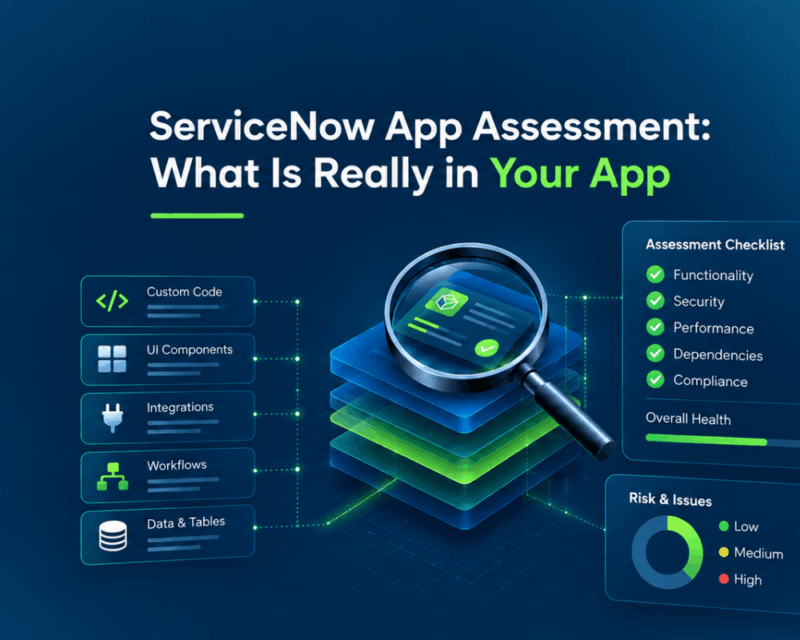
ServiceNow App Assessment: What Is Really in Your App
Every ServiceNow application that has been in production for more than a year shares one property: it works. Someone logs in, clicks through, and watches it do the thing it was built to do. That single fact usually ends the internal conversation about whether the app is healthy.
read more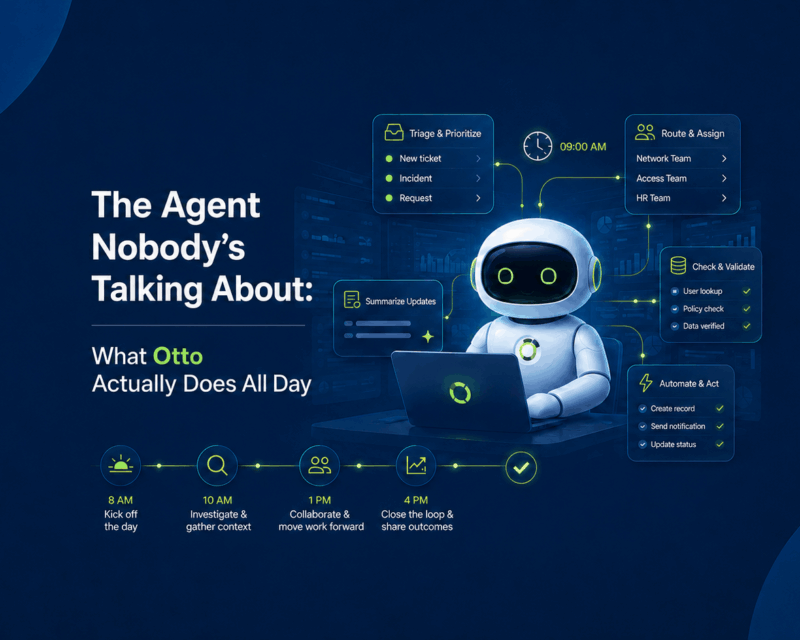
The Agent Nobody’s Talking About: What Otto Actually Does All Day
Every ServiceNow release introduces features that quickly take over conference keynotes and LinkedIn discussions. The Australia release is no exception. AI Control Tower, Action Fabric, L1 AI Specialist, and new governance capabilities have received much of the attention — and for good reason.
read more
ServiceNow Autonomous Security:What Should You Actually Automate?
ServiceNow Autonomous Security can now move security operations from detection to investigation, decision, and action. But how much authority should AI actually have? Here is a practical framework for deciding what to automate — and where human approval should remain.
read more