
10 Must-Know Customization Tips for Bulletproof ServiceNow Apps
Customization of apps is a challenging task but it’s worth trying. According to a recent survey, 89% of marketers reported a revenue increase due to the customization of their apps.
That’s why we believe that you should learn something more about ServiceNow app customization. Let’s take a closer look at 10 tips that will make ServiceNow performance optimization an easy and understandable task.

1. Learn More About the Platform Capabilities First
Before customizing, thoroughly understand ServiceNow’s out-of-the-box features and functionalities. Leverage these as much as possible to reduce the need for extensive custom code and ensure compatibility with future platform upgrades.
2. Design for Upgradability
While implementing the ServiceNow best practices, prioritize configurations over code modifications whenever feasible. Utilize ServiceNow’s built-in configuration options (e.g., Business Rules, Client Scripts, UI Policies) to achieve the desired functionality. This minimizes the risk of customizations breaking during platform upgrades.
3. Follow ServiceNow Best Practices
Adhere to ServiceNow scripting standards and guidelines. This includes naming conventions, scripting best practices, and utilizing supported APIs.
4. Isolate Customizations within Scoped Applications
ServiceNow workflow customization works better for apps within their own dedicated scopes. This prevents naming collisions and ensures that your customizations are isolated from the base system.
5. Minimize Client-Side Scripting
While client scripts at the ServiceNow mobile app development can enhance user experience, excessive client-side logic can impact performance. Opt for server-side processing (e.g., Business Rules, Workflow) whenever possible to maintain application responsiveness.
6. Implement Robust Error Handling and Logging
When dealing with the ServiceNow agile customization, it’s important to identify and resolve issues quickly and efficiently, ensuring the stability of your application.
7. Thoroughly Test All Customizations
ServiceNow portal and dashboard customization won’t give you any benefits if you don’t implement rigorous testing procedures for all customizations, including unit testing, integration testing, and user acceptance testing (UAT).
8. Document Your Customizations Clearly
Maintain detailed documentation for all ServiceNow UI/UX customization and code modifications. This includes the purpose of the customization, how it works, and any dependencies.
9. Utilize ServiceNow’s Development Tools Effectively
Leverage ServiceNow UI development tools like the Script Debugger, Background Scripts, and System Logs to troubleshoot issues and optimize your customizations.
10. Plan for Future Scalability and Maintenance
Design your custom applications with future growth and maintenance in mind. Avoid hardcoding values and instead use configurable options or reference data.
Oleksii Konakhovych, CTO, Apr 22, 2025
Eager to take the next step? Contact us today!
Latest Articles
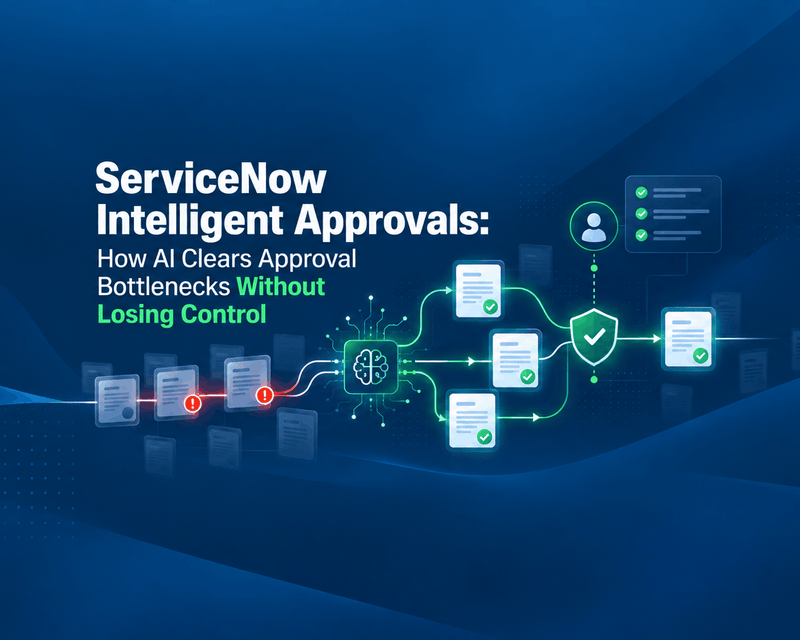
ServiceNow Intelligent Approvals: How AI Clears Approval Bottlenecks Without Losing Control
Your automation is fast. Your approvals are not. Organizations invest heavily in automation, AI and digital transformation. Yet many business processes still stall at the same point: waiting for someone to click “Approve.”
read more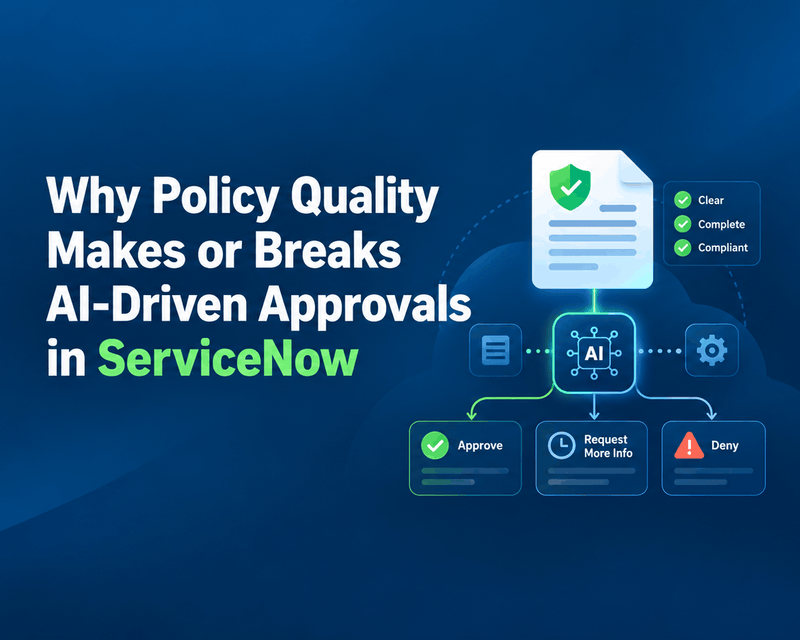
Why Policy Quality Makes or Breaks AI-Driven Approvals in ServiceNow
As enterprises bring AI-driven approvals into ServiceNow, attention goes straight to automation: faster decisions, fewer manual tasks, shorter approval queues. One factor gets far less attention: the quality of the policies behind those decisions.
read more
Teiva Systems at ServiceNow AI Summit 2026 — Munich
On October 7, 2026, Teiva Systems joined the ServiceNow AI Summit in Munich, where industry leaders, innovators, and the ServiceNow community came together to explore the next chapter of enterprise AI and intelligent automation.
read more