
ServiceNow Releases Explained
Understanding ServiceNow releases explained is significant for the companies that are using the platform. Every update brings fresh tools along with stronger protection – this makes daily workflow smoother for companies.
Knowing the future changes helps tech groups and leaders organize ServiceNow upgrades well, match tests inside the company because systems fit better with future plans. When that awareness misses the mark, issues pop up – useful upgrades get left behind.
Another key point? Catching drops early, so teams adjust long before issues appear. By reviewing what shifted in a release note, individuals spot which pieces got modified – giving them time to speak up before delays hit. When changes often happen, they no longer seem like shocks – they slowly turn into chances.
One path begins, then the next actions keep moving it forward. When large collections grow, control gets harder – especially if problems race across connections. Over the years, minor jolts might swell if networks remain tangled too tightly.
What ServiceNow releases are and why they matter
ServiceNow rolls out fresh versions, nudging how things operate inside the platform. With every refresh comes sharper ways to handle tech crews, track work, assist people, keep things secure, dig deeper into the numbers, and smooth out workflows as well. Not just patches – each update brings something different, built right in.
Now, operations hum along without quite so much friction. Inside the app, navigating lands not on chance but on recognition instead, spotting and sorting items by their true place. With steady refreshes coming each cycle, companies lean into existing tools instead of pushing breaks or bending rules.
A release changes things in ways people later remark on. Teams tend to act slightly otherwise once it happens – this shift runs quiet but sticks. Early quick actions tend to lead to quicker repairs later instead of delayed ones piling up. Lasting order tends to stick around if updates unfold slowly instead of rushing them. Furthermore, the timely adoption of ServiceNow versions is key to keeping critical systems current, secure, and aligned with modern enterprise requirements.
How ServiceNow release cycles work
ServiceNow follows a structured ServiceNow release cycle, with a combination of major and minor releases. When things get a serious overhaul, expect nothing but shifts – fresh tools show up, things become easier to use, and the entire setup sees improvements. Where it shows up the most? In larger updates, tackling big alterations versus tiny ones. Fast turnaround hits bugs when updates stay tight and focused. Here things move faster, not by tearing things apart but by adjusting small parts quietly.
Quiet changes in how things are watched now, slipping through regular routines. These updates tweak things a bit – no noise, only smooth steps forward. If people start seeing the issue, thinking ahead won’t feel so tangled. Upgrades show up just in time – when they matter most. When things go wrong, they simply stop drawing attention.
As each release cycle unfolds, patterns begin shifting. Early planning takes root, with developers accessing updated systems inside protected test environments. Changes in workflow appear well before actual deployment, allowing adjustments without rush. When update tasks become part of regular engineering routines, teams adapt smoothly. Larger glitches then become far less common.
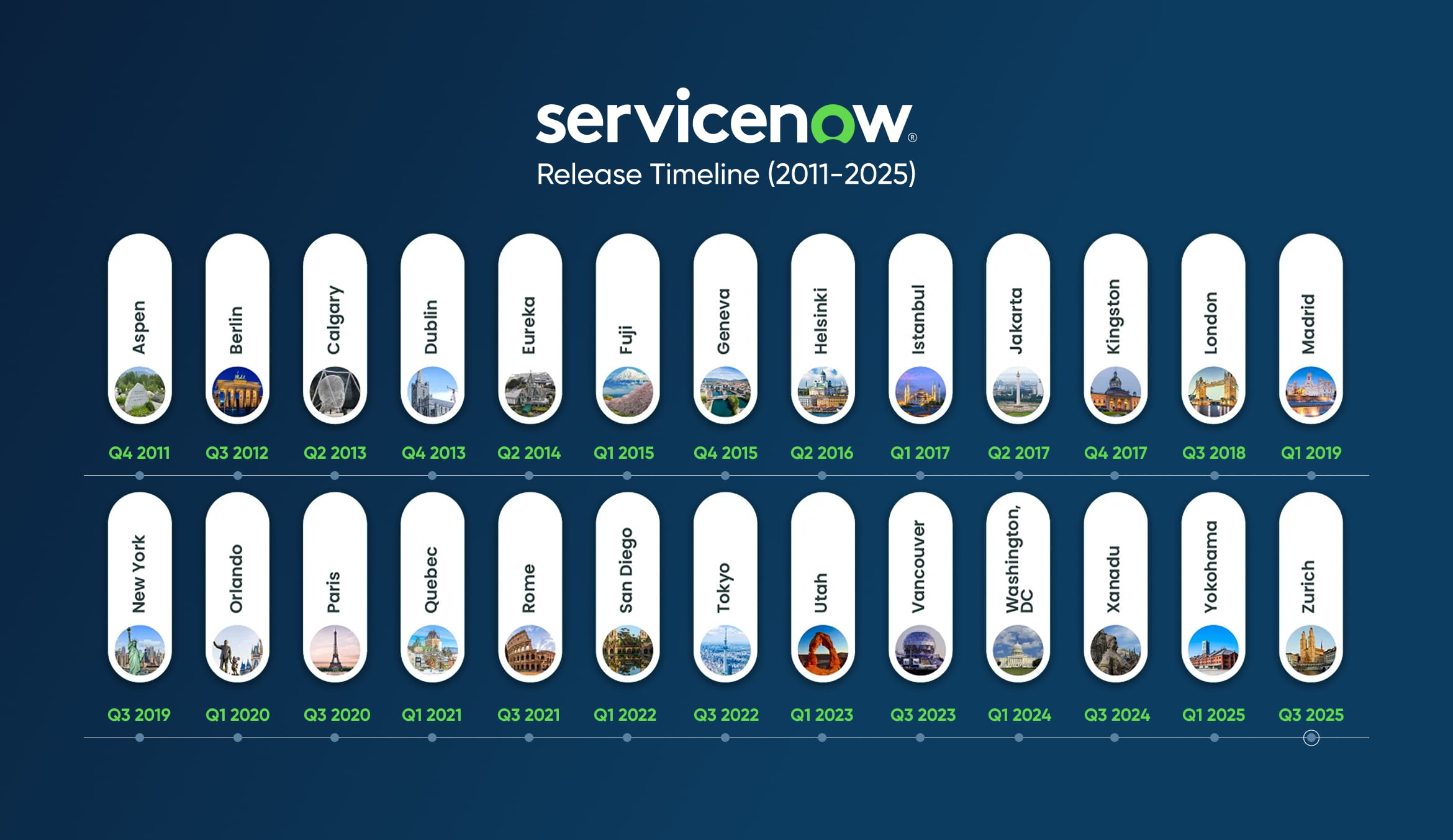
ServiceNow’s alphabetical city-naming convention for releases
For decades, ServiceNow has named its releases after cities in alphabetical order. This unique convention makes it easier to reference specific updates when coordinating ServiceNow upgrades and monitoring platform evolution. Examples of recent releases include Washington, Xanadu, Yokohama, and Zurich.
City names tagged on releases make shifts easier to follow. Because each spot links to unique edits, tech folks spot variations right away. See “New York”? That hint – changes made it better once more. Changes happen quickly once leaders step in – surprises rarely come into play.
Picture the flow in Tokyo – updates there feel fresh but grounded, triple-checked before release. After years, the pattern sticks like routine breaths; people tune into it, shaping schedules quietly, flawlessly.
Timeline of recent and upcoming releases
Here’s an overview of the most upcoming ServiceNow releases, highlighting key features and improvements for each version:
- Washington: Automation gains pace, while better tracking systems boost overall system trustworthiness.
- Simplification Focus: Processes were streamlined, and analysis became clearer for more informed decision-making.
- At Xanadu, workflow tweaks happened slowly, fitting right into how things already ran.
- In Yokohama, the telephone applications have been simplified, allowing people to use them more quickly. The technical staff now works more smoothly, performing tasks without delays. Improvements in the area of security have also been quietly implemented behind the scenes.
- Zurich: Once compliance procedures were simplified, everything started to run more smoothly. So in this case, the data security improved, and core systems became more stable overall.
These sequential platform releases allow organizations to track progress, anticipate upcoming changes, and prepare for upgrade planning systematically. Looking back at how releases have unfolded gives companies a clearer picture about when they might need training, matching team readiness with the pace of platform changes.
Transition from city names to country names starting in 2026
Starting 2026, ServiceNow begins swapping city labels for country tags across its updates. Given its reach spans many nations, clearer identifications abroad stood behind the shift. Though born locally, global audiences shaped the move toward country-based naming. Despite this change in nomenclature, the ServiceNow roadmap and the structure of the release cycle will remain consistent, ensuring that organizations can continue planning upgrades without disruption.
With every tweak in names, teams in different regions find it easier to collaborate. This smoother flow happens because updates move seamlessly across separate platforms. The force behind this stability comes from ServiceNow’s deliberate approach. Their aim? Maintain worldwide functionality while respecting regional customs. Even as locations get new labels, processes remain unshaken. Changes arrive guided by familiar patterns. City-based or region-specific naming still fits within established workflows.
What ServiceNow releases mean for customers and upgrade planning
For customers, understanding ServiceNow releases is essential for scheduling ServiceNow upgrades, minimizing operational risk, and maximizing the adoption of new features. Each new version offers opportunities to improve workflows, enhance user experience, and maintain compliance with industry standards. Tracking ServiceNow versions ensures IT teams can validate compatibility with existing processes, test integrations, and plan training for employees.
When updates are scheduled far ahead, things usually move without hiccups – particularly if trial versions run apart from active operations. Teams staying aligned with release timing tend to handle resulting changes more quietly. When change happens, acting early supports smooth operations and makes the most of new developments.
Peeking at ServiceNow’s future updates lets groups shift systems without stumbling into problems. Check the service’s roadmap to glimpse how new releases might align with daily tasks or broader system goals.
Oleksii Konakhovych, CTO, Feb 11, 2026
Eager to take the next step? Contact us today!
Latest Articles

From Ticket Chaos to Autonomous IT: How Enterprises Are Turning ServiceNow Into a Self-Driving Platform
Why scaling tickets is not the same as scaling IT - and what leading organizations are doing instead.There was a time when IT success seemed simple:close more tickets.
read more
ServiceNow AI Skills, AI Agents & AI Workflows: The Complete Guide (2025–2026)
ServiceNow offers over 300 AI Skills across 30+ product modules, organized under the Now Assist ecosystem. AI Skills are discrete, reusable GenAI capabilities (e.g., incident summarization, resolution notes generation).
read more
Teiva Systems at ServiceNow Partners Day Munich: In the Age of AI, Execution Wins
Teiva Systems recently joined ServiceNow Partners Day in Munich, where more than 70 partner organizations and 120+ attendees came together to discuss the future of the ServiceNow ecosystem.
read more