Global international change has expanded the business space for all sides, but at the same time has brought difficulties related to the differences in the requirements of different countries. In business, where customer trust is becoming the currency and competition is the engine of progress, ISO standards are no longer a formality.

Universal international standards ISO eliminate existing barriers by offering a unified approach to quality, reliability, and safety. For example, compliance with standards can reduce the time required for customs procedures, as well as increase the competitiveness of products on the global market.
The ISO standards implementation is an important strategic step for companies wishing to discover as many opportunities as possible.
What is ISO certification and why international standards exist
ISO (ISO, International Organization for Standardization) is an international organization for standardization. ISO standards are being developed for various fields: medicine, information security, manufacturing, energy consumption, and others. Each area has its own standards. For example, the ISO 22000 series of standards confirm food safety, and ISO 27001 regulates information security standards. The fundamental difference between ISO standards is that they contain requirements not for specific products, but for the processes themselves. If the processes meet the established requirements, then the company works efficiently and a high-quality product is obtained.
Why ISO certification matters for companies
Of course, the very idea and advantages of the ISO standard are important. Just imagine: there are no identical companies, they are all of different sizes, profiles, are at different levels of development, with different approaches and corporate culture. But ISO audit is the same for everyone, and that’s why ISO is a common concept and approach.
- Improve processes. The implementation of ISO standards helps to review and optimize business processes in a company.
- They improve the quality of goods and services. Standards make it possible to create management mechanisms in which employees themselves are interested in maintaining high-quality products.
- Confirm compliance with international requirements. ISO certification confirms compliance with the requirements of international markets.
- They increase the investment attractiveness of the ISO certified company. If you have an ISO certificate, cooperation is considered less risky.
- They contribute to the growth of the number of customers. It is easier for companies to understand consumer expectations because ISO standards are specifically targeted at them.
ISO is applicable not only to business structures, but also to government and administrative bodies, medicine, education and non-profit institutions. Thus, from the point of view of standardization, it is a wonderful universal document.
What ISO certification means for clients
As for client audience, ISO certification meaning comes with the following benefits:
- High-quality guarantee: For example, the ISO 9001:2015 document guarantees that customers can be sure of receiving the best service that complies with all existing standards.
- High level of trust: ISO/IEC 27001:2022 document ensures that client confidential info is in safe hands. This creates a deep trust environment, allowing enterprises to focus on crucial business tasks without worrying about data security issues.
- Strategic benefits: Working with a partner who is certified in both of these key areas can give you a competitive advantage. Meeting these standards means that your business benefits from advanced quality management and information security practices.
When a company implements the ISO audit standard, it undertakes to comply with a number of strict rules aimed at improving quality. This means that production processes become clearer and the end products more reliable. For example, the ISO 9001 standard, dedicated to the quality management system, requires constant monitoring and analysis of all stages of production, which minimizes the risks of defective products.
In addition, regular checks and audits help identify weaknesses in processes, which allows for rapid implementation of improvements. The result is satisfied customers, stable quality and a high reputation of the company.
Main types of ISO certifications relevant for technology and AI
The presence of a certified quality management system is a guarantee of the stability of the organization and allows you to be confident in the future development of your own business. Main types of ISO standards documents relevant for AI are presented below.
ISO 27001-2022
This certificate is an international information security standard. It contains requirements for the creation, development and maintenance of an information security management system (ISMS).
Goal: to ensure the protection of confidentiality, integrity and accessibility of information, to minimize the risks associated with information leakage or unauthorized access.
ISO 9001-2015
It is an international standard for quality management systems (QMS).
Goal: to prove that the organization has standardized its business processes and is able to continuously ensure the quality of products or services.
ISO 14001-2016
The ISO standards help organizations to minimize the negative impact on the environment.
Goal: to set requirements for maintaining the environmental safety of processes and finished products, methods for assessing environmental performance and emergency preparedness.
ServiceNow’s new ISO AI certification
The ServiceNow ISO AI certification is a program that confirms the ability to effectively use artificial intelligence (AI) tools on the ServiceNow site to automate operations, manage records, and eliminate incidents.
A month ago, ServiceNow received an AI certification ISO/IEC 42001:2023. This is another advantage for customers who use the platform.
ISO/IEC 42001:2023 is another guarantee that ServiceNow adheres to safe and ethical practices in the field of artificial intelligence.
This internationally recognized standard demonstrates commitment to responsible development of artificial intelligence and safe management according to the best international practices.
The company ISO standards are developed in accordance with four basic principles:
- An organization starts working on a standard only if there is demand in the market – if consumers inform the standardization bodies of such a need.
- All standards are based on the opinion of world experts from national standardization bodies worldwide participating in the development.
- The organization listens to the opinions of all stakeholders, including industry experts, consumers, scientists, representatives of private organizations and governments.
- Standards are developed based on consensus – the document is edited until it becomes satisfactory for all participants of the technical committee.
The ISO certification meaning is about an extra assurance our AI solutions are managed by a reliable platform. This allows our customers to confidently use the ServiceNow AI platform for their most important workflows. That is why ISO standards are unbiased, maximally complete and objective requirements. And compliance with these requirements testifies to the high quality of internationally recognized products.
Teiva Systems’ ISO certifications in 2025 and their value for clients
Teiva team is working on improving innovative management-based tools. In this way, we empower our customers and maintain internationally recognized standards of safety and ethics.
At the moment, Teiva Systems already has the following certificates:
- ISO document 9001:2015
- ISO document 14001:2015
- ISO document 27001:2022

We pay special attention to responsibility at every stage of AI development, strengthening trust in AI-based innovations. We are implementing ISO standards, helping your business at all stages of this process.
By choosing us, you get a service that meets international standards by maintaining the security of your data up to a maximum level!
Slava Trotsenko, CEO, Feb 03, 2026
Eager to take the next step? Contact us today!
Latest Articles
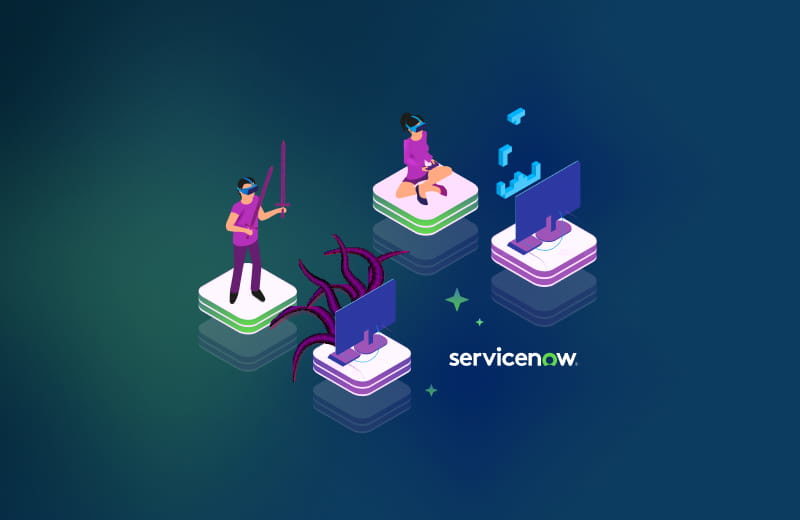
From Ticket Chaos to Autonomous IT: How Enterprises Are Turning ServiceNow Into a Self-Driving Platform
Why scaling tickets is not the same as scaling IT - and what leading organizations are doing instead.There was a time when IT success seemed simple:close more tickets.
read more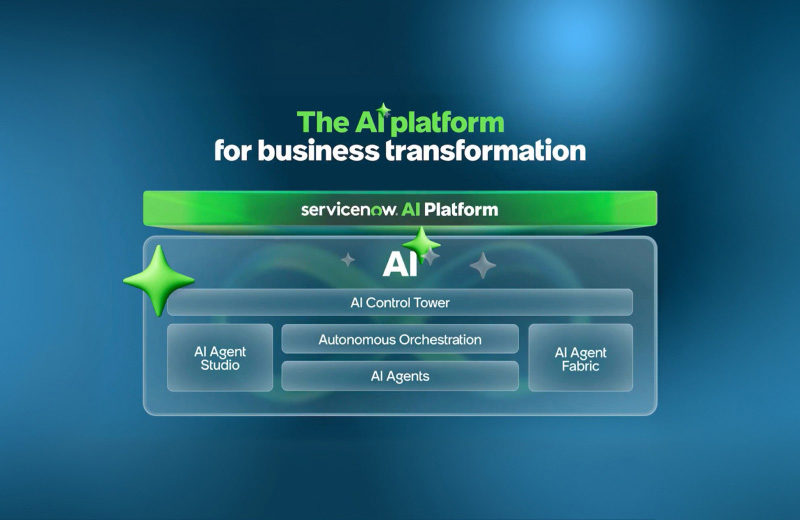
ServiceNow AI Skills, AI Agents & AI Workflows: The Complete Guide (2025–2026)
ServiceNow offers over 300 AI Skills across 30+ product modules, organized under the Now Assist ecosystem. AI Skills are discrete, reusable GenAI capabilities (e.g., incident summarization, resolution notes generation).
read more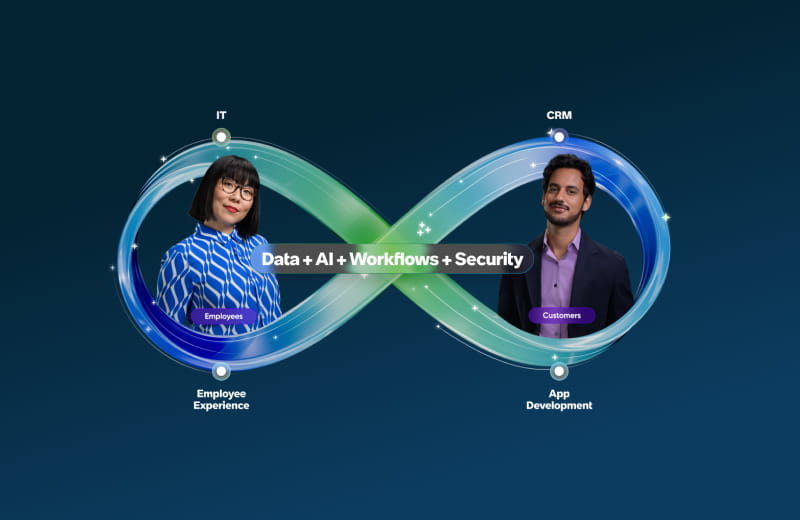
Teiva Systems at ServiceNow Partners Day Munich: In the Age of AI, Execution Wins
Teiva Systems recently joined ServiceNow Partners Day in Munich, where more than 70 partner organizations and 120+ attendees came together to discuss the future of the ServiceNow ecosystem.
read more