
Why Building on ServiceNow in 2026 Just Makes Sense
Digital transformation is over. The debate has been settled. What companies are wrestling with now is a harder, more practical question: where do you actually build everything going forward?
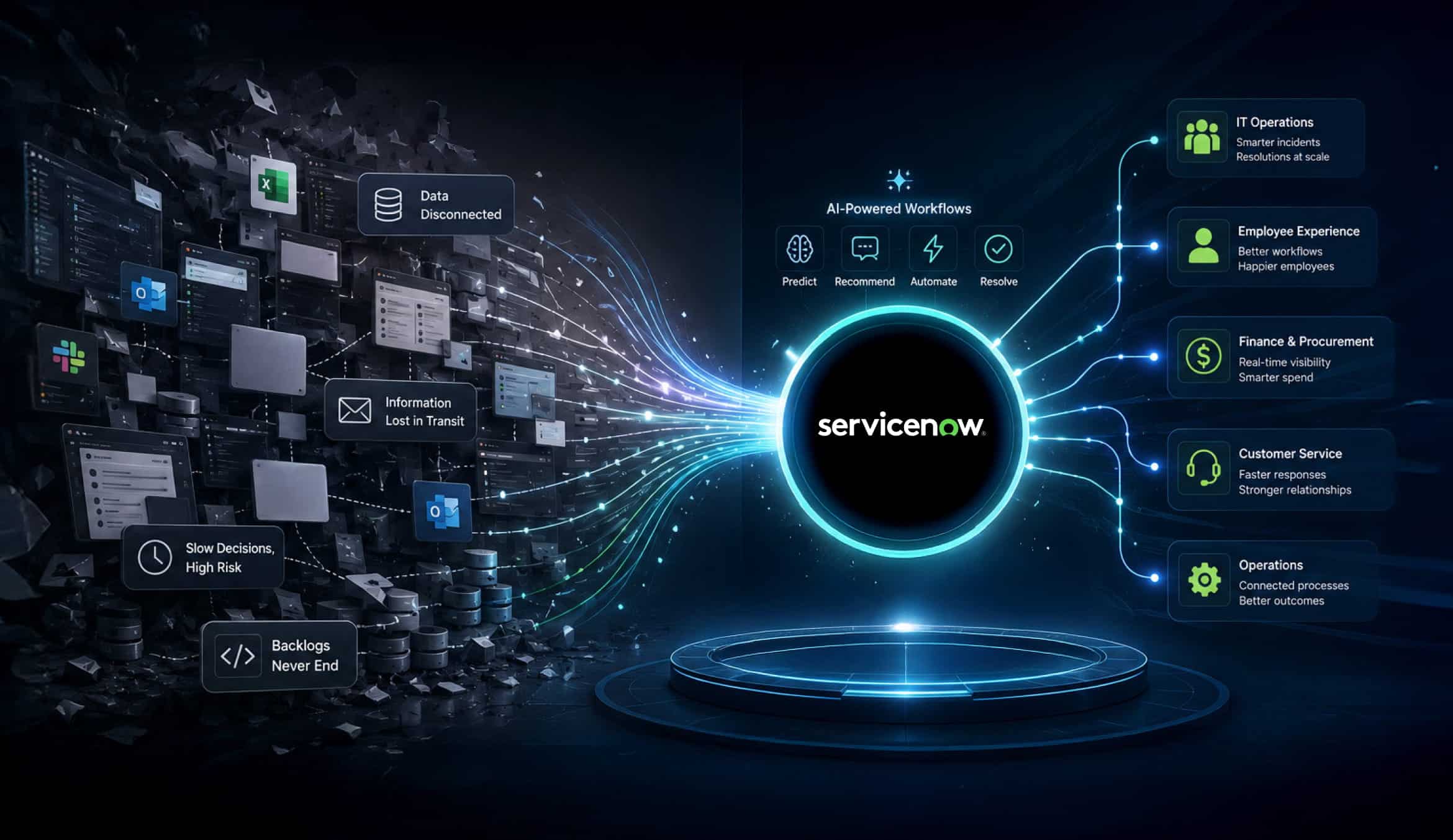
It’s Not Your Tools. It’s the Chaos Between Them.
Most companies already have plenty of software, plenty of data, and some level of automation. And yet — things still feel slow, disjointed, and hard to manage.
The culprit isn’t a shortage of technology. It’s that everything lives in a different place. Teams operate in silos. Data doesn’t travel. Decisions that should take minutes take days.
“The problem isn’t that businesses lack tools — it’s that their tools don’t talk to each other.”
ServiceNow fixes that by pulling everything into one intelligent environment — where data, workflows, and AI operate in concert from day one. Not bolted on afterward. Not optional. Built in.
Finally — A Single Source of Truth
One of the most underestimated costs in any organisation is lack of visibility. When teams can’t see what other teams are doing, every decision slows down. Every project carries hidden risk.
- Every system, team, and process connected in one place
- Real-time updates across the entire organisation
- Everyone working from the same, reliable source of truth
- No more chasing updates or reconciling conflicting data
It sounds simple. It changes everything.
From Backlog to Live — Without the Wait
Most platforms weren’t built for the pace businesses need to move at now. New initiatives sit in backlogs. Changes require dev sprints. Good ideas die waiting.

You don’t need months to launch something new. You don’t need a dedicated engineering team for every configuration change. You need a platform that moves when your business does.
AI Isn’t Assisting Anymore. It’s Doing.
This is the biggest shift happening right now — and it’s easy to underestimate.
AI inside ServiceNow doesn’t just surface suggestions. It takes action. It resolves issues autonomously, triggers cross-team workflows, and delivers real-time recommendations — without waiting for a human to press go.
- Resolves incidents and service requests without human intervention
- Triggers coordinated actions across departments automatically
- Surfaces real-time recommendations based on live operational data
- Scales like a digital workforce running alongside your people
This isn’t experimental. It’s already part of daily operations for companies that have made the shift.
You’re Not Starting From Zero
One underrated advantage: ServiceNow’s ecosystem means you can plug in pre-built solutions and extend functionality without reinventing every component. Less complexity. Faster time to value.

Real Returns. Not Just Rhetoric.
This isn’t “innovation” for the sake of a slide deck. Companies moving onto ServiceNow are seeing concrete, compounding results:

The kind of improvement that doesn’t peak — it compounds year over year.
“The future of operations isn’t coming. It’s already happening. The only question is — are you building in the right place?”
Oleksii Konakhovych, CTO, May 11, 2026
Eager to take the next step? Contact us today!
Latest Articles
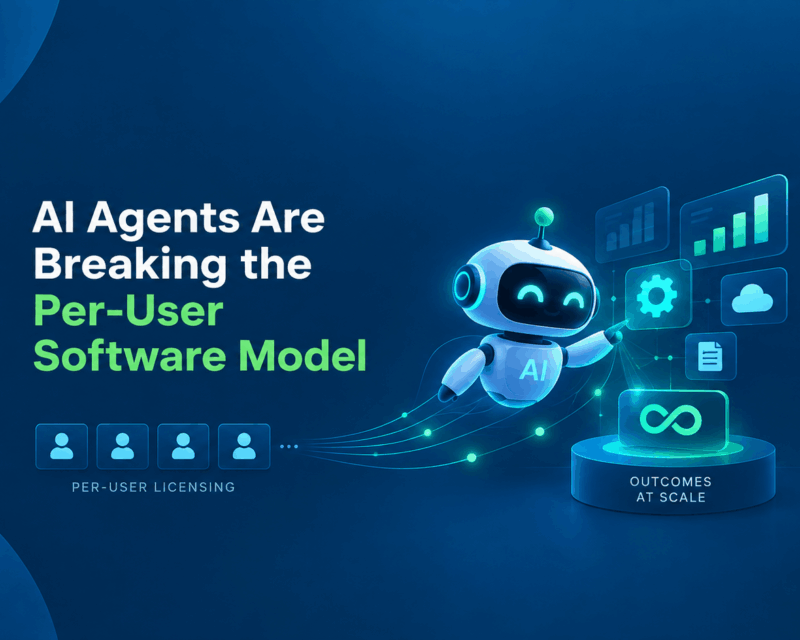
AI Agents Are Breaking the Per-User Software Model
AI agents are changing more than enterprise workflows. They are challenging one of the assumptions SaaS economics has relied on for decades: that software value broadly scales with the number of humans using it.
read more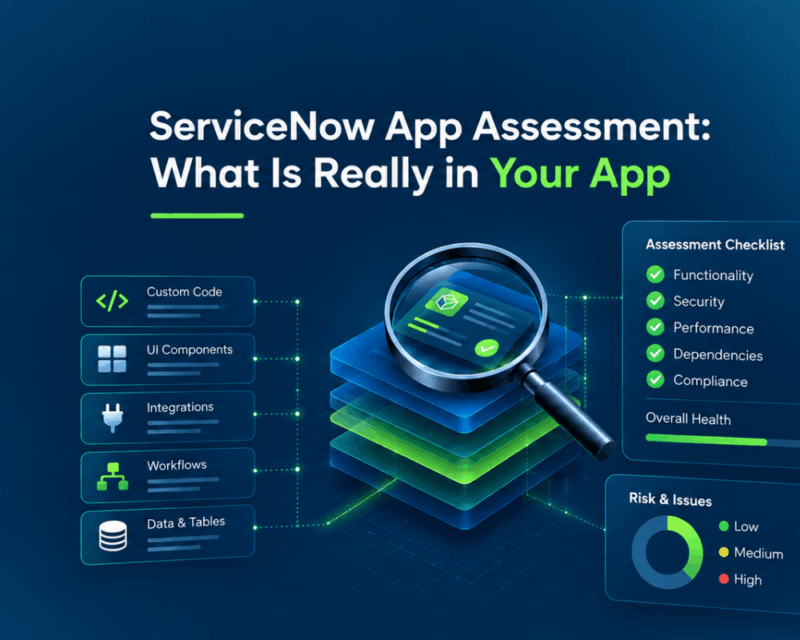
ServiceNow App Assessment: What Is Really in Your App
Every ServiceNow application that has been in production for more than a year shares one property: it works. Someone logs in, clicks through, and watches it do the thing it was built to do. That single fact usually ends the internal conversation about whether the app is healthy.
read more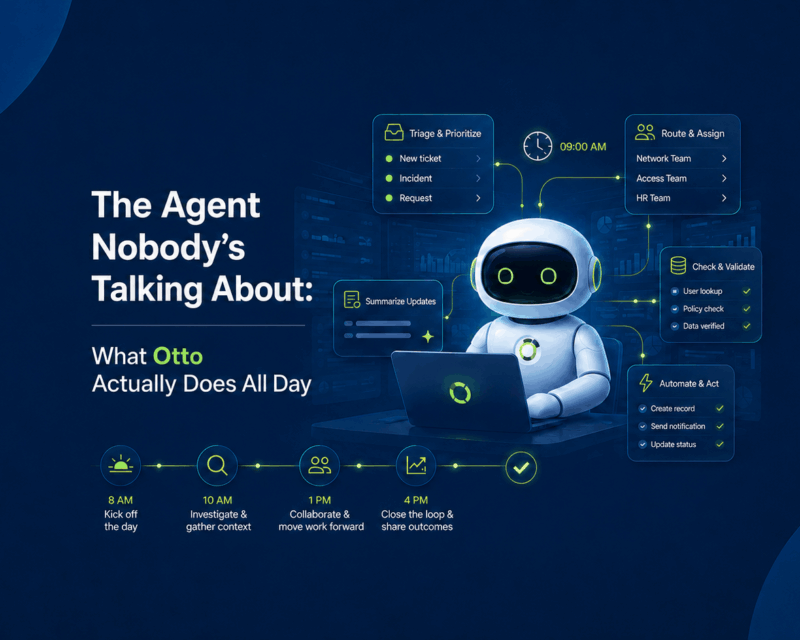
The Agent Nobody’s Talking About: What Otto Actually Does All Day
Every ServiceNow release introduces features that quickly take over conference keynotes and LinkedIn discussions. The Australia release is no exception. AI Control Tower, Action Fabric, L1 AI Specialist, and new governance capabilities have received much of the attention — and for good reason.
read more