
Unlocking the Potential of ServiceNow: The Crucial Role of Efficient Deployment in Digital Transformation
In today’s rapidly evolving digital landscape, businesses are constantly seeking ways to stay competitive and enhance their operations. One of the most sought-after tools for achieving this is ServiceNow, a powerful platform designed to streamline workflows, improve customer service, and drive digital transformation. However, the success of a ServiceNow implementation hinges on efficient deployment. Inefficient deployment practices can erode the value of this valuable tool and hinder the progress of digital transformation initiatives.
ServiceNow offers a wide range of capabilities that can significantly benefit organizations across various industries. From IT service management and employee self-service to performance analytics and automation, ServiceNow can revolutionize the way businesses operate. Yet, many organizations face challenges when it comes to deploying this platform effectively.
Here are some key points to consider:
1️⃣ Strategic Alignment: ServiceNow should be deployed in alignment with the organization’s strategic goals. Failing to define clear objectives and align the implementation with broader digital transformation strategies can result in a disjointed and ineffective deployment.
Examples for strategic goals:
- Deliver synergetic customer experiences while reducing costs
- Accelerate software transformation and ensure application net zero
- Optimize enterprise asset investments while managing risk in real time
2️⃣ Value-aligned planning: aligning planning to expected outcomes is crucial for successful deployment. This includes assessing current processes, identifying pain points, and designing workflows that leverage ServiceNow’s capabilities. Rushed or haphazard deployment can lead to inefficiencies and reduced ROI.
Typical components within a value-aligned roadmap
- Include organizational change management and governance
- Describe dependencies and sequencing of product capabilities
- Consider the right implementation methodology
- Align to technical architecture
- Show the value gained in all the phases of the roadmap
3️⃣ Change Management: The introduction of ServiceNow often necessitates changes in how employees work and interact with technology. Adequate change management is essential to ensure that teams adapt smoothly to the new system and fully utilize its features.
Activities as part of Change Management:
- Analysis of the organizational impact through the change
- Communications and engagement with the organization
- Enablement and engagement with change champions
- Alignment and engagement with executive sponsors
- Training and enablement
- Outcome and success measurement
4️⃣ Integrations: ServiceNow’s effectiveness relies on seamless integration with existing systems and data sources. Inefficient data integration can lead to inaccuracies, duplication, and reduced overall efficiency.
Core platform capabilities for integration
- Integration Hub
- RPA Hub
- Document Intelligence
- Automation Center
- Stream-Connect
- MID Server
- REST
- XML-Webservice
- Import Sets
5️⃣ Performance Monitoring: Regularly monitoring the performance and usage of ServiceNow is critical. Organizations should track key performance-related areas and make necessary adjustments to optimize the platform’s effectiveness continually.
Example of the elements relevant for performance monitoring
- Instance architecture and nodes
- Threads and transactions
- Sessions
- Large datasets
- Asynchronous processing
- Record watcher
- Service portal design and configuration
6️⃣ Security, Data Encryption and Compliance: Neglecting security and compliance considerations during deployment can lead to vulnerabilities and regulatory issues that erode trust in the system.
Key concepts and considerations:
- Understand key security persona (CISO, Security architects, Legal and compliance officers)
- Understand concept of risks and controls
- Align to industry compliance requirements
- ServiceNow Compliance Operations Readiness Evidence (CORE)
- ServiceNow Security Best Practice Guide
- GDPR and data privacy
- Physical security and instance architecture
- Key instance security features (incl. Adaptive authentication, Multi factor authentication, Access Control Lists, IP Address Access Control, Password policies, Secure Web Services, Attachments, Email security, MID Server security)
- Instance Hardering
- Instance Security Center
In conclusion, the value of ServiceNow in digital transformation is undeniable. However, the success of its implementation hinges on efficient deployment practices. To fully harness the potential of ServiceNow and achieve their digital transformation goals, organizations must invest time and resources in careful planning, strategic alignment, change management, and ongoing support. Only through these efforts can they ensure that ServiceNow becomes a valuable asset rather than an underutilized tool.
#DigitalTransformation #ServiceNow #DigitalWorkflows #OrganisationalChangeManagement
Kostya Bazanov, Managing Director, Sep 15, 2023
Eager to take the next step? Contact us today!
Latest Articles

Teiva Systems at ServiceNow World Forum 2026 — London
On October 20, 2026, Teiva Systems attended ServiceNow World Forum London at ExCeL London, where industry leaders, technology experts, and the ServiceNow community came together to explore how AI, intelligent automation, and digital workflows are transforming enterprise operations.
read more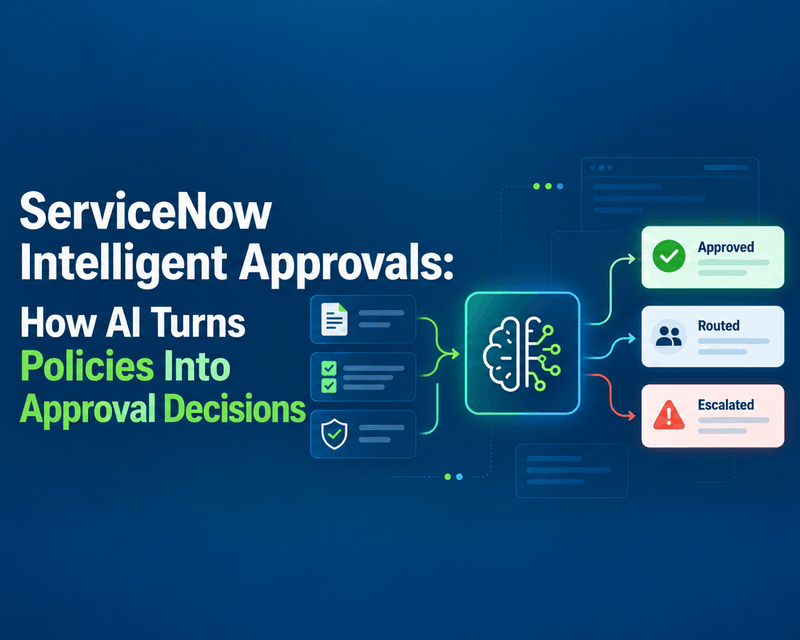
ServiceNow Intelligent Approvals: How AI Turns Policies Into Approval Decisions
What if your approval policies could make decisions, instead of sitting in documents waiting for someone to interpret them? For years, approval automation has followed the same pattern. Business teams write policies. Developers translate them into workflow conditions. Employees wait for someone to approve or reject their request, even when the outcome is obvious.
read more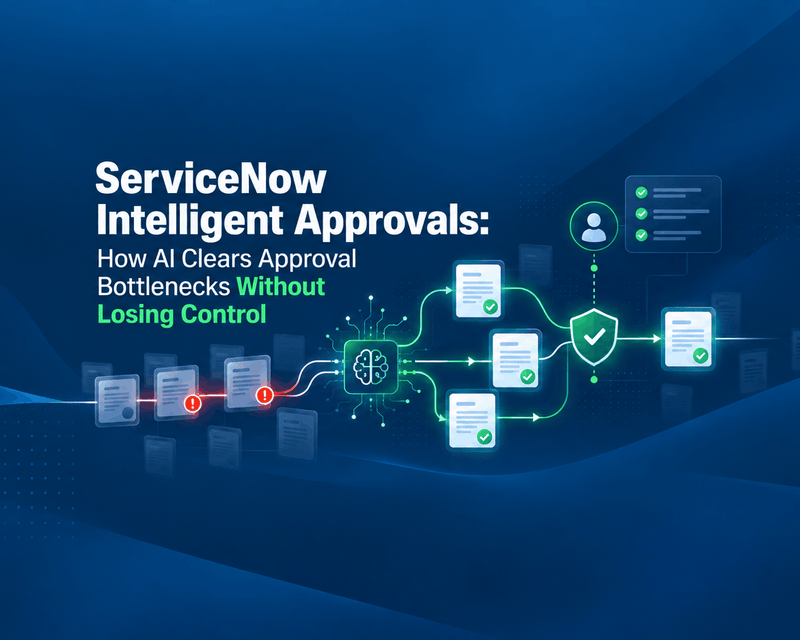
ServiceNow Intelligent Approvals: How AI Clears Approval Bottlenecks Without Losing Control
Your automation is fast. Your approvals are not. Organizations invest heavily in automation, AI and digital transformation. Yet many business processes still stall at the same point: waiting for someone to click “Approve.”
read more