
Making the Leap to Zero Trust Security with ServiceNow – A Practical Guide
In the U.S., the average cost of a data breach is a staggering $9.44M, and globally, cybercrime is predicted to cost $8 trillion by 2023. The traditional security approach of verifying once at the perimeter is insufficient in today’s complex digital landscape.
Zero Trust security, a principle that no actor, system, network, or service, inside or outside the security perimeter, is trusted, is now crucial. Every access attempt must be continually verified.
Challenges in Zero Trust Implementation
- Attack Surface is dramatically expanding because of the cloud expansion and remote workforces. The attack surface grows and it’s complicating security maintenance.
- There is a False Security Confidence within the some organisations. They trust their security controls too much and become ironically more prone to breaches.
- Overwhelming Tool Diversity. 61% of cybersecurity professionals struggle with numerous tools lacking comprehensive visibility, leading to “analytic islands.”
- AI and Automation become an additional risk. While AI is promising for security operations, it’s in its infancy and often generates more alerts than it resolves.
- And, last but not least, there is a Talent Shortage. 51% of organizations report stressed staff, making them more vulnerable to cyberattacks.
ServiceNow’s Solution: Zero Trust Access (ZTA)
ServiceNow drives security with its Zero Trust Access product, a part of its Vancouver release. It emphasises secure, strategic platform business workflows. ZTA aims to enhance security posture and user security with features like:
- Multi-factor Authentication (MFA)
- Adaptive Authentication
- Policy-based Session Access
A key outcome is Dynamic Privilege Reduction, allowing organisations to adjust user privileges based on various factors dynamically.
How It Works
Dynamic privilege reduction in ZTA uses adaptive authentication policies, considering device status, risk score, IP address, and location. After verifying identity, ZTA policies assess risk and adjust session privileges.


Benefits
- Increased Security: Protects from unauthorized access and breaches.
- Reduced Risk: Minimises malicious actor access to sensitive data.
- Increased Flexibility: Grants appropriate access levels irrespective of location or device.
Implementing Zero Trust Access in ServiceNow
To explore more about ServiceNow’s support in your Zero Trust journey and for detailed configuration steps, refer to the product documentation or the video below.
If you nee any architectural advise or want me to enable you and your team to prepare, install, configure and run the ServiceNow Zero Trust Access application, get in touch with me or any Teiva Systems representative.
Teiva Systems is a ServiceNow Premier Partner and provides advisory, architecture, implementation, training and support services. Teiva Systems specialises in building custom applications and integrations with ServiceNow App Engine leveraging platform capabilities like common data model, security, integration layer.
Kostya Bazanov is ServiceNow Leading Architect and Technology Advisor since 2011. He acted in various roles such as technical consultant, implementer, solution architect, team lead in national and global projects and ServiceNow platform rollouts. Kostya is certified in ServiceNow ITSM, Discovery, Event Management, Application Development and other critical modules and capabilities.
Kostya Bazanov, Managing Director, Jan 14, 2024
Eager to take the next step? Contact us today!
Latest Articles
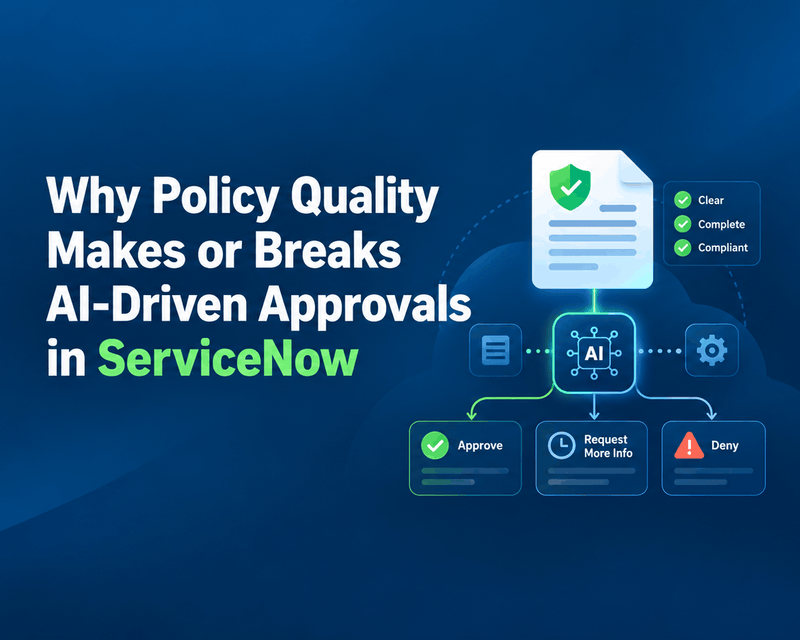
Why Policy Quality Makes or Breaks AI-Driven Approvals in ServiceNow
Why Policy Quality Makes or Breaks AI-Driven Approvals in ServiceNow AI can make approval decisions in seconds. It can also make the wrong ones, consistently, if the policy behind them is vague. As enterprises bring AI-driven approvals into ServiceNow, attention goes straight to automation: faster decisions, fewer manual tasks, shorter approval queues. One factor gets […]
read more
Teiva Systems at ServiceNow AI Summit 2026 — Munich
On October 7, 2026, Teiva Systems joined the ServiceNow AI Summit in Munich, where industry leaders, innovators, and the ServiceNow community came together to explore the next chapter of enterprise AI and intelligent automation.
read more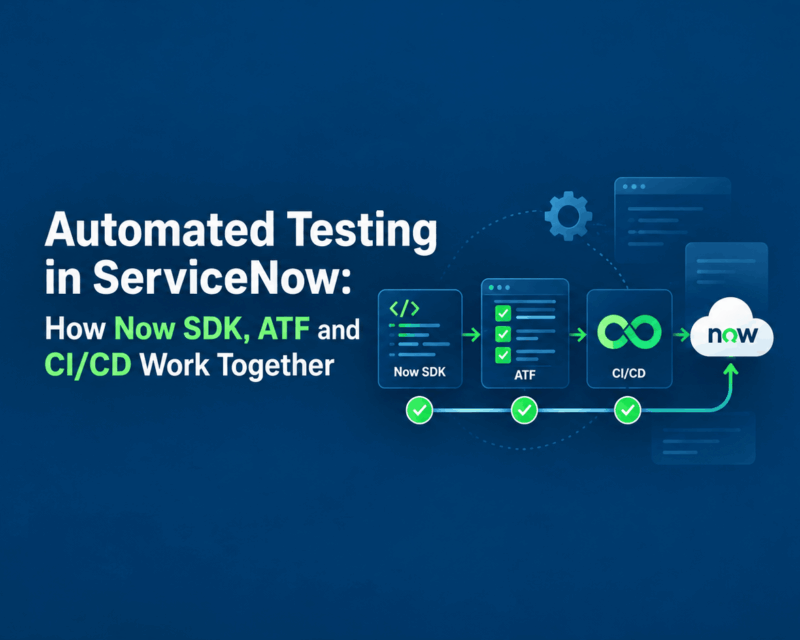
Automated Testing in ServiceNow: How Now SDK, ATF and CI/CD Work Together
Automated Testing in ServiceNow: How Now SDK, ATF and CI/CD Work Together Automated testing in ServiceNow is becoming more important, not because ATF or CI/CD are new concepts, but because the way they can work together is changing the development lifecycle itself. As ServiceNow moves toward a more source-driven engineering model, testing is becoming less […]
read more